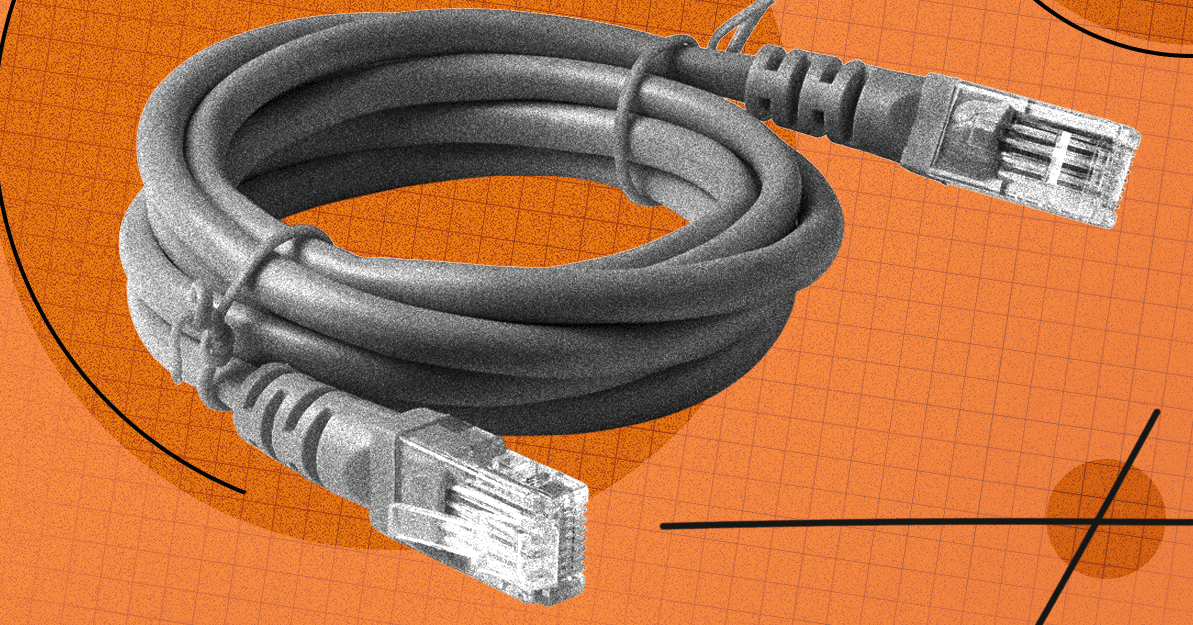
Cable ties are ideal for bundling multiple cables together and making them easier to manage. You probably already have a bunch, but you can buy a pack of 60 reusable ones for cheap ($7).


Alex Tech
10-foot cable sleeve
Cable sleeves are even better, as they provide a mesh cover for bundles of cables, making it easier to remove or add cables.
label your cables
If you have more than one cable, make sure you label them. This can save you from a lot of trouble later. Choosing a different color for your Ethernet cables (or at least not black, white or gray) can help you immediately tell them apart from other cable types, especially if you’re installing them behind walls or under floors.
How to Hide Ethernet Cables
There are many ways to hide Ethernet cables, and some are stricter and more invasive than others.
Running Ethernet cable along your baseboard or skirting board can be quite neat, and it’s easy to do. Depending on your baseboard style, there may be a suitable channel or recess, and you can use nails or adhesive cable clips. The tricky part is dealing with the transitions between doors and rooms. If you’re lucky, you may have enough space under your door, although it may be neater and safer to drill a hole in the wall to run cables from one room to another.
Probably the easiest way to hide cables is to tuck them under your carpets. It’s best to stick tightly to the baseboard to reduce the risk of someone standing on the cable. If you have carpet grippers around the edges, you may be able to run cables on either side of them to keep them out of the way. Just be sure to avoid high-traffic areas, and if you must run cables across a door, get a proper cable protector.

D-Line
6-Foot Floor Cord Cover
If you don’t want visible cables, but can’t go inside or under a wall, cable raceways or trunking may be the answer. You can get kits with different lengths of trunking with angled bends to run your cable. The best trunking can also be painted to match your baseboards or walls, which really helps it blend in.


D-Line
Mini Cable Trunking 4-Meter Pack
Maybe your cable runs are an excuse to upgrade your rooms with some crown molding or coving. Crown molding that runs around the top of the room, where the wall meets the ceiling, is easy to fit and can add a decorative flourish and conceal paintwork. It may also have a channel with an Ethernet cable inside, although you’ll still need a neat solution to run the cable in and out.
behind the wall or under the floor
For the cleanest finish, you can’t avoid running cables behind your wall or under the floor, but this is also the hardest way to do it. You need a variety of tools, and it can be a messy job, with potential risks including electrical cables and water pipes. If you’re up to the challenge and your home is suitable, here are some things that can help you do a good job.
Boere Fiberglass Flexible Snake Rods ($19):These extendable, flexible rods make it easy to run cable from Spot A to Spot B with limited access.
<a href