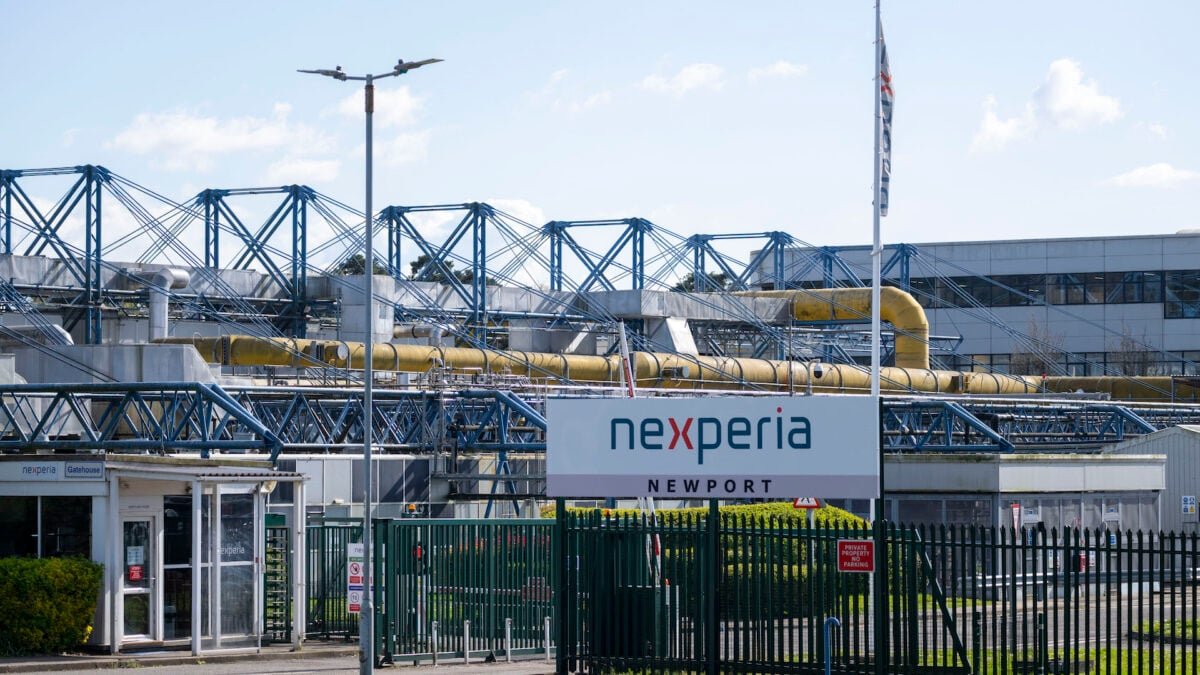

The activities of the Netherlands-based part of semiconductor company Nexperia represent a disruption in operations that could lead to a global semiconductor shortage, according to a statement from the Chinese Commerce Ministry on Saturday. If that happens, the ministry said Saturday, “the Netherlands will have to bear full responsibility.”
It’s hard to get caught up in this kind of mess because strained computer chip supply chains are so common. So to be clear, this will be a different type of emerging semiconductor crisis than car infotainment systems being threatened by AI. Instead, it will be a return to the Covid-era, when car production was slowed by a global shortage of the more basic and boring, but essential, chips used in cars – a shortage that very briefly surfaced late last year due to earlier issues with this same company and its bizarre, international quasi-civil war.
The baffling international corporate conspiracy at the center of this story also feels like an essential artifact for understanding the global Trump 2.0 era.
Nexperia is thoroughly European – a Dutch company whose own website traces its history back 100 years to British and German electronics companies, which were later acquired by Amsterdam-based Philips and became the cornerstone of the microprocessor industry. But Nexperia is also completely Chinese, for the simple reason that a Chinese electronics firm called Wingtech bought it in 2018. This comes months after Nexperia opened a massive business complex and assembly plant in China’s Guangdong province.
According to CNBC, 30% ownership of WingTech is tied to the Chinese government.
So go ahead: we’re talking about a Netherlands-based company with a rich tradition of European electronics leadership, with a big presence in China, that also has a Chinese parent company. And all this scenario happened at a time of increasing economic rivalry between China and the US and its sphere of influence including the EU.
Last June, amid Donald Trump’s high-profile trade war with China, the Guardian says the US complained to Netherlands authorities that if Nexperia wanted to continue selling chips to the US, Nexperia would have to remove already-suspended Chinese company leader Zhang Xuezheng.
Then in late September last year, the Dutch government invoked a long-forgotten Cold War-era law to seize control of Nexperia, due to concerns that Nexperia’s secret recipes were being handed over to Wingtech—its own parent company. China then suspended exports of Nexperia’s basic automotive microprocessors from the said giant plant in Guangdong province – causing a mini-crisis.
US fears about some kind of Chinese-controlled technological chokepoint being used as a bargaining chip became more pronounced in October when China responded to Donald Trump’s tariffs by imposing export controls on rare earths.
Then in November, the Netherlands took a softer stance and effectively returned the company to its legal owner, apparently because the Netherlands felt confident that global access to automotive chips was secure. Dutch Economy Minister Vincent Karremans said, “We are positive about the measures already taken by the Chinese authorities to ensure the supply of chips to Europe and the rest of the world.”
The point now is that, whether or not international diplomacy has theoretically smoothed it all out, the warring international divisions within Nexperia have not overcome their differences, and the latest episode in this saga is perhaps the strangest yet. On Tuesday, amid a court battle over control, and the threat of litigation as Chinese owners struggle to get their possession back, the Dutch headquarters blocked Chinese employees from using their SaaS accounts – as such: they could no longer open applications like Microsoft Word on their work computers, effectively shutting down office work at Nexperia’s offices in China.
Nexperia’s Dutch operations confirmed the software block on Friday, according to Reuters, but rejected the idea that the incident had an impact on the affected facility’s output. The same day, most operations in China were reportedly back online.
This should be a relief for automakers, but the constant shutdown of calls within Nexperia may not be good for the hearts of executives. “The chips produced by the affected manufacturers are critical parts used in electronic control units, etc., and we believe this incident will have a serious impact on the global production of our member companies,” the Japan Automobile Manufacturers Association (JAMA) wrote in a statement during the Netherlands’ seizure of Nexperia last year. “We hope that the countries involved will find prompt and practical solutions,” JAMA said.
But instead of taking quick and practical steps toward a solution, the food fight inside this important global company is only becoming smaller and more bitter.
Gizmodo contacted Nexperia for a statement and asked for information on whether its Chinese division has indeed restored access to corporate software that was previously cut off. We will update this story if we get a timely response.
<a href