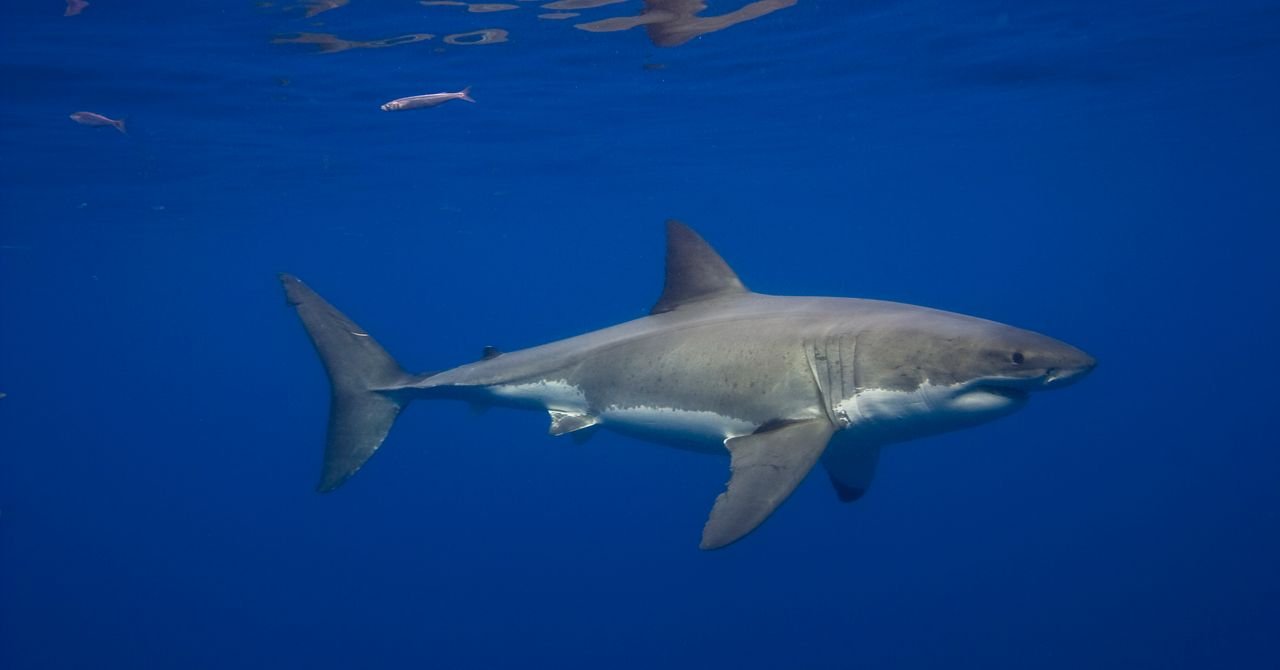
The encounter was documented by diver Dirk Remmers, who told the BBC that he had difficulty turning on his camera due to the excitement. The footage – the first ever record of a great white shark in its Mediterranean Sea habitat – shows a massive adult male specimen Carcharodon carchariasA native species now considered critically endangered.
great White shark
Carcharodon carchariasCommonly known as the great white shark, it belongs to the Lamnidae family and is one of the largest predatory fish in existence. It can exceed 6 meters (20 ft) in length and weigh more than 2 tons. It primarily eats fish, including rays and other sharks, although adult individuals may also hunt marine mammals such as seals and dolphins.
Equipped with an extremely keen sense of smell and excellent swimming abilities, the great white shark is considered one of the most efficient apex predators in the food chain. Thus, it plays an important role in maintaining the balance of marine ecosystems by controlling the population of its prey.
endangered species
Found in temperate and subtropical waters in oceans around the world, the great white shark has also resided in the Mediterranean Sea for millions of years. However, today, its population there has declined significantly, and sightings have become rare. Despite its reputation, attacks on humans are very uncommon. And the species is increasingly threatened by human activities, particularly incidental capture in fishing operations, illegal fishing, habitat loss, and degradation of its natural prey.
For this reason, Carcharodon carcharias It is classified as vulnerable on the International Union for Conservation of Nature Red List, while the Mediterranean population is considered most vulnerable and is classified as critically endangered.
a rare encounter
Therefore, the sighting of a great white shark in the Mediterranean Sea represents a valuable opportunity, as it provides useful information for scientific research and conservation strategies for the species in seas where its presence is now extremely rare. At the same time, this latest encounter can be interpreted as an encouraging sign for marine biodiversity and a reminder of the importance of continuing and strengthening conservation efforts in marine ecosystems, which are considered among the most fragile in the world.
“Most of our knowledge about great white sharks in the Mediterranean Sea comes from dead specimens caught during fishing operations,” says Carlo Caetano, a researcher at the Stazione Zoologica Anton Dohrn. “Observations such as these are extremely valuable in improving our understanding of the distribution, habits and behavior of this critically endangered species, whose survival is threatened by human activities. Our shark research has allowed us to identify several critical areas for the threatened species over time, and this sighting is particularly important in validating the conservation value of this area.”
This story was originally published on wired italia And it has been translated from Italian.
<a href