Parents only want one thing from AI: adding a soccer game or a list of “Spirit Week” themed days or a poorly formatted flyer to their calendar all at once from an email. And I have good news for parents with iPhones — the new Siri can finally do it.
After failing in its first launch of AI-powered Siri, Apple is trying again. The newly upgraded Siri AI can talk to you about what could be harming the roses in your garden, generate a shopping list for the hardware store, and set a reminder to add some fertilizer to that flower bed. It can reference the information in your emails and calendars to make its recommendations, or provide a really useful answer to the question: “When should I leave for the airport?” And yes, it can also add a list of events from email to your calendar. I tried all of these scenarios for myself and I saw it happen. This time the AI is actually Siri.


But this is a very basic set of features for an AI assistant in 2026, especially if you compare it to the ones on Gemini Android from the past few years. Google’s chatbot has been able to add multiple calendar events from a single screenshot for at least a year at this point. It has been diagnosing plant problems and scheduling maintenance reminders for many months, if not longer. The new Siri is built on the Gemini model, so it makes a lot of sense that the first version of Siri AI looks a bit like “Gemini, circa 2025.”
However, Siri AI has its own flavor. Apple has a lot of proprietary stuff going on under the hood and in the cloud. This is drawn from an on-device pool of data that’s collected from things like emails and messages. This information is indexed so that Siri can access the relevant bits when needed. Signals that can’t be fully controlled on the device are sent to Apple’s private cloud compute along with only the relevant pieces of personal data. Gemini handles personal context differently; You choose to share your Gmail or calendar, and then it will go straight to those sources to get the information you need.
Siri AI working well depends largely on the context the AI understands. So far, it’s performing quite well. When I needed to return some camera gear I rented for WWDC I asked her, and she found the information in a calendar event I created and an email (for the record, it’s due back on Friday). Similarly, prompting it with something like “Add these events to my calendar” will trigger it to continually reference the information on my screen. so far so good.
I couldn’t coax Siri into doing any finesse — I didn’t really bother to test it, but the guardrails were strong enough to turn the “I can’t help you with that” back into a questionable prompt. blond. As a conversationalist, the new Siri also seems a bit more impartial than the Gemini. I gave the same signal to both of them and asked why the flowers in front of my house looked withered. They both gave sharp responses with several possible reasons, but Gemini started with “This is incredibly frustrating…”, where Siri was more direct and was able to correctly diagnose the situation.


The new Siri also handled my follow-up requests well. I asked him to recommend a garden center “close to home” and he came up with a good suggestion. It also created a new reminder list with some checklist items for my garden rehab project and added a calendar event from the same prompt. Very basic thing, but it’s Sir, I. The fact that it works at all is a step forward that has been years in the making.
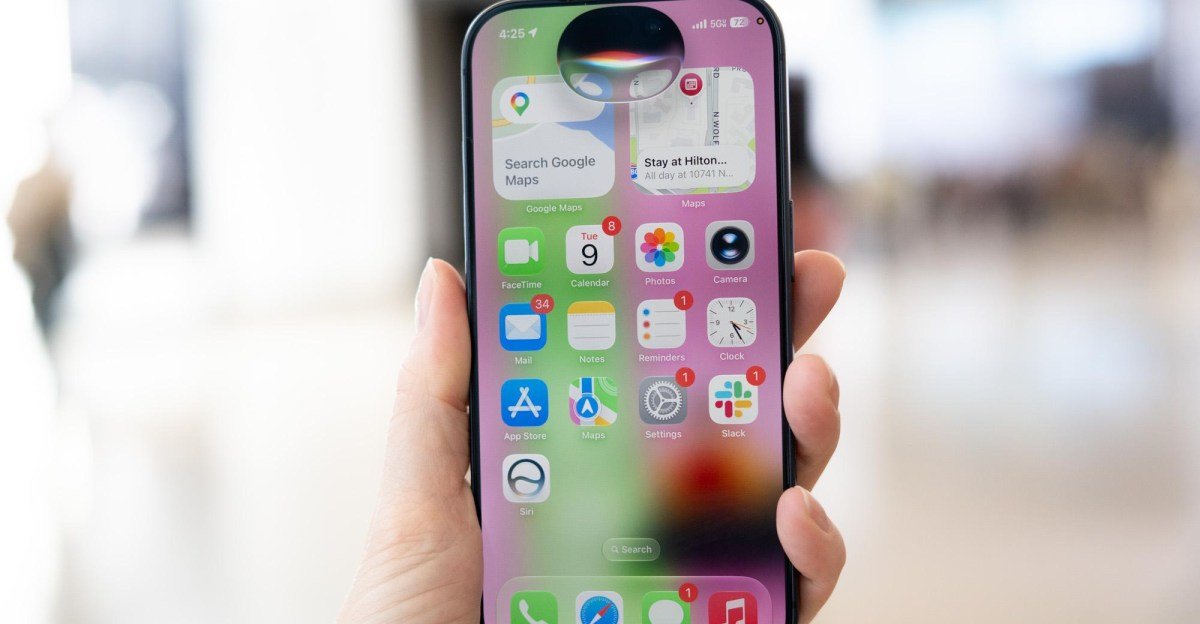
The new Siri shows up in a lot of places on the iPhone. I’ve gotten used to swiping down on the homescreen and using search to access apps, and every time I do so there’s a big “Search or ask” prompt with a flashing, blinking cursor. Long pressing the wake button also invokes Siri from the dynamic island, rather than presenting it as a flashing border around the screen. All of these changes add up to a subtle feeling that you’re never too far from Siri.
All of these changes add up to a subtle feeling that you’re never too far from Siri.
This iteration of Siri feels like the AI assistant you’d create if you knew you couldn’t screw it up. It supports a very basic set of features – it’s not doordashing your burritos for you – but it does exactly what is advertised. For a company that made big promises about Siri two years ago that never materialized, this is a big deal. “It works” and “it will actually be shipped to customers” are two goals Apple can’t miss here. It’s only in developer beta right now, but it’s more real than the first AI Siri we were shown at WWDC. Apple needs this version of Siri to earn back trust. And based on what I’ve seen so far, it seems like a small step toward getting that trust back.
Photography by Alison Johnson/The Verge
<a href