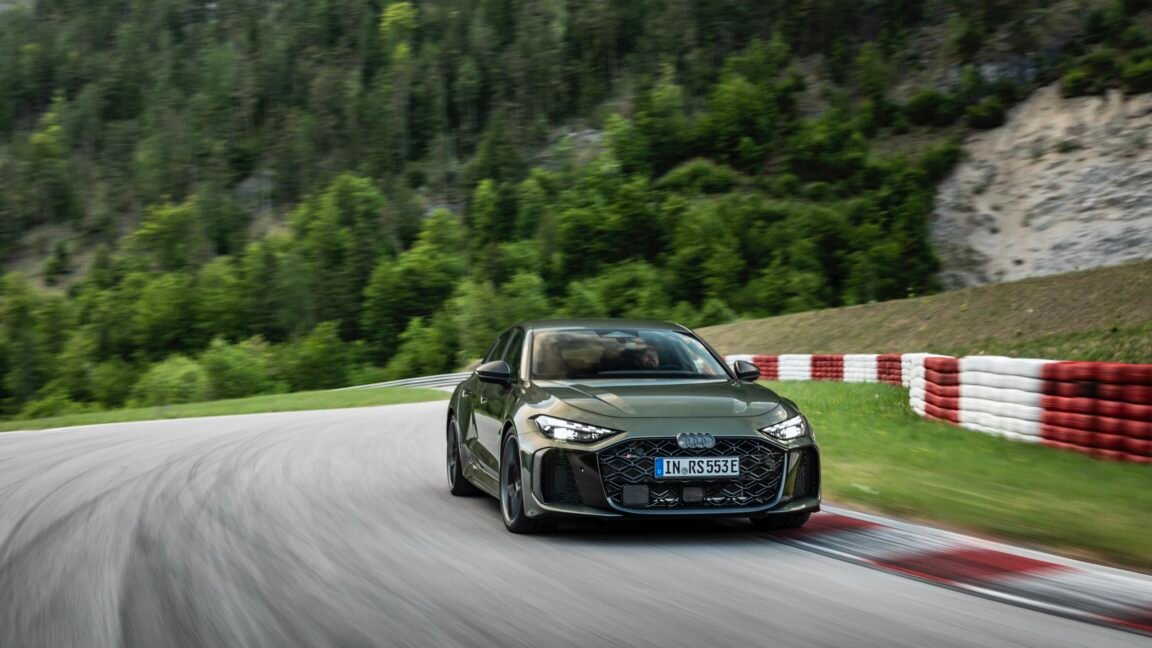
What is the difference?
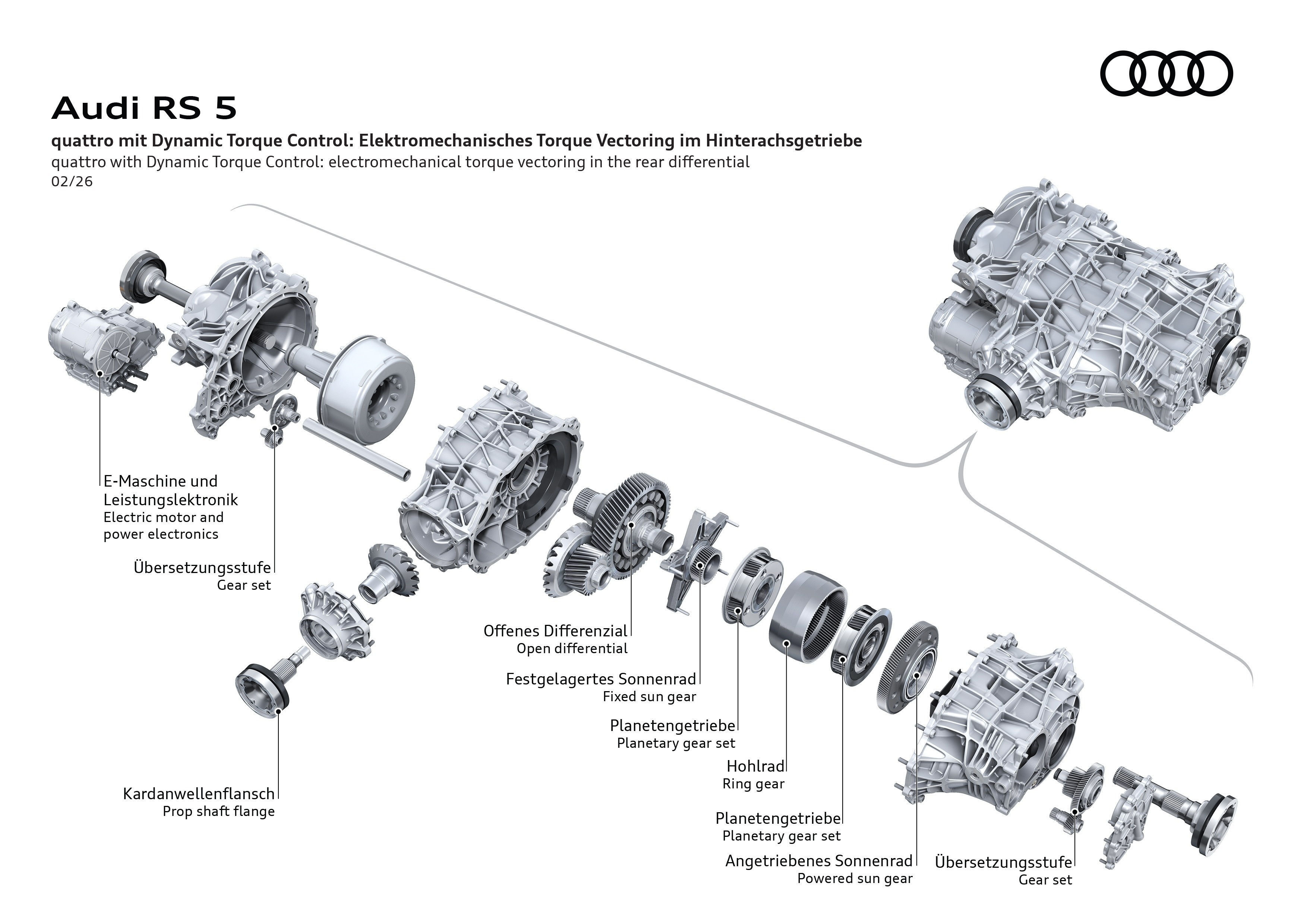
An actuator, overdrive gear and a differential combine to intelligently transfer torque between the rear wheels. They do this in an almost completely variable manner depending on driving conditions and ensure agility and stability.
audi
An actuator, overdrive gear and a differential combine to intelligently transfer torque between the rear wheels. They do this in an almost completely variable manner depending on driving conditions and ensure agility and stability.
audi
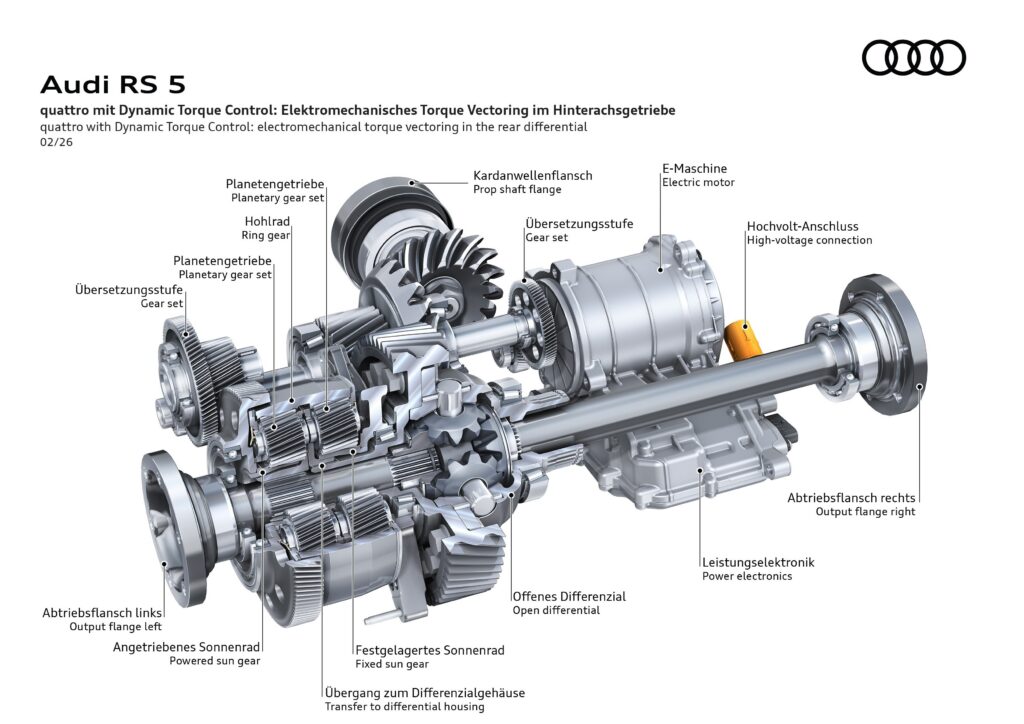
A look at the cumulative difference.
audi
A look at the cumulative difference.
audi
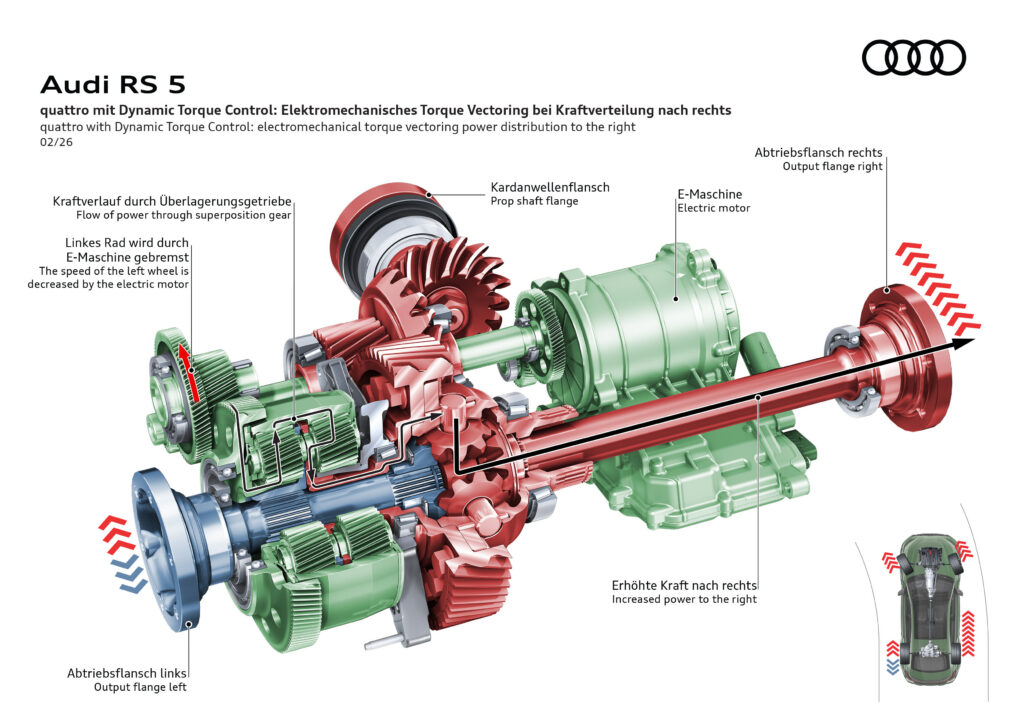
An illustration showing how torque is controlled at the rear axle.
audi
An illustration showing how torque is controlled at the rear axle.
audi
A look at the cumulative difference.
audi
An illustration showing how torque is controlled at the rear axle.
audi
Like all performance Audis, the RS5 uses quattro all-wheel drive, there’s a limited-slip center differential that splits power between 70/30 and 15/85 front to rear.
We’ve enjoyed the torque-vectoring rear differential on previous Audi RS models – the ability to send more power to different rear wheels as required has played a big role in why people love the RS3, TT-RS, R8 and similar cars. In those cars, a clutch for each wheel is used to achieve the rear differential, but for the new RS5, Audi Sport decided to develop something new in-house.
It’s calling the new setup Dynamic Torque Control, and it ditches the hydraulic clutch in favor of an 8kW, 40Nm electric motor (powered by a 400V traction battery) and some planetary gears. The electric motor resides on one side of the axle and applies torque to the driven sun gear on the other side. This sun gear acts on the planetary gear, then a fixed sun gear is connected to an open differential. It can add or subtract torque from the ring gear to the half shaft for a 1,475 lb-ft (2,000 N⋅m) split at the axle, or send it directly back to the open differential for a 50:50 split. Because it is controlled by an electric motor, the differential will react in just 15 milliseconds, putting the car in neutral or allowing it to oversteer, depending on the drive mode.
split personality
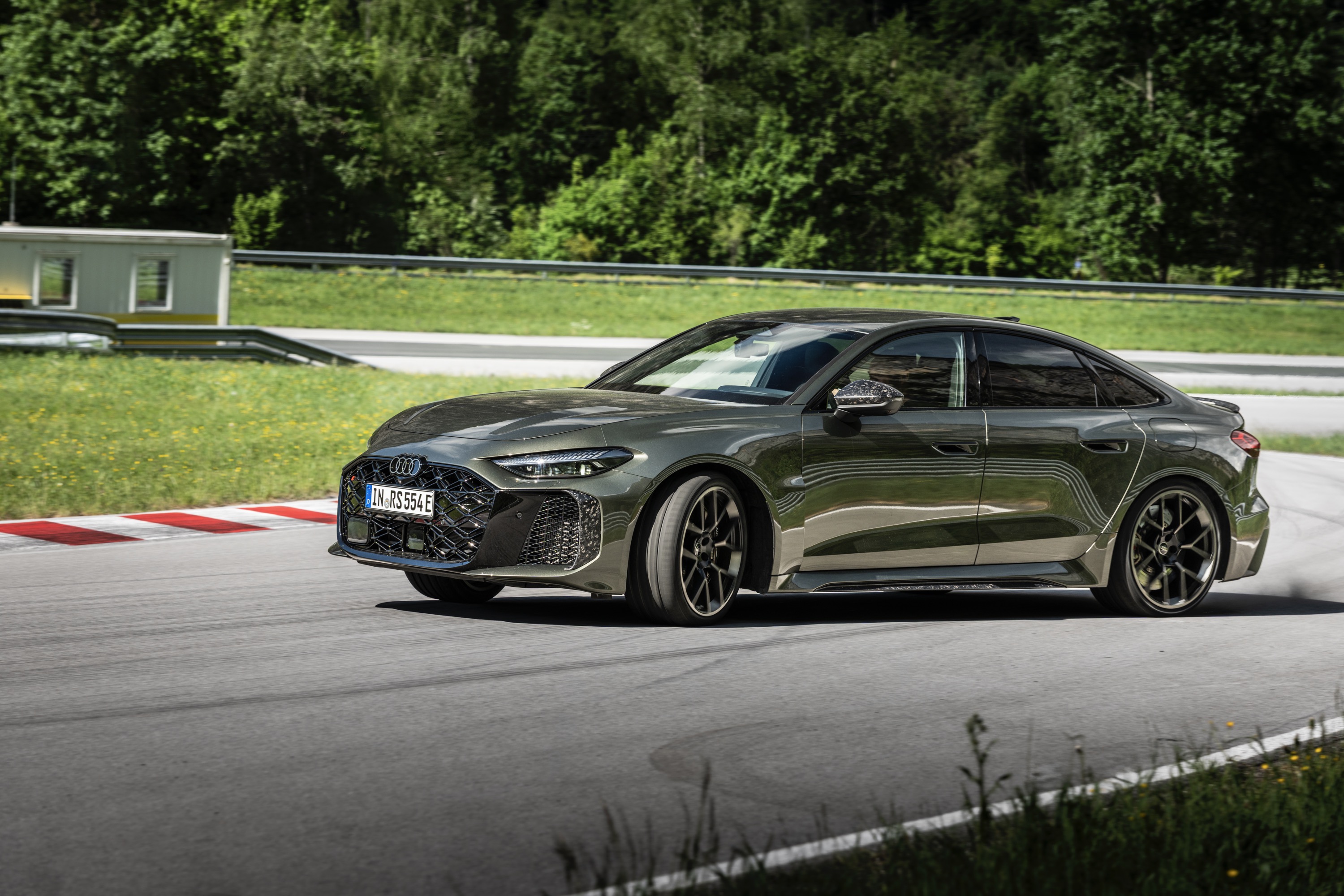
Handling can be neutral or oversteer-y.
Tobias Sagmeister/Audi
Handling can be neutral or oversteer-y.
Tobias Sagmeister/Audi
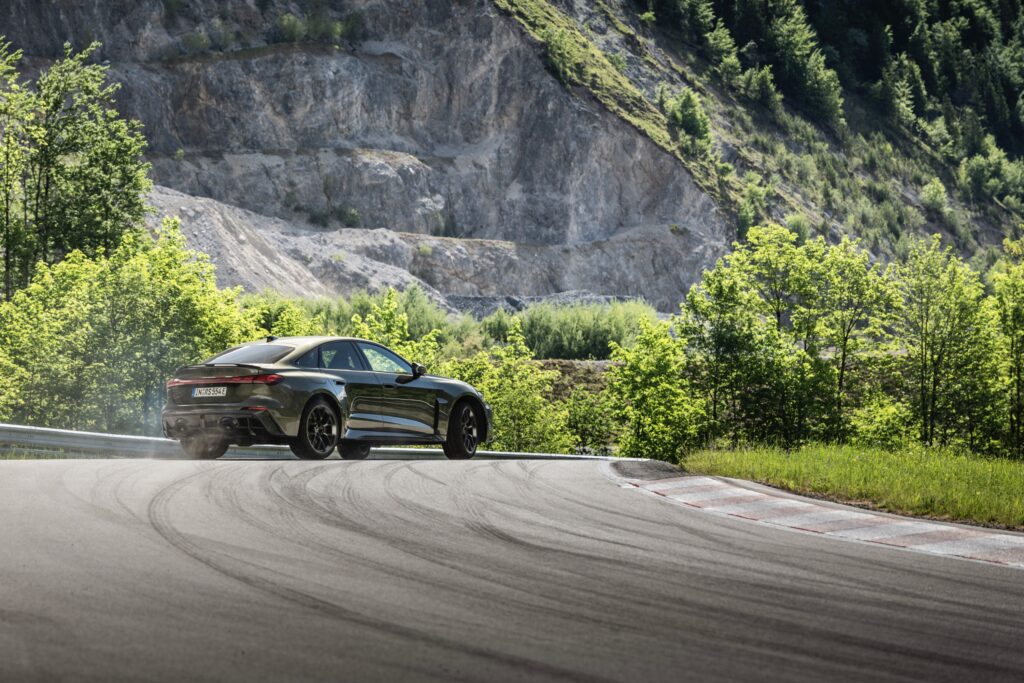
It helps when you don’t have to pay for your tires.
Tobias Sagmeister/Audi
It helps when you don’t have to pay for your tires.
Tobias Sagmeister/Audi
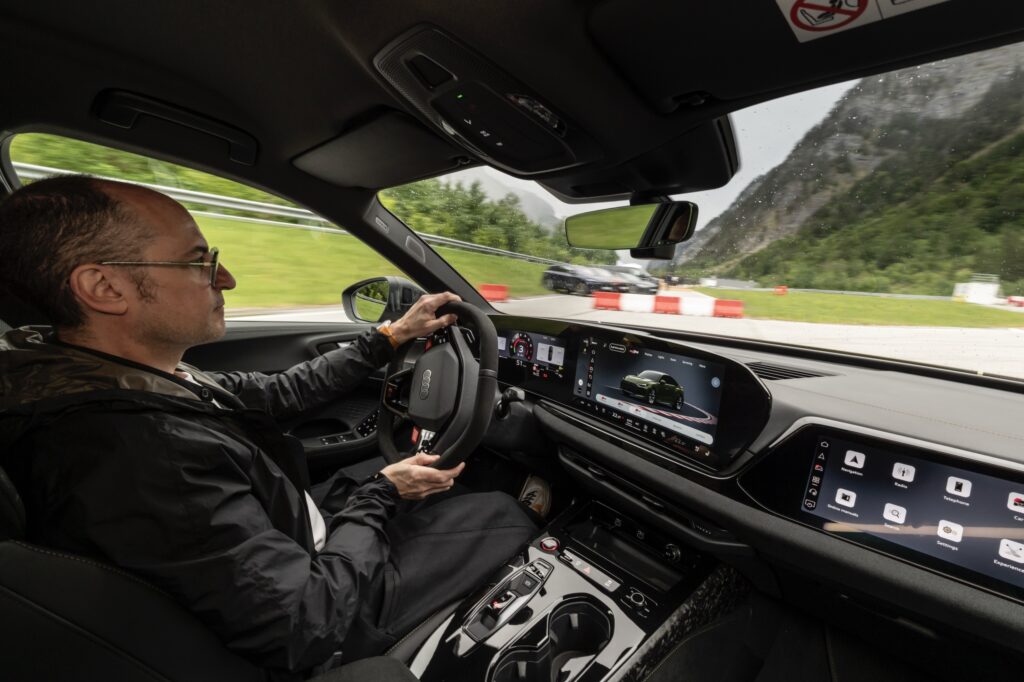
The RS5 was very easy to slide on and hold.
Tobias Sagmeister/Audi
The RS5 was very easy to slide on and hold.
Tobias Sagmeister/Audi
It helps when you don’t have to pay for your tires.
Tobias Sagmeister/Audi
The RS5 was very easy to slide on and hold.
Tobias Sagmeister/Audi
When driving on the road in Balanced, Comfort, or even Dynamic, you may never notice how clever the rear torque distribution is. The weather was quite poor for most of my road driving in the RS5, with a mix of rain and snow at high altitude in late May. Yet despite wearing wide summer tires on 21-inch wheels and having so much power and torque, its behavior was never less than locked down and stable on the road. So this really is a true all-weather performance car, in the way the fastest fast Audis always have been.
<a href