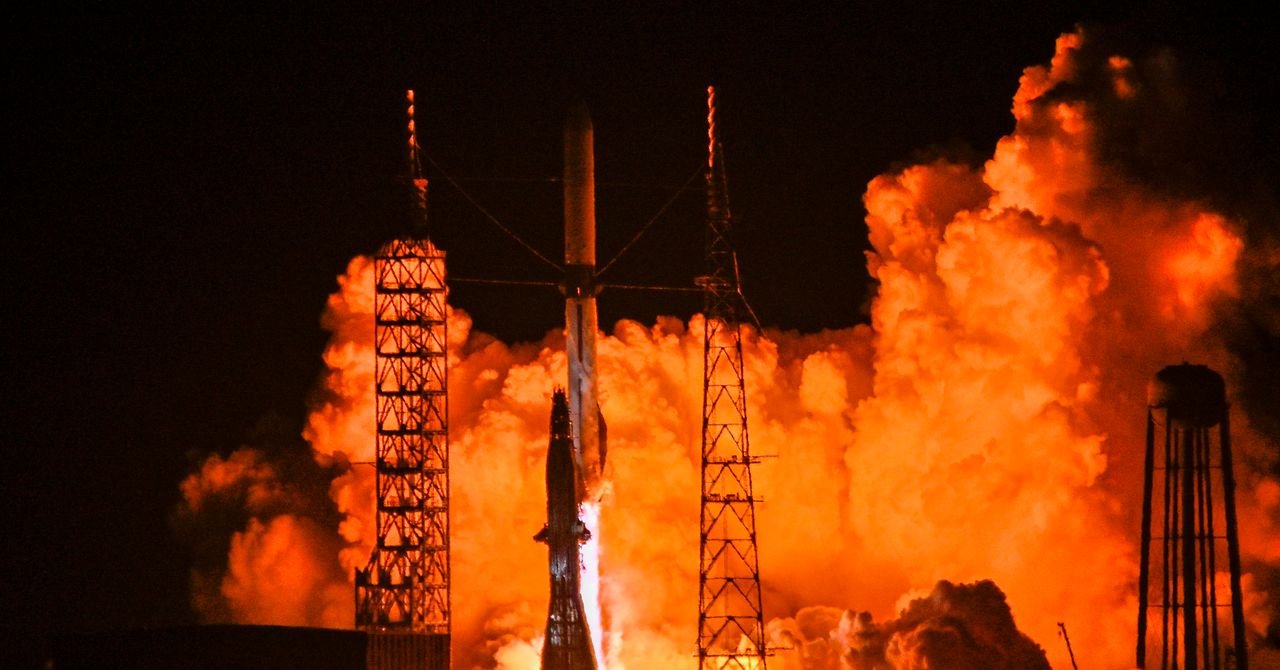
“It’s too early to know the root cause, but we’re already working to find out,” Bezos wrote. “It’s a very tough day, but we will rebuild whatever needs to be rebuilt and get back flying. It’s worth it.”
What is hotfire test?
The test during which Blue Origin’s rocket – a vehicle that, at 98 meters tall, is one of the largest rockets ever built – exploded, is known as the hotfire test, or static fire test. Essentially, this is a standard procedure performed on the engines of rockets, spacecraft or prototypes, in which the engines are ignited for a very short period of time and then shut down while the vehicle remains safely on the launch pad. The purpose of this testing is to verify that the systems are working correctly before the actual launch.
blue origin rocket
This will be the fourth mission of the New Glenn rocket, which was scheduled to carry 48 satellites that were to become part of the Amazon LEO satellite internet network by next week. “NASA is aware of an anomaly involving Blue Origin’s new Glenn rocket at Launch Complex 36 tonight at Cape Canaveral Space Force Station,” NASA Administrator Jared Isaacman said in a post on Twitter.
Isaacman further said that NASA will provide updates on any potential impacts on the Artemis and Moon Base missions when they become available; The agency has contracted with both Blue Origin and SpaceX for various aspects of its lunar return plans.
The explosion represents the latest blow to Bezos’s company. On April 19, a failure occurred during the rocket’s third flight leading to an investigation by the Federal Aviation Administration (FAA). During that mission, the rocket’s first stage successfully landed on a floating platform, but the upper, or second stage, failed to lift its payload—AST Spacemobile’s Bluebird 7 satellite—into a safe orbit. That investigation was just completed on May 22.
This story originally appeared on WIRED Italia and has been translated from Italian.
<a href