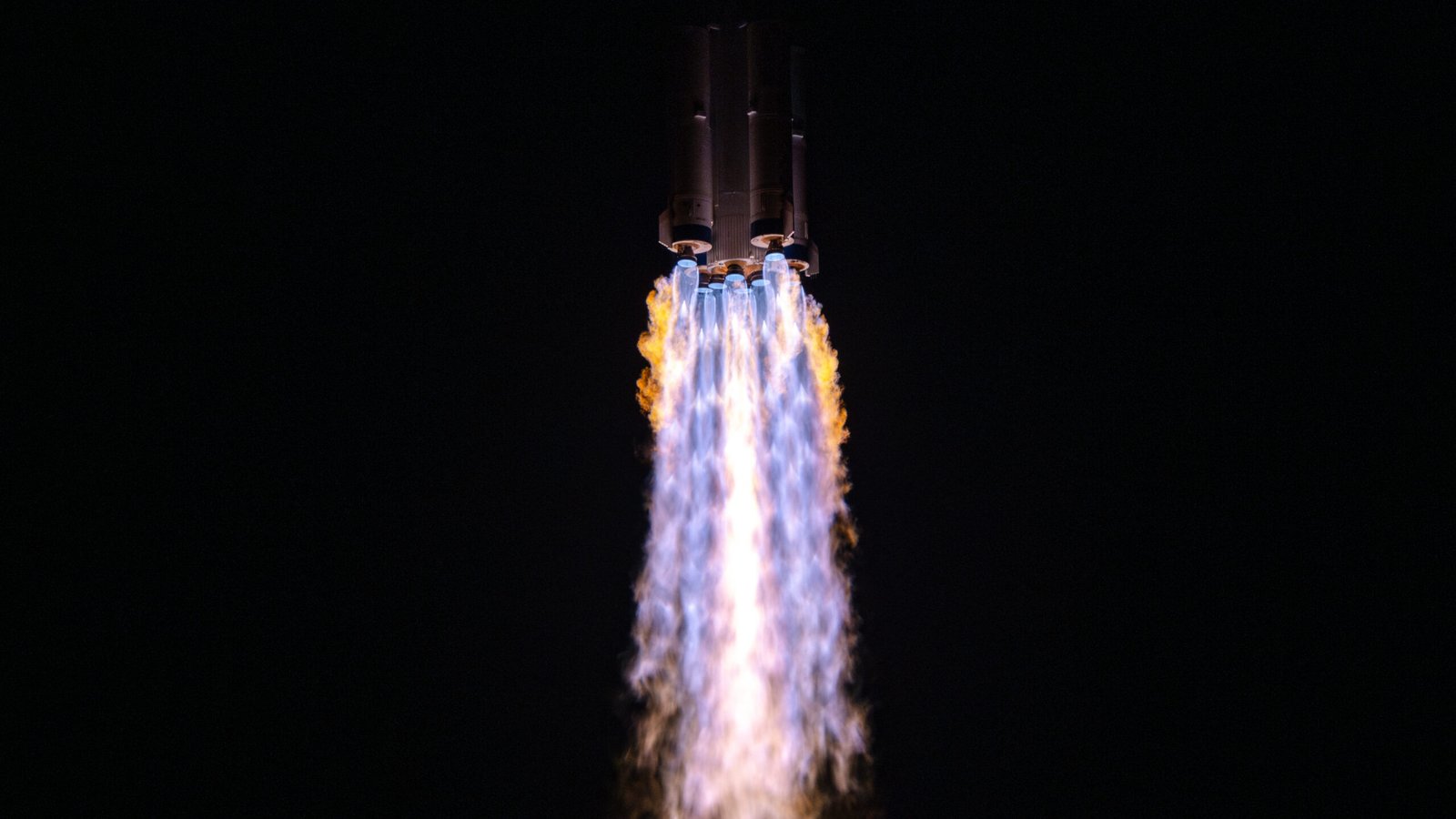
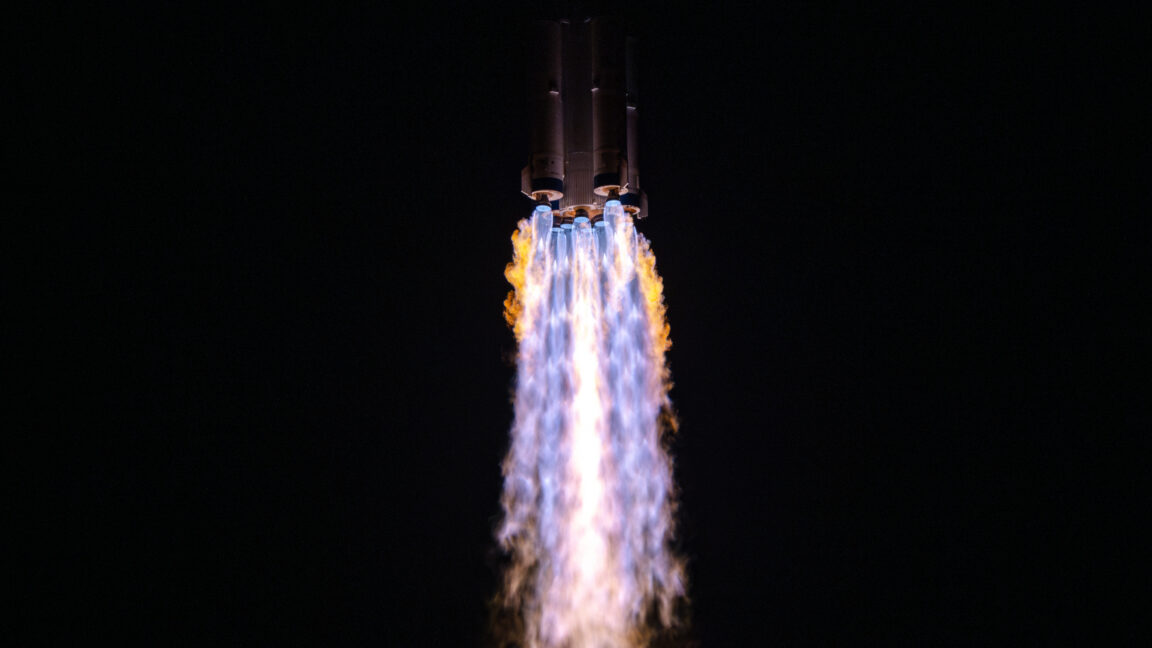
Worst practices… Recent growth in Chinese upper stages has been driven by the country’s increased launch rate as it begins to deploy satellite megaconstellations, Shell said. China’s space industry is just beginning to launch megaconstellations to compete with SpaceX’s Starlink satellite service, suggesting the country could worsen its already crowded space environment if it does not curb the practice. Chinese constellations such as Guowang and SpaceSail are typically at altitudes of more than 800 km, and China may launch 1,000 or more rockets over the next decade to support these constellations. That’s a lot of new junk if this trend continues.
DARPA, Voyager team up on solid rocket motors. The Defense Advanced Research Projects Agency (DARPA) has awarded Voyager Technologies a $16.5 million contract to continue development of solid rocket motor thrust-control technology designed to make missile propulsion systems more adaptable to different missions and weapons programs, Space News reports. This contract is part of DARPA’s “Burn N’ Go” program. Solid rocket motors are used for a wide variety of applications, from tactical missiles to space launch vehicles. The positive side of solid rocket motors is their reliability and manufacturability. Solid rocket motors can vary their thrust, but these thrust profiles are predetermined by the propellant grain pattern and the dimensions of the motor. In other words, the thrust profile is locked in after the motor is built. Unlike liquid-fueled rocket engines, solid-fueled rockets generally cannot be sped up or down.
It’s in the propellant… Voyager is working with DARPA on a new “propellant-embedded” method of controlling the thrust of solid rocket motors after they are built. The latest contract is for Phase 2 of the Burn N Go program. During Phase 1, Voyager worked on architectural concepts and preliminary designs. Voyager’s Phase 2 contract will culminate in “optimized SRM hot-fire demonstrations,” the company said in a press release. “This award reflects confidence in our ability to translate advanced propulsion technologies into field-ready capabilities that support U.S. national readiness and deterrence,” said Matt Magana, president of space, defense and national security programs at Voyager. “Our approach is designed not only to demonstrate performance benefits at the system level, but to establish a reliable path to industrialization that can reshape the way solid rocket motors are produced, mission-tailored, and controlled.”
<a href