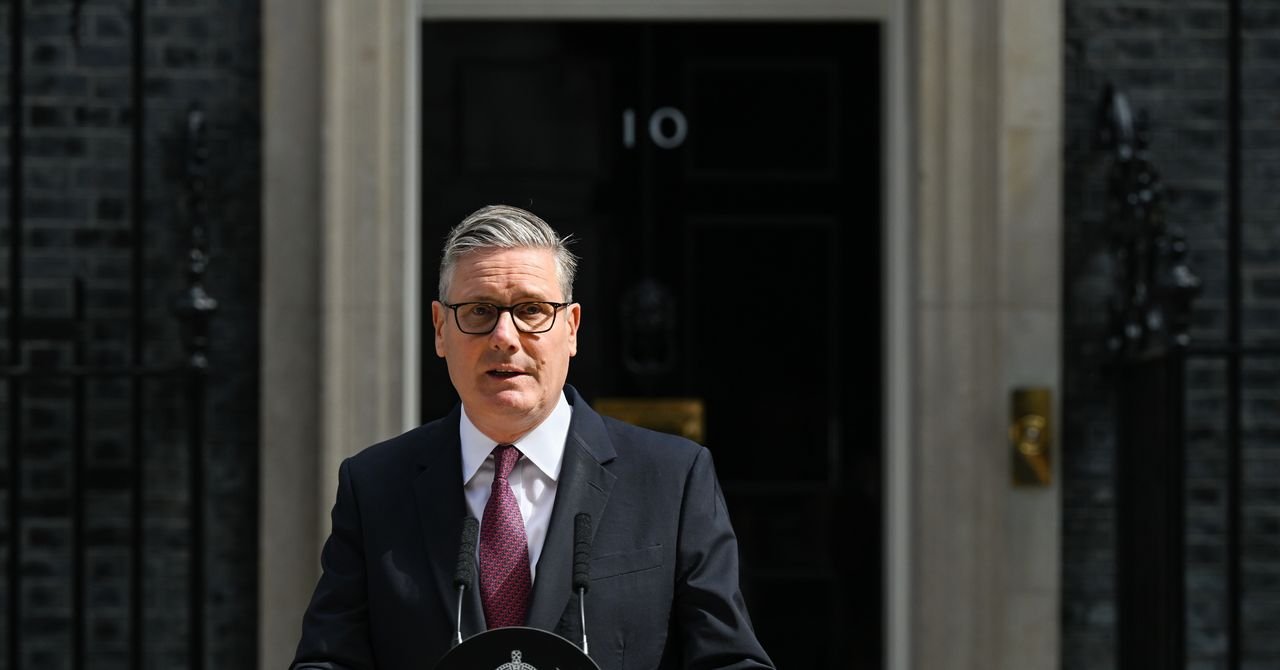
Starmer’s popularity has waned since the beginning of his premiership as Britons have faced tax increases, spending cuts, and struggled to see promised reforms to creaking public services. May’s local elections confirmed the challenge Labor faces in keeping British voters on board, as the party lost nearly 1,500 councilors across the country and control of 38 councils. Many were caught by Nigel Farage’s challenger party, Reform UK.
“The question my party is now asking is whether I am in the best position to lead us into the next general election,” Starmer said outside his official residence on Downing Street in London on Monday morning. “I have heard the answer of my parliamentary party to that question, and I heartily accept that answer.” General elections are not to be held in Britain until 2029.
Donald Trump also predicted resignation in a post on his Truth social platform over the weekend and criticized Starmer for “failing miserably” on immigration and energy. Net migration to the UK has fallen during Starmer’s prime ministership, although he has struggled to curb small boat arrivals, a proxy in public debate for unauthorized immigration. Trump is also critical of the Labor government’s restrictions on oil and gas drilling in the North Sea.
Andy Burnham, the former Labor mayor of Manchester, is expected to replace the embattled premier after former health secretary Wes Streeting – who quit Starmer’s government last month and previously said he would stand in any leadership contest – pledged his support.
Since the Brexit referendum in 2016, the UK has seen an unprecedented change of leaders, starting with David Cameron’s resignation after the Brexit vote, Theresa May in 2019 after failing to garner support for a Brexit deal, Boris Johnson amid a wave of ministerial resignations and scandals, Liz Truss after her mini-budget caused market turmoil, and in the 2024 general election. Rishi Sunak after Labour’s landslide victory.
The pressure on Starmer reached a tipping point on Friday after Andy Burnham, the former Labor mayor of Manchester, won a seat in Parliament through a by-election in northwest England. This enables Burnham, who is popular within her own party, to run for the party leadership, and with enough support to challenge Starmer’s premiership even if he has not resigned.
Starmer will remain prime minister until the ruling Labor Party elects a new leader, which he said would happen before Parliament reconvenes in September.
Labor’s victory in the July 2024 general election ends 14 years of Conservative rule, which had seen five different prime ministers. At the time, Starmer criticized the chaos caused by the party’s inconsistency.
This is a developing story. Please check back for updates.
<a href