What are clathrates?
The term “clathrates” refers to materials that are characterized by a “cage-like” structure that traps other atoms and molecules inside, giving them unique properties. Of great technological interest, these materials are being studied for a variety of applications ranging from energy conversion (as thermoelectric materials capable of converting heat into electricity) to the development of new semiconductors, gas storage and hydrogen for future energy technologies.
new content
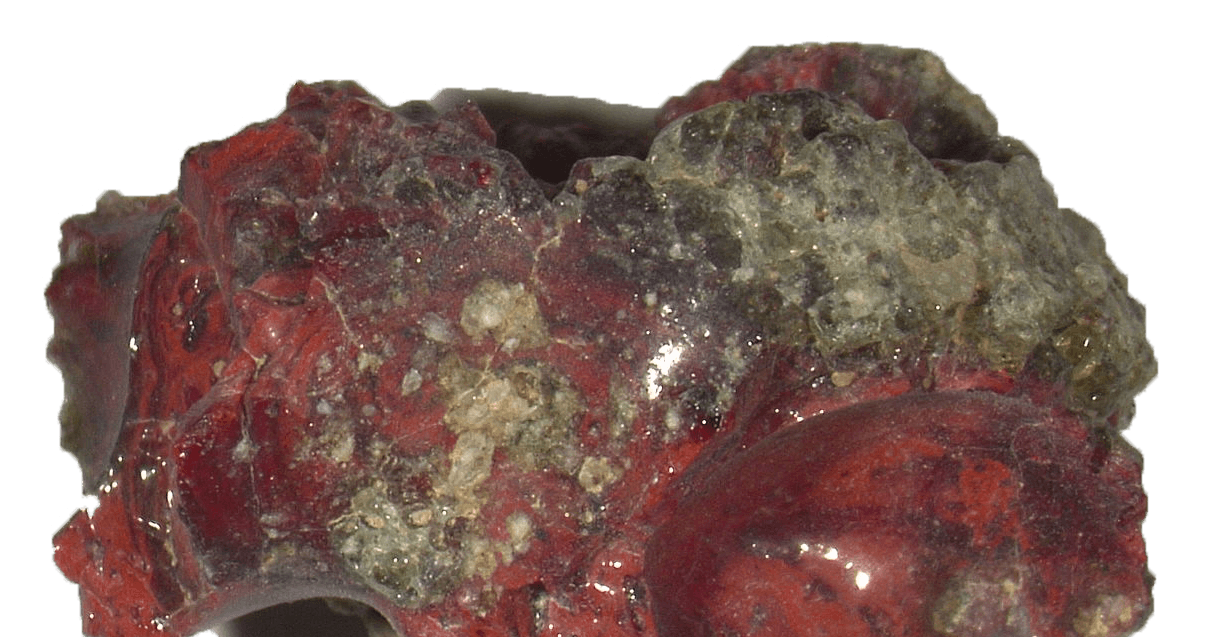
To search for the new material, the researchers focused on trinitite, a silicate glass that contains rare metal phases. Using some techniques such as
Researchers say that the new material was formed spontaneously during the nuclear explosion. This indicates that extreme conditions such as extremely high temperatures and pressures can generate new materials that are impossible to obtain by conventional methods.
natural laboratories
This discovery is even more interesting because the same explosive event also produced the formation of another very rare material: a silicon-rich quasicrystal, which was documented only a few years ago by the team of experts led by Bindi.
A quasicrystal, as Bindi told WIRED at the time, is something that isn’t a crystal, but looks a lot like a crystal. “Their peculiarity,” he said, “is that the atomic arrangement, which is not periodic, but almost so, produces incredible symmetries that lead to, among other things, amazing physical properties that are very difficult to predict.”
Establishing connections between these structures therefore helps scientists better understand how atoms organize under extreme conditions and expands the possibilities for designing new materials. “Events such as nuclear explosions, lightning strikes or meteorite impacts act as real natural laboratories,” the researchers explain. “They allow us to observe forms of matter that we cannot easily reproduce in the laboratory.”
In short, this research opens up new avenues for the development of innovative technologies, showing that even catastrophic events can lead to useful discoveries for the future.
This story originally appeared wired italia And it has been translated from Italian.
<a href