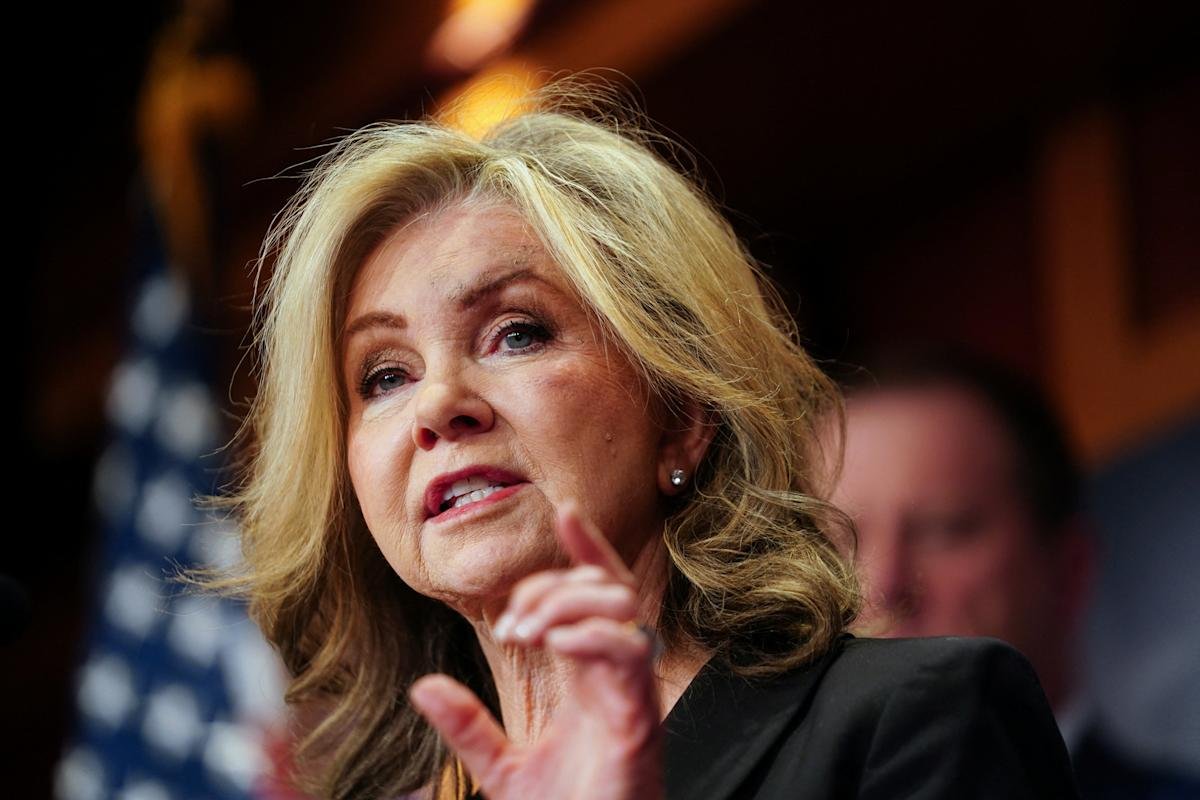
The White House has been promising a set of national rules to guide artificial intelligence since late last year, and today Senator Marsha Blackburn (R-Tenn.) fired the first volley. The senator shared a discussion draft to codify the executive order on the AI bill signed by President Donald Trump in December. Their stated goal is a policy that “protects children, creators, conservatorships, and communities from harm.”
Blackburn has called for stricter policies for AI safety, and one of the main messages in this discussion draft is that it “places a duty of care on AI developers in the design, development and operation of AI platforms to prevent and minimize potential harm to users.” It also draws a line on the many copyright infringement questions raised by the creative industries: “Unauthorized reproduction, copying or processing of copyrighted works for the purpose of training, fine-tuning, developing an AI model or creating an AI does not constitute fair use under the Copyright Act.”
Some other notable provisions are:
-
Requires covered online platforms, including social media platforms, to implement tools and safeguards to protect users under the age of 17 from harm online.
-
Protects the voices and visual likenesses of individuals and their creators from dissemination of digital reproductions without their consent.
-
Sets out new federal transparency guidelines for marking, authenticating, and locating AI-generated content.
-
Some companies and federal agencies are required to issue reports on AI-related job impacts, including layoffs and job displacement, to the U.S. Department of Labor (DOL) on a quarterly basis.
This includes eliminating Section 230, which marks the latest effort to eliminate a law that has been questioned as a potential loophole for AI companies to avoid liability when their devices cause harm. While AI critics may see positive signs here, remember that this is only an early version of the framework. Lawmakers will likely spend a lot of time negotiating the final outcome, which could differ significantly from its current state. It could end up with too many requirements, repeating this Republican complaint: “Counters the persistent pattern of bias against conservative figures displayed by AI systems by requiring third-party audits to prevent discrimination based on political affiliation.” Despite claims of repression and censorship, we have consistently found this conservative argument to be false – or at least misleading.
<a href