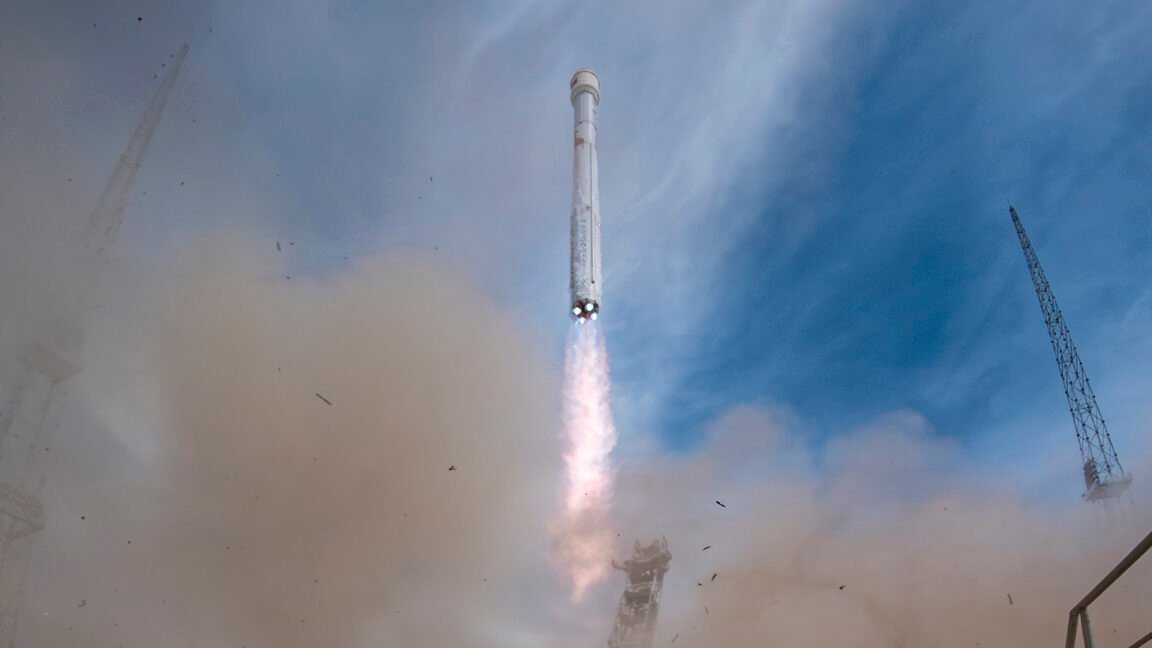
Skyroot named its initial series of vehicles “Vikram” in honor of Indian physicist Vikram Sarabhai, who is considered the father of the Indian space programme. As a test of its technology, Skyroot worked on a suborbital version of its rocket, Vikram-S, from 2020 to 2022 and launched the 6-meter rocket in November of the same year. Now nearing its launch, the larger Vikram-1 rocket has three solid-fuel stages, with the ability to place up to half a metric ton of payload into low-Earth orbit.
Russia finally tasted success with Sarmat. Russia has announced the successful test of its long-delayed Sarmat intercontinental ballistic missile (ICBM), which President Vladimir Putin now says will be operationally deployed later this year, The War Zone reports. The weapon, developed to deliver multiple nuclear warheads over long distances, has had a mixed record in testing so far and was planned to be fielded in 2020.
All this makes this week’s announcements all the more significant, although they have not yet been independently verified. The test launch took place on Tuesday from the Plesetsk Cosmodrome in the Arkhangelsk region, according to the Kremlin. About half an hour later, Russian officials said the missile hit its target at the Kura testing range on the Kamchatka Peninsula in Russia’s far east.
Righting the ship...The RS-28 Sarmat, known by NATO codename SS-29 Satan II, is Russia’s new generation heavy ICBM, intended to replace the Soviet-era R-36M2 system (SS-18 Satan). The Sarmat is a silo-launched, liquid-fueled, nuclear-armed ICBM. The missile will reportedly have multiple capabilities to defeat ballistic missile defense, but Russia has not had a good track record with the vehicle.
The first successful test launch of Sarmat took place in 2022 from Plesetsk. However, this was followed by a failed test launch in February 2023. Another test in September 2024 also failed, destroying the test silo in Plesetsk.
<a href