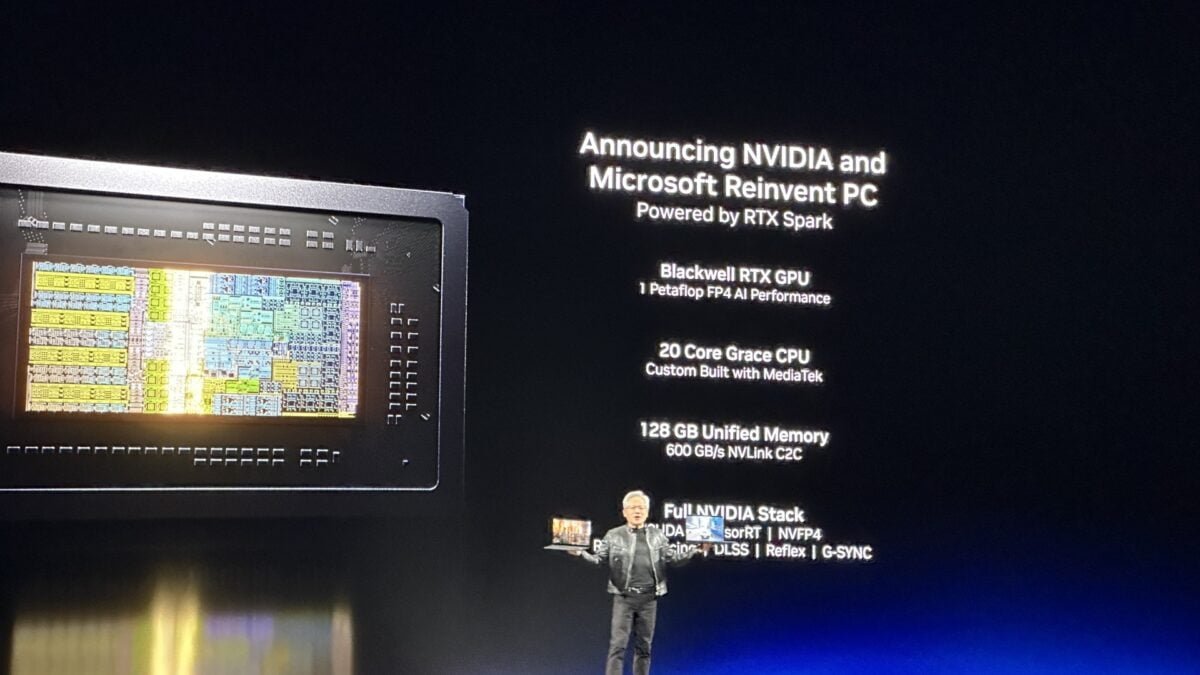
Huang claimed that Nvidia is effectively reinventing the PC with the new-age RTX Spark platform. He even said that the RTX Spark will “handle every application run by Windows.”
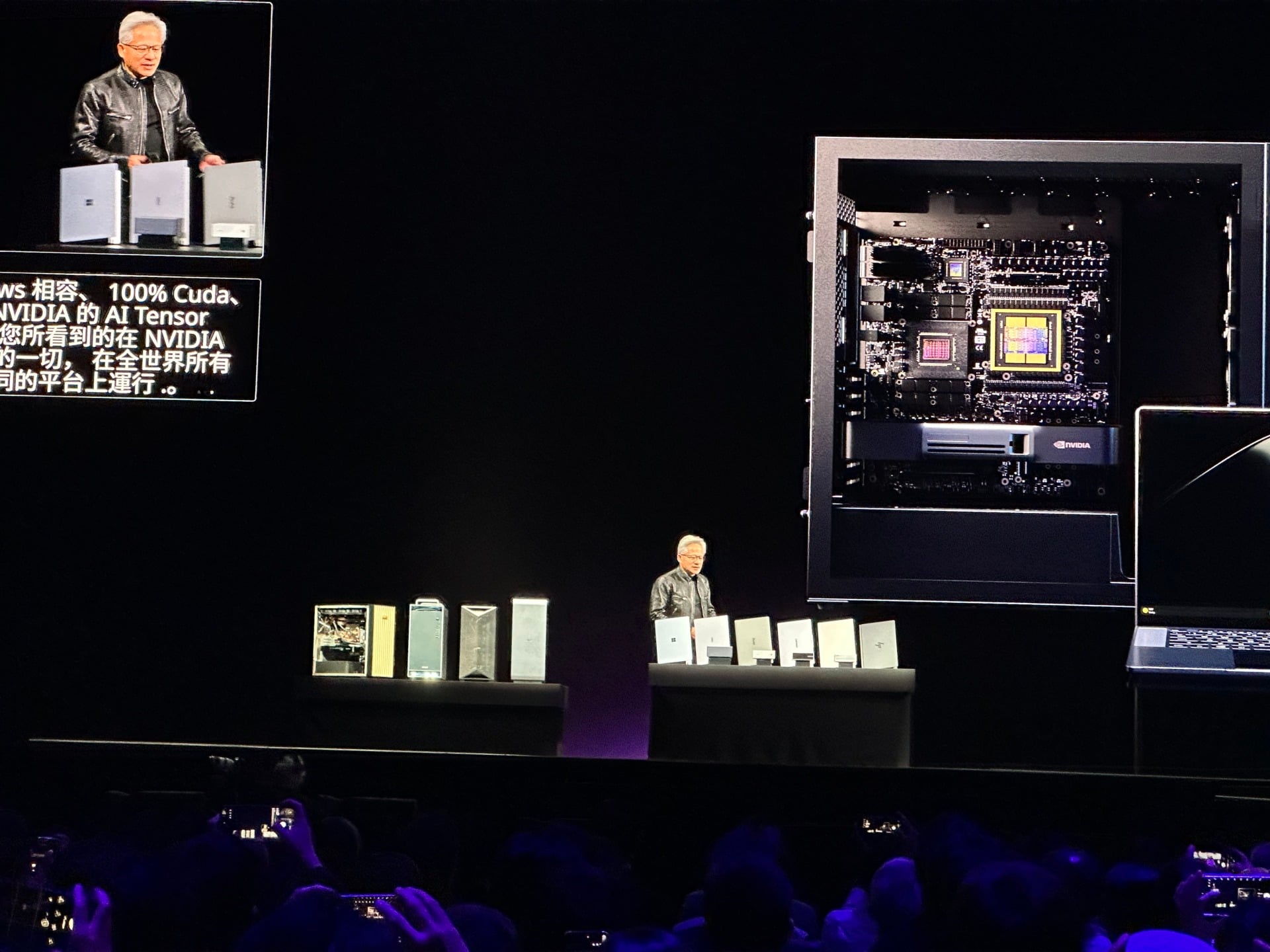
Huang walked onto the stage holding a PC in both hands and running with one hand 007 first light and another Forza Horizon 6. He claimed that both titles were doing “well”. How good, we’ll have to find out for ourselves.
The first in this stack is N1X. The N1X is exciting because it represents the company’s GPU architecture. The chip has Blackwell-series GPU, TThe Nvidia GeForce RTX 50-series discrete graphics cards use the same architecture you’ll find in many professional or gaming laptops. It uses a 20-core GPU partially developed by MediaTek. The chip supports up to 128GB of integrated memory, but beyond these figures, Huang didn’t reveal what people can expect.
But, of course, the purpose of these chips is to run AI, or at least some AI, on the device and then rely on the cloud for everything else. Nvidia promised that we’ll see laptops from practically all major PC makers, including Microsoft, Lenovo, Acer, Dell, Gigabyte, and MSI.
The N1X will be an ARM-based chip, meaning they use the same RISC-based microarchitecture as Qualcomm’s recent Snapdragon X series. Qualcomm has struggled since launching its first PC SoC (system-on-chip) to achieve greater compatibility with older x86 apps and drivers.
Nvidia may be reaping some of the fruits of Qualcomm’s hard work, but it’s not all sunshine and rainbows for Team Green. There are still inherent compatibility issues with ARM-based chips, especially when you’re dealing with older drivers.
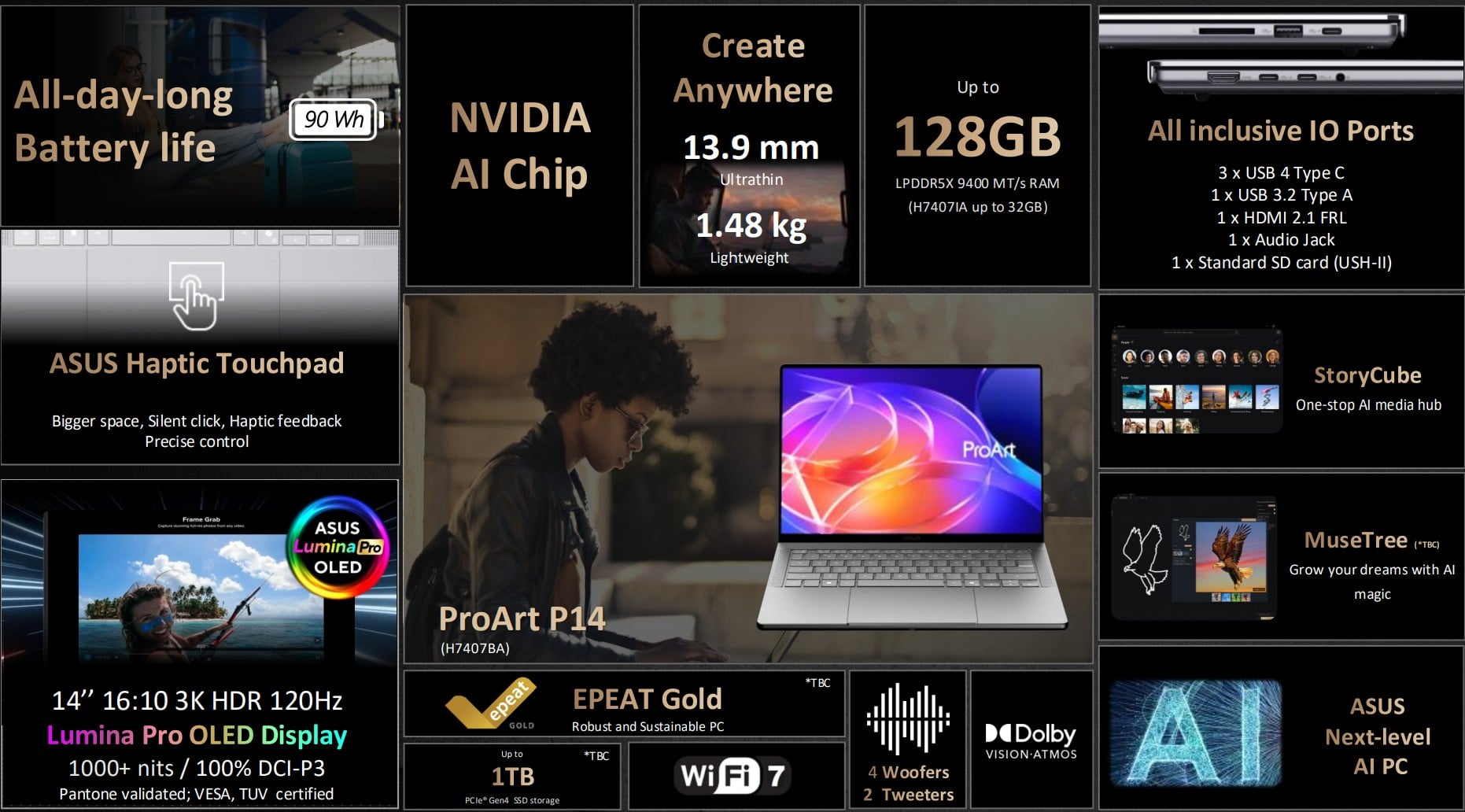
Asus has confirmed that its ProArt P14 and ProArt P16 will be among its first models to include N1X. These devices are built for professional video and graphics work, with options up to 128GB of RAM (on the larger model) and 14- or 16-inch 120Hz OLED displays with 3K and 4K resolutions, respectively.
One of these Blackwell GPUs on a single SoC could be attractive for the creative sector. It remains to be seen whether the same chip will be equally effective for gamers on the go. Similarly, Nvidia is building an entire ecosystem of Spark-type PCs, including more mini PC-like devices built to run agentive software like Nvidia’s own Nameklow. Huang also showed off a desktop built with a custom SoC, which he promised would run Windows. That so-called DGX station supports up to 748GB of memory and should be able to run 1-trillion-parameter models on the device.
It’s certainly interesting to see the world’s wealthiest company try its hand at a full-fledged laptop processor after putting all its eggs in the AI basket. Furthermore, it appears to be a step towards better graphics and greater efficiency on PC. That is, if all of Nvidia’s claims actually play out in practice.
<a href