Drone footage reveals trail of destruction in Texas
Another round of dangerous storms swept across the Plains Sunday afternoon and evening, the latest in a several-day siege of deadly severe weather. Below, you can find our live updates from Sunday night, and read our forecast article for more information about the threat of severe weather and tornadoes in the coming days.
(08:52 PM EDT) What time is nighttime?
From meteorologists Rob Shackelford and Caitlin Kaiser:
The threat of severe storms is expected to continue overnight, especially across the central plains.
Parts of southern Kansas and northern Oklahoma are likely to see strong tornadoes over the next hour or so.
The storm that produced a large and dangerous tornado in Sycamore, Kansas, continues eastward through southern Kansas and will eventually move toward Missouri. Although no tornadoes have been observed over land at this time, storms that have a history of tornadoes have the potential to produce more.
As of this evening, we have seen 41 reports of hail, 16 destructive wind reports and two tornado reports across the plains. This number will likely continue to increase overnight.
(08:41 PM EDT) Damage reported in Sycamore, Kansas
Although we don’t yet know how severe the damage is, emergency managers are reporting damage in Sycamore, Kansas, a town of about 70 people in Montgomery County, Kansas. Fire and EMS are headed to town.
(08:26 PM EDT) Tornado threat in Sycamore, Kansas
Storm chaser Charles Peak is sharing video on social media of the tornado trying to turn around in Sycamore, Kansas, which is under a PDS tornado warning:
(08:13 PM EDT) PDS Tornado Warning in Southeastern Kansas
A “particularly dangerous conditions” tornado warning has been issued for Montgomery County, Kansas, in the southeastern part of the state. Cities included in this PDS tornado warning include Sycamore and Cherryvale.
“You’re in a life-threatening situation,” the National Weather Service said. “Flying debris can be fatal to people caught without shelter. Mobile homes will be destroyed. Considerable damage to homes, businesses and vehicles is likely and complete destruction is possible.”
With the threat of tornadoes expected over the next several hours, we should break down the types of tornado warnings.
The first is a “radar indicated” tornado warning. This does not mean that a tornado is confirmed but that it could occur at any time. Take these warnings as seriously as any other warning.
The next confirmation is a tornado warning with tags. These are of two types: radar based and spotter based.
Then, there are tornadoes confirmed by Particularly Dangerous Status (PDS). These are rare and are an upgraded version of a tornado warning and suggest an unusually high risk of damage and loss of life.
Ultimately, there is a tornado emergency. This is the rarest type of warning and is only used for serious situations.
To get more information on the different types, click here.
(07:56 PM EDT) Another tornado watch issued in Missouri
From meteorologist Rob Shackelford:
A tornado warning has been issued for southern Missouri until 2 a.m. local time.
The main threats are a few tornadoes, tennis ball-sized hail (up to 2 inches in diameter) and wind gusts up to 70 mph.
The combined population under tornado watches between the four tornado watches now exceeds 4 million.
(07:33 PM EDT) Largest hailstorm ever reported
From meteorologist Caitlin Kaiser:
Hail up to 3 inches in diameter was reported in Iowa City, Texas – the largest hail report so far this evening.
There is an increasing risk of hail up to 2 to 3 inches across parts of northern Texas and southern Oklahoma, as well as the possibility of tornadoes.
Another notable report was 2 inches of hail in Madison, Kansas. Overall, there have been more than 20 hail reports so far, the majority of which have occurred in Kansas. This number is expected to increase as the night progresses.
(07:14 PM EDT) What to expect from the rest of the night
From meteorologist Rob Shackelford:
As storms continue across the Central Plains, here is a brief forecast of where the storms will be over the next few hours.
The main line of storms we’re seeing is moving through southern Kansas and into Iowa and Missouri. This series of storms has a history of severe thunderstorms and tornado warnings because of its abundant moisture and instability, the ingredients needed for severe hurricane development. The strongest storms are expected to form at the southern end of this initial line of storms.
The storms will fill in behind this initial line and move through the same areas in the coming hours, bringing the threat of high winds, large hail and even a strong tornado. This second round of storms is expected to follow in the footsteps of the first line, so heavy rainfall is possible along with the threat of severe storms.
(06:50 PM EDT) Tornado damage reported near Kansas City
Southwest of Kansas City, homes were damaged and a barn was destroyed near Edgerton, Kansas, according to local tornado reports. No further details were immediately available.
(06:32 PM EDT) Tornado watch issued for parts of Oklahoma, Arkansas
From meteorologist Rob Shackelford:
As the storm continues to move across the region, tornado outbreaks are becoming more frequent across the Central Plains.
A third tornado watch of the night has been issued for parts of northeastern Oklahoma and northwestern Arkansas. This watch covers the city of Tulsa, Oklahoma.
The main threats are a few intense tornadoes, large apple-sized hail (up to 3 inches in diameter) and winds up to 70 mph.
The combined population under tornado watches between the three tornado watches now exceeds 3.5 million.
(06:16 PM EDT) Severe storms have begun in Texas
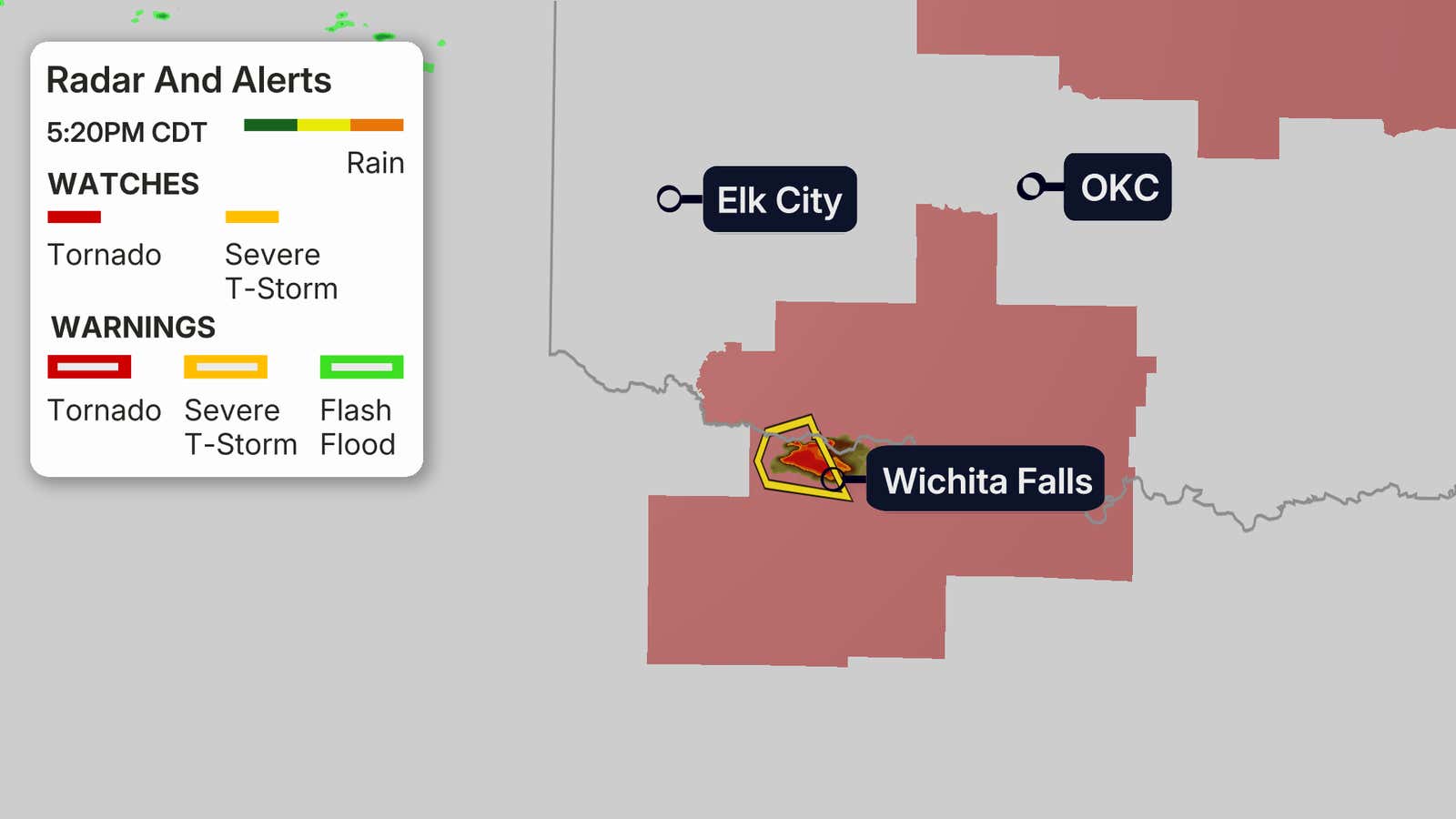
From meteorologist Caitlin Kaiser:
After a quiet afternoon, we are starting to see storms move into Texas.
The first severe thunderstorm warning has been issued for the Lone Star State for a cell headed toward Wichita Falls.
The storm can drop hail the size of golf balls and produce winds up to 60 mph.
Conditions in the tornado-affected area are expected to worsen in the coming hours.
(05:55 PM EDT) Severe Weather Safety 101
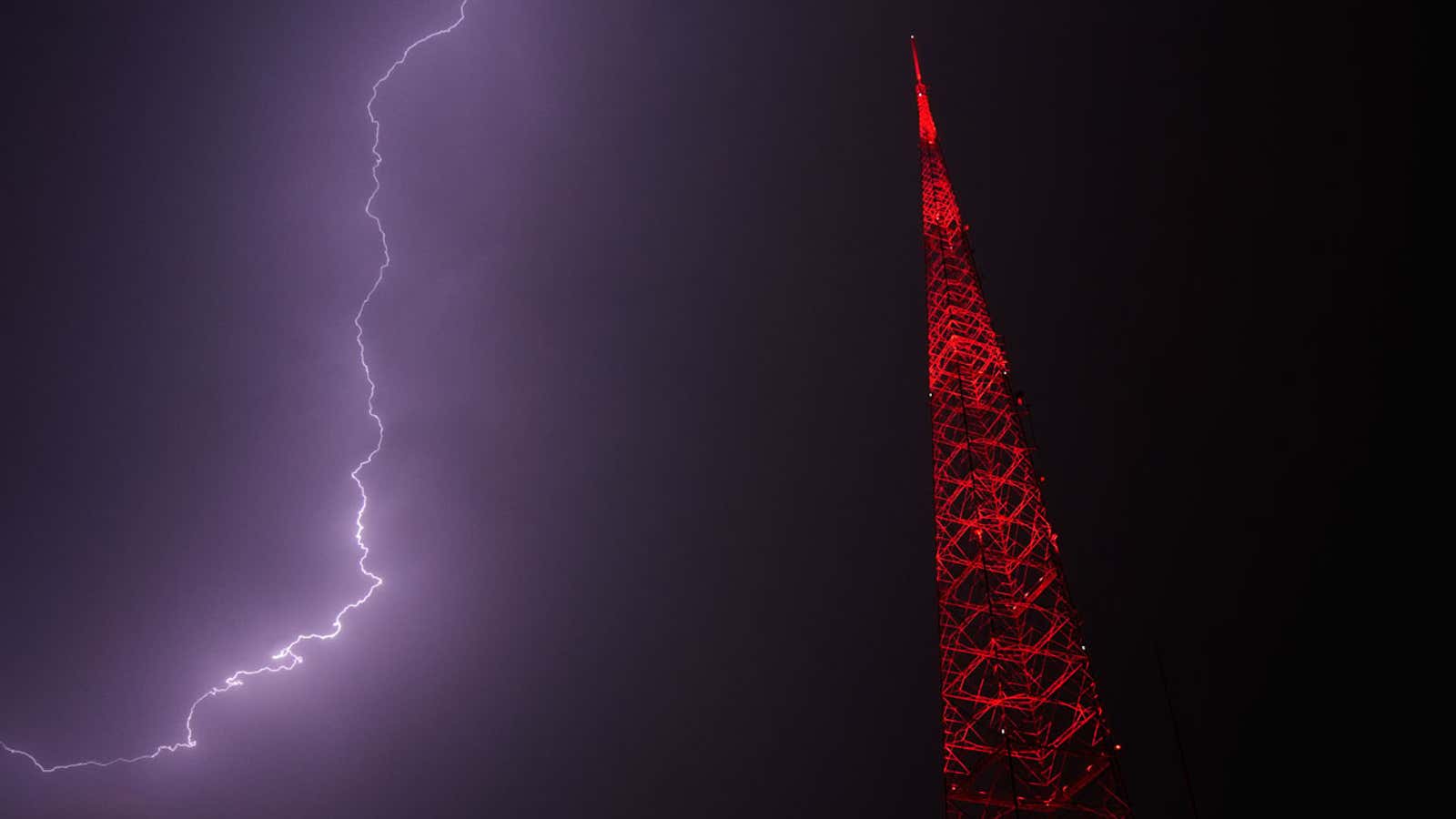
Lightning flashes in the sky behind a television tower in Kansas City, Missouri, on Thursday, April 23, 2026, as a thunderstorm moves through the area.
(AP Photo/Charlie Riddell)
Is your area at risk for severe weather tonight? It is important to be prepared before the storm reaches you.
Meteorologist Caitlin Kaiser explains the common mistakes people make here and some potentially life-saving tips to help you prepare.
(05:40 PM EDT) Severe thunderstorms moving across eastern Kansas, western Missouri
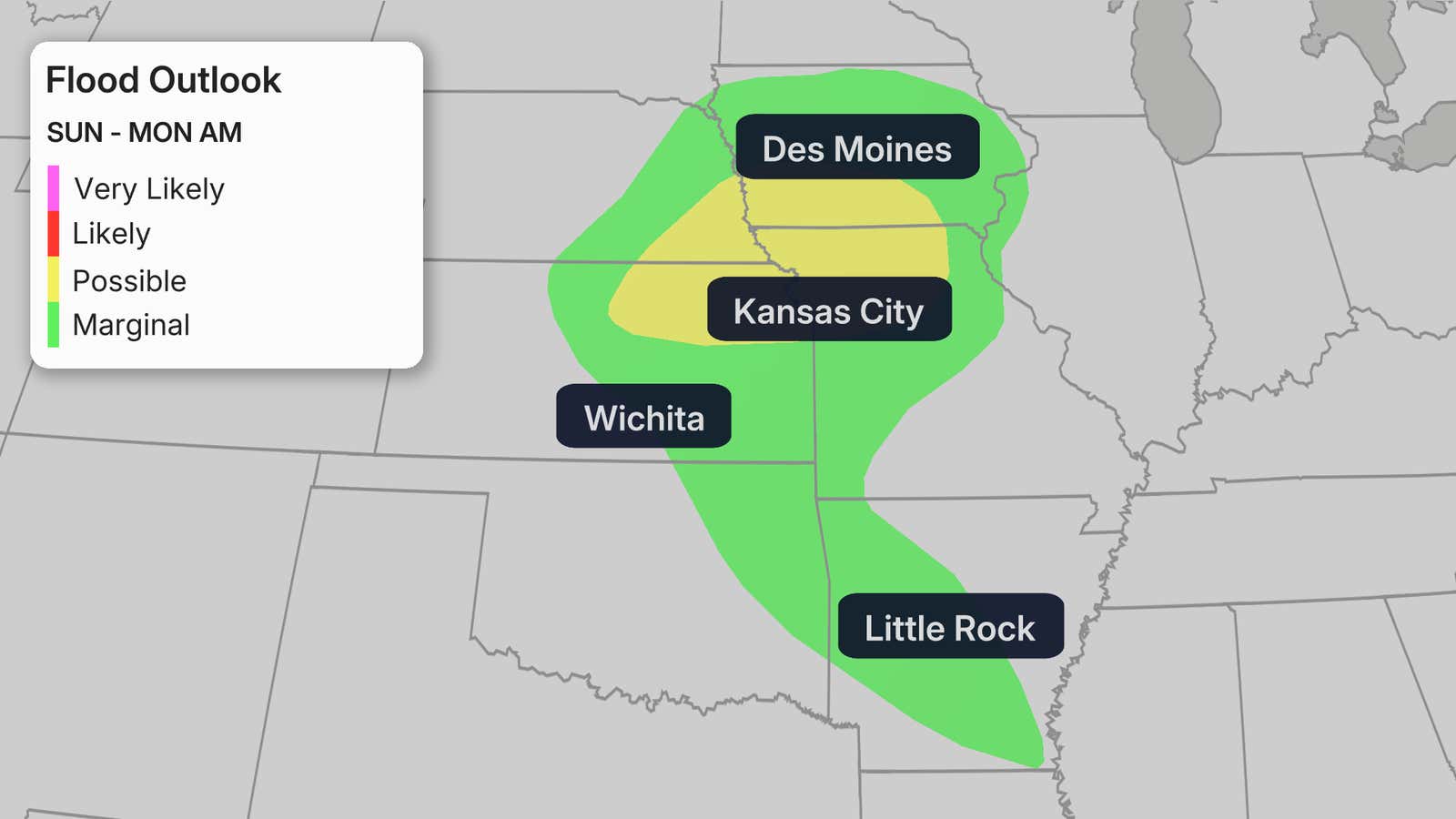
From meteorologist Rob Shackelford:
A series of powerful storms are moving across eastern Kansas, just south of Kansas City.
Severe thunderstorm and tornado warnings are issued for these storms, where winds up to 70 mph, ping-pong-ball sized hail and even tornadoes are possible.
There is a possibility of more storms following these storms, which will “train” heavy rainfall over the same areas. This means we could see flash flooding in these areas, with rainfall of 1 to 2 inches per hour possible. A flood watch is in effect for these areas, including Kansas City.
(04:56 PM EDT) Another tornado watch in effect
From digital meteorologist Caitlin Kaiser:
A tornado warning has been issued for parts of Oklahoma and Texas until 11 pm local time. The main threats are hail up to apple size, wind gusts up to 70 mph and a few tornadoes.
(04:23 PM EDT) Tornado watch issued for parts of Missouri, Kansas
From digital meteorologist Rob Shackelford:
The first tornado watch of the night has been issued for parts of Kansas and Missouri until 11 p.m. local time.
The main threats are tornadoes, hail up to the size of tennis balls and wind gusts up to 75 mph.
Here’s how you can tell the difference between a tornado watch and a tornado warning.
(04:12 PM EDT) Nighttime tornadoes are especially deadly
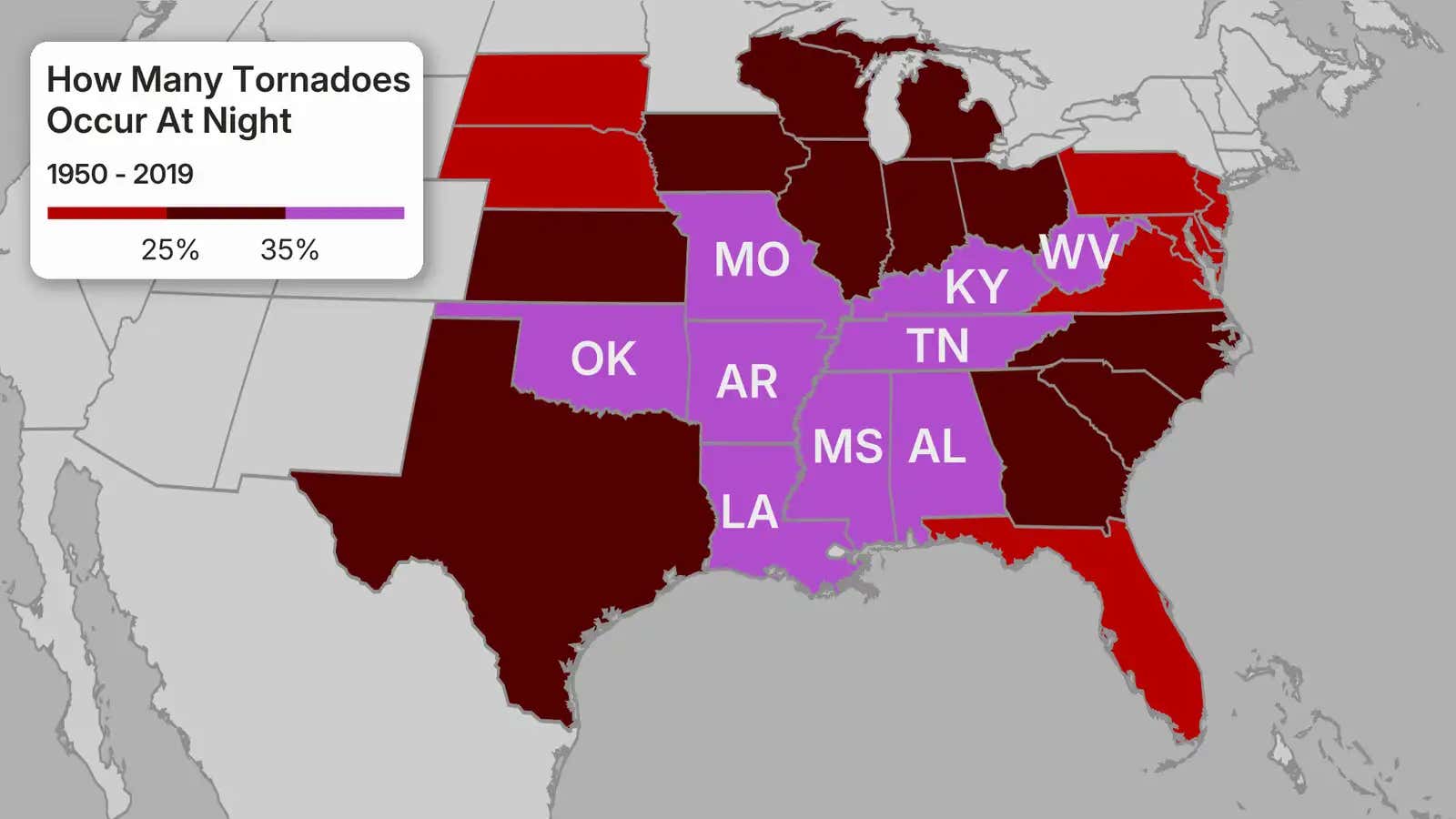
The threat of tornadoes is expected to last overnight, and a recent study confirmed that nighttime tornadoes are nearly twice as deadly as daytime tornadoes.
There are many reasons for increased risk. The most obvious: visibility. Nighttime tornadoes are illuminated only by lightning, which lasts for a few seconds.
Additionally, there are not as many storm chasers and trained spotters after dark.
The biggest reason for the increase in deaths from nighttime tornadoes is that you are sleeping while the threat is looming in your area.
Meteorologist Rob Shackelford explains everything here.
(03:56 PM EDT) How big can hail get tonight?
From meteorologist Caitlin Kaiser:
The severe weather tonight could bring the risk of widespread hail across parts of the Plains, including places like Kansas City, Wichita, Dallas and Oklahoma City.
Hail can grow as large as 2 to 3 inches in diameter. But how big is it really?
Hail 2 inches in diameter is the size of a hen’s egg, while hail 3 inches in diameter is the size of a large apple.
Find out more about hailstorms and the damage they can cause to you and your property here.
(03:26 PM EDT) More details on deadly Texas tornado
Two people died late Saturday night when tornadoes heavily damaged homes in several North Texas cities, according to the Associated Press. An EF2 tornado brought winds of 130 mph to the runway bay, killing one person. Later in the evening, an EF1 tornado with 105-mph winds killed another person on the south side of Springtown.
“Access has been difficult due to blocked roadways and downed utilities, but crews are moving forward to reach those in need,” Wise County Judge JD Clark told reporters. “Road closures in the affected area will remain in place by law enforcement to ensure safety and allow emergency crews to manage the scene without disruption.”
(03:08 PM EDT) Here’s the latest information about the afternoon start
From meteorologist Jennifer Gray:
Dangerous weather continues across the Plains and Midwest over the weekend and into the coming week, which has already claimed two lives. Significant risk of tornadoes, hail and damaging winds will remain through Tuesday.
There is a threat of supercell storms across the central and southern Plains, especially parts of Kansas, Nebraska and Missouri.
With enough warm, humid air and strong wind gusts, these supercells can produce strong tornadoes, in addition to very large hail and damaging wind gusts. Cities like Kansas City and Oklahoma City need to be on alert.
The threat of a less severe storm could hit cities like Dallas, San Antonio and Austin with massive hail and damaging winds.
<a href=