what a week? Beloved nature communicator David Attenborough turned 100 on Friday, and scientists named a newly discovered species of wasp in his honor. Wasp called from Chile Attenbronculus tau, It’s not the first to be named after Attenborough – it’s somehow joined the list of over 50 creatures named after him, which seems about right. Also this week, NASA shared an update about its Curiosity rover, which encountered some problems during an attempt to collect a sample on Mars, and the agency released a new batch of photos from the Artemis II mission.
Read on to learn more about those and other science stories we found interesting this week.
curiosity gets into a little trouble
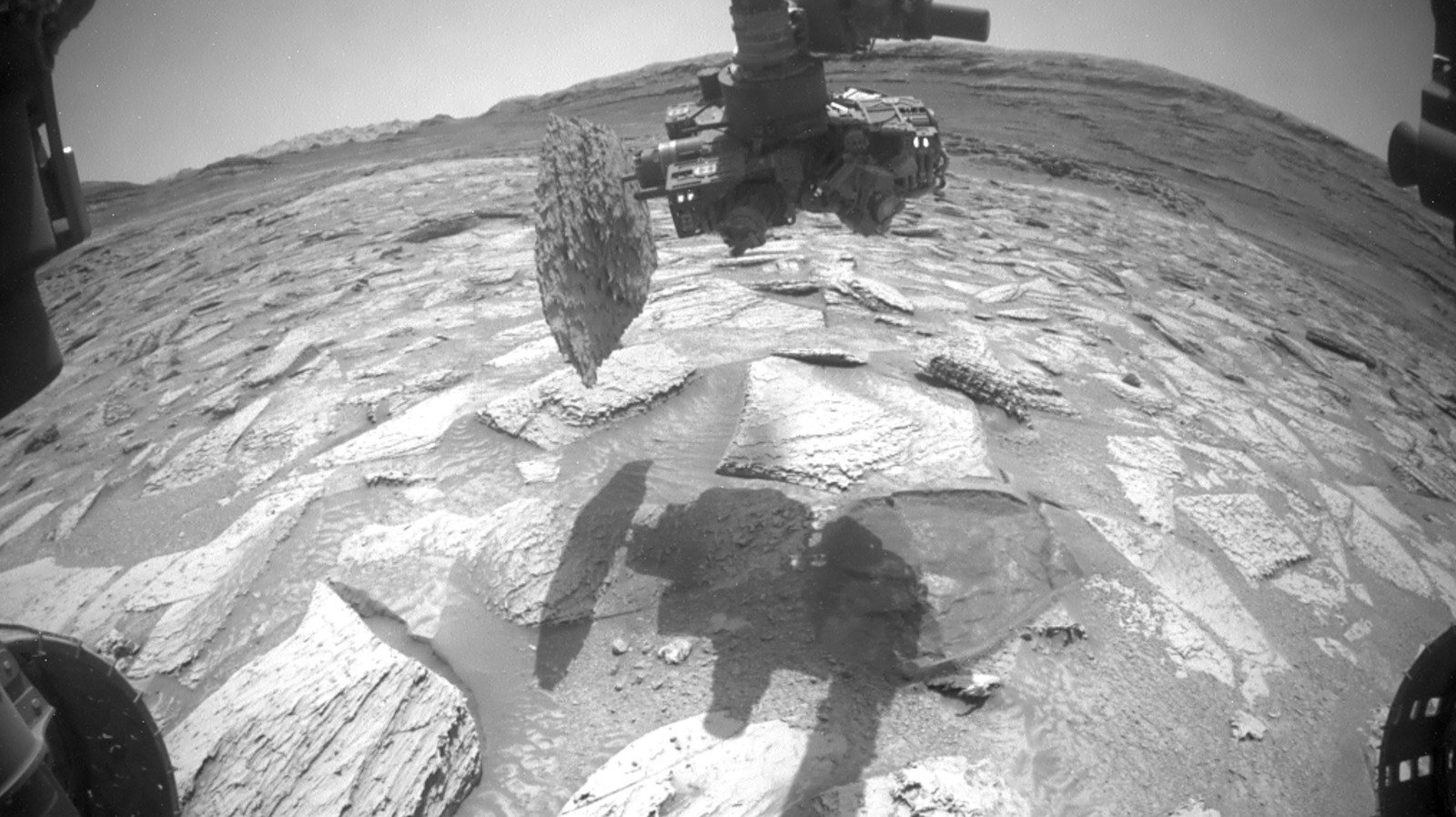
NASA’s Curiosity rover recently found itself in a pickle after drilling into some Martian rocks that proved unexpectedly sticky. In an incident captured by Curiosity’s cameras on April 29, the rover can be seen with a slab of rock on its drill bit after attempting to collect a sample. According to NASA, the rock, called Atacama, was about 1.5 feet wide and weighed about 30 pounds. Somehow in the last 14 years the rover has been exploring Mars, this had never happened before, and moving the drill to free the rock didn’t work.
“When the rover retracted its arm, the entire rock rose above the ground, hanging from a fixed sleeve around the rotating drill bit,” NASA explained in a blog post. “Drilling in the past has fractured or separated upper layers of rock, but no rock has ever been attached to a drill sleeve.” After a few more attempts over the next few days, the team was able to loosen the rock “by tilting the drill higher, rotating and vibrating the drill, and rotating the drill bit”. In photos taken on May 1, we can see the rock finally falling and breaking away from Curiosity.
Curiosity has taken dozens of samples from the surface of Mars by drilling into rock, as shown in this image from 2024 (trypophobia warning). After drilling, the rover collects powdered rock and analyzes it with its Sample Analysis (SAM) and Chemistry and Mineralogy (CheMin) instruments on Mars to determine composition. Now that its brief mishap has been resolved, it can get back to work.
What’s going on at the bottom of an Arctic Fjord?
The Arctic seafloor isn’t exactly an easy place to see, but thanks to a long-running research program at Inglefield Bredding in northwest Greenland, we’ve got a glimpse of what life is like deep beneath the surface. As part of this effort, researchers deployed a video camera and hydrophone at a depth of 260 meters in the fjord for a week in August 2025 to assess the seafloor environment and biodiversity. Their findings were just published in the journal one moreWith some incredible photos and videos (don’t be alarmed by the terrible color, it’s due to the red light they used underwater).
The team recorded a total of 478 different organisms, including comb jellies, arrowworms, snailfish and shrimp. In one clip, a snailfish can be seen drifting backwards while passively riding the current, which researchers described as “weird”. Watch the highlights here.
 Podolsky et al.
The instruments also picked up the sounds of nearby narwhals, which were present every day of the study except one, as well as the sound of icebergs breaking and melting and the sounds of boat engines. The footage also shows piles of what is known as “sea snow” or organic debris such as feces and dead animal and plant material. It’s a bit strange to think about, but many creatures living in the deep sea depend on this material falling from high water.
Based on the success of their observations, the researchers say their approach could be a viable way to study these deep Arctic ecosystems. “So far, there have been few direct underwater observations in the Arctic for ecological research,” the authors wrote. “With video setups becoming accessible, more studies would be beneficial to fill this knowledge gap.” He says the compact, portable mooring with video recorder could be “an important tool for exploring the Arctic seafloor.”
Take a look at 12,000+ photos of Artemis II
 NASA
NASA
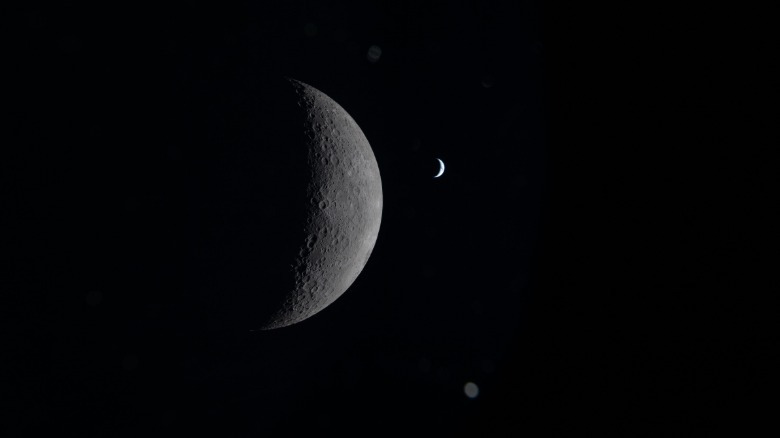
NASA this week released thousands of photos taken during last month’s Artemis II mission around the moon. You can find them all here. In classic government website fashion, the UI is kind of useless, but if you have some time it’s worth clicking through the catalog. While their target was the Moon, and there are plenty of great shots of the Moon both up close and far away, there are also some really stunning images of Earth and the Milky Way.
Before you go, be sure to check out these stories, too:
<a href