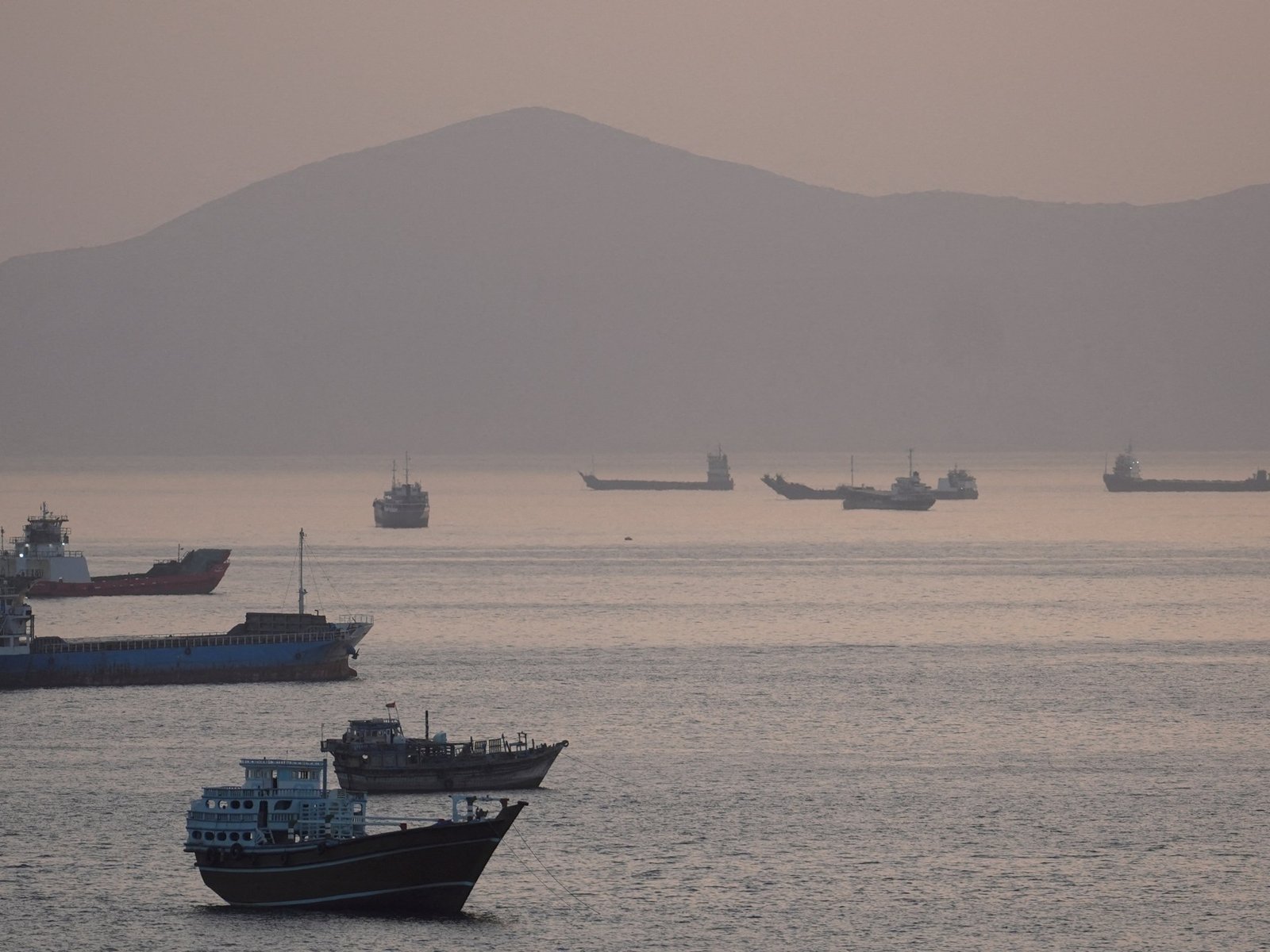
The IRGC statement posted on Twitter on Wednesday did not specify what the new procedures included. It thanked the owners and captains of the ships for respecting Iranian regulations when passing through the strait.
Recommended Stories
4 item listend of list
The announcement comes a day after US President Donald Trump halted the “Project Freedom” military operation to guide stranded ships through the waterway.
On Tuesday, the US President, citing “great progress” towards a comprehensive agreement with Iran and saying it came at the request of brokered Pakistan, said he would pause the operation for the time being. Trump said, however, that the US naval blockade of Hormuz remains in effect.
In a social media post on Wednesday, Trump said the war could end if “Iran agrees to capitulate”.
“Assuming that Iran agrees to deliver what has been agreed upon, which is probably a big assumption, the already famous epic fury will end, and the highly effective blockade will allow the Strait of Hormuz to be kept open to all, including Iran,” he wrote on Truth Social.
“If they don’t agree, then the bombing begins and, sadly, it will be at a much higher level and intensity than before,” Trump said.
Iran’s Foreign Ministry spokesman said Tehran was reviewing the US proposal and the mediator would convey its views to Pakistan, the Iranian Student News Agency reported.
Pakistan Prime Minister Shehbaz Sharif, who is mediating between Tehran and Washington, said he was “grateful” for Trump to halt the operation.
Sharif said on Wednesday that the pause would “go a long way in advancing regional peace, stability and reconciliation during this sensitive period”.
Iran began blockading the strait after the US and Israel launched a war on February 28, in which Iranian forces attacked several ships, laid sea mines and charged fees for safe transit through the narrow channel.
Iran on Tuesday established the “Persian Gulf Strait Authority”, a new body to regulate and organize the passage of ships, whether military or commercial, in an effort to permanently change the status of the strait.
“Practically, what the Iranians are saying is that this is not a temporary new maritime regime; they are talking about a permanent change in the status of the strait, and they say they are not going to give it up,” said Al Jazeera’s Resul Sardar Attas, reporting from Tehran.
‘Project Freedom’ stopped
The US operation in the strait failed to bring about any significant resumption of traffic through the waterway, while provoking a new wave of Iranian attacks on ships in the strait and targets in neighboring countries.
In the latest attack, French shipping group CMA CGM said one of its ships, the San Antonio, was attacked while transiting the Strait of Hormuz, resulting in injuries to crew members and damage to the ship.
The company said on Wednesday that the incident had occurred a day earlier, adding that the injured crew had now been evacuated and given medical care.
The attack is the latest disruption to the vital shipping route during the Middle East conflict. The war has blocked hundreds of ships, stranded thousands of people and brought about 20 percent of global oil trade to a near standstill.
Government spokeswoman Maud Bregon said the incident showed that the situation in the Strait of Hormuz remains dangerous, but that France was not specifically targeted in the attack.
“France was not the target in any way,” Bregon told reporters.
CMA CGM reported last month that one of its ships was the target of warning shots in the strait, although no crew members were injured.
The French firm, the world’s third-largest container shipping line, has indicated that 14 of its ships were stranded in the Gulf at the start of the US-Israel war over Iran. One ship, CMA CGM Kribi, exited the Strait of Hormuz in early April.
loss of revenue
A prolonged disruption in the Strait of Hormuz is likely to impact the economies of the Gulf countries.
“The Gulf economies are relatively strong. We’ve heard from countries like Saudi Arabia, the United Arab Emirates and Qatar, which have large reserves. But with the rise in oil and gas prices, you still have to ship your product out and that’s having an impact,” said Al Jazeera’s Asad Baig, reporting from Doha, Qatar.
“According to Goldman Sachs, Gulf Cooperation Council (GCC) states are losing about $700 million a day from not being able to move oil.”
<a href