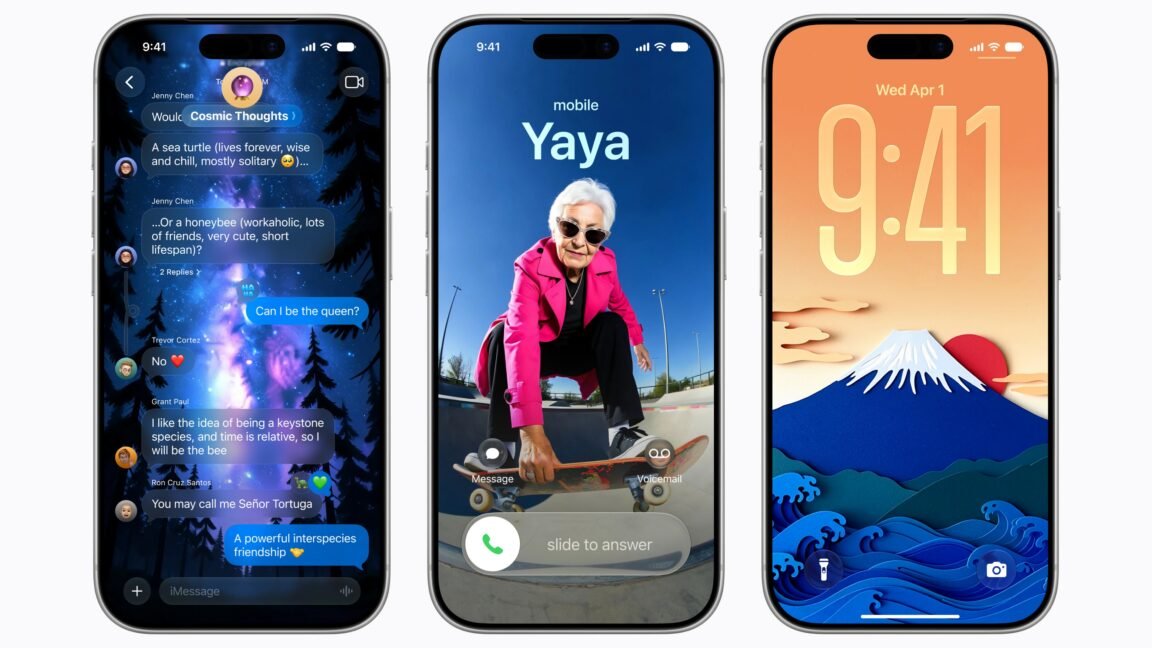
If you’re using older iPhone or iPad hardware and you’re hoping to run Apple’s latest operating system, this year’s releases bring mostly good news. The iOS 27 update will run on all iPhones that can run iOS 26, up to the iPhone 11 and the second-generation iPhone SE. The iPadOS 27 update is a little less generous, dropping support for the 3rd generation iPad Air, 8th generation iPad, and 5th generation iPad mini (all of these devices used the older A12 Bionic chip; supported devices now use the A13 or better).
Apple says owners of older devices should see performance improvements in iOS 27, thanks to the updated CPU scheduler. This scheduler was apparently already included with newer iPhones, but with this release it has been ported back to older devices.
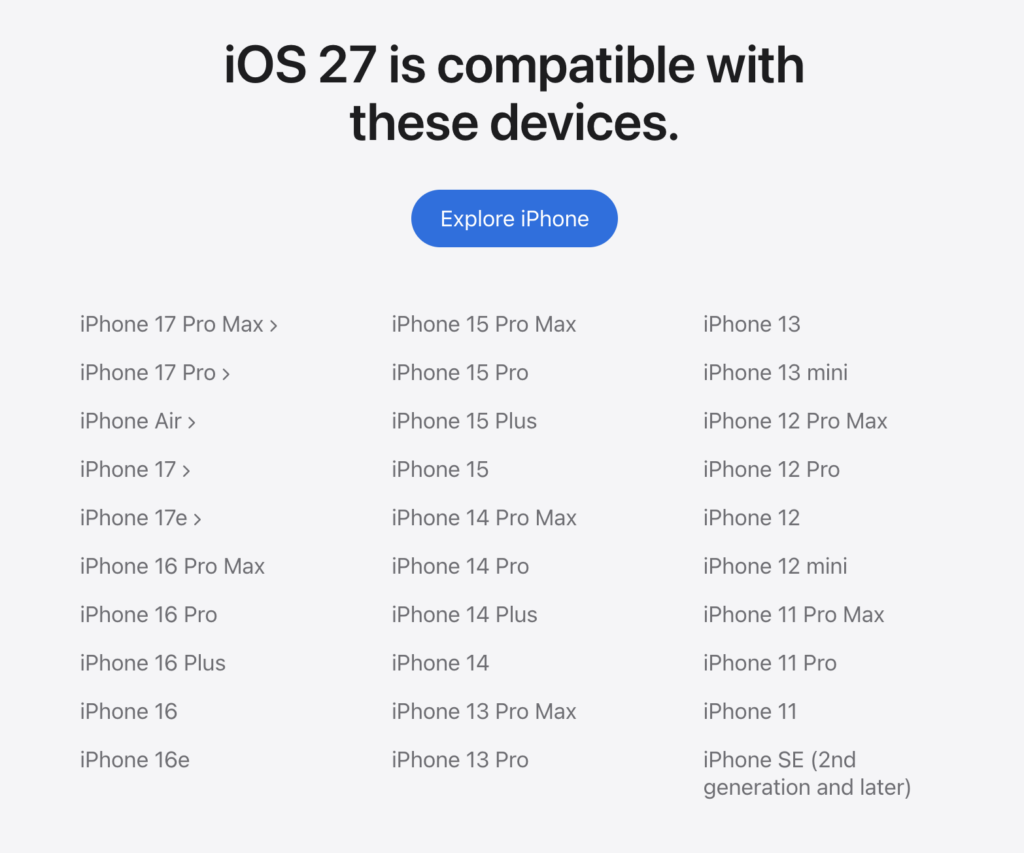
Apple’s iOS 27 compatibility list.
Apple
Apple’s iOS 27 compatibility list.
Apple
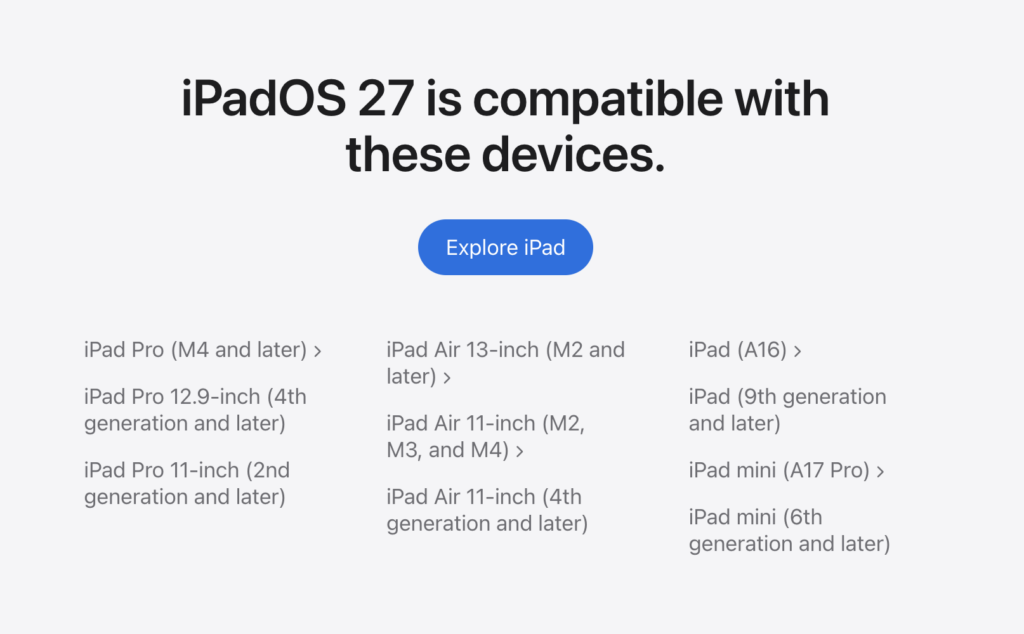
Apple’s iPadOS 27 compatibility list.
Apple
Apple’s iPadOS 27 compatibility list.
Apple
Apple’s iOS 27 compatibility list.
Apple
Apple’s iPadOS 27 compatibility list.
Apple
But many of the new features mentioned by Apple require support for Apple Intelligence, which is limited to newer devices with at least 8GB of RAM. Apple Intelligence still requires an iPhone 15 Pro or newer, iPhone 16 or newer, or iPhone Air. On iPad, support requires an iPad Air or iPad Pro with M1 or newer.
And the more capable local models announced by Apple have even more restrictive system requirements. They require a new Apple Silicon chip and at least 12GB of RAM, which means they’ll only work on the iPhone 17 Pro, iPhone Air, the recently introduced M4 iPad Air, or the M4 or M5 iPad Pro.
The first iOS 27 and iPadOS 27 developer betas are available now, and a version for public beta testers will arrive in July. The final release will be in the autumn, as is usually the case.
<a href