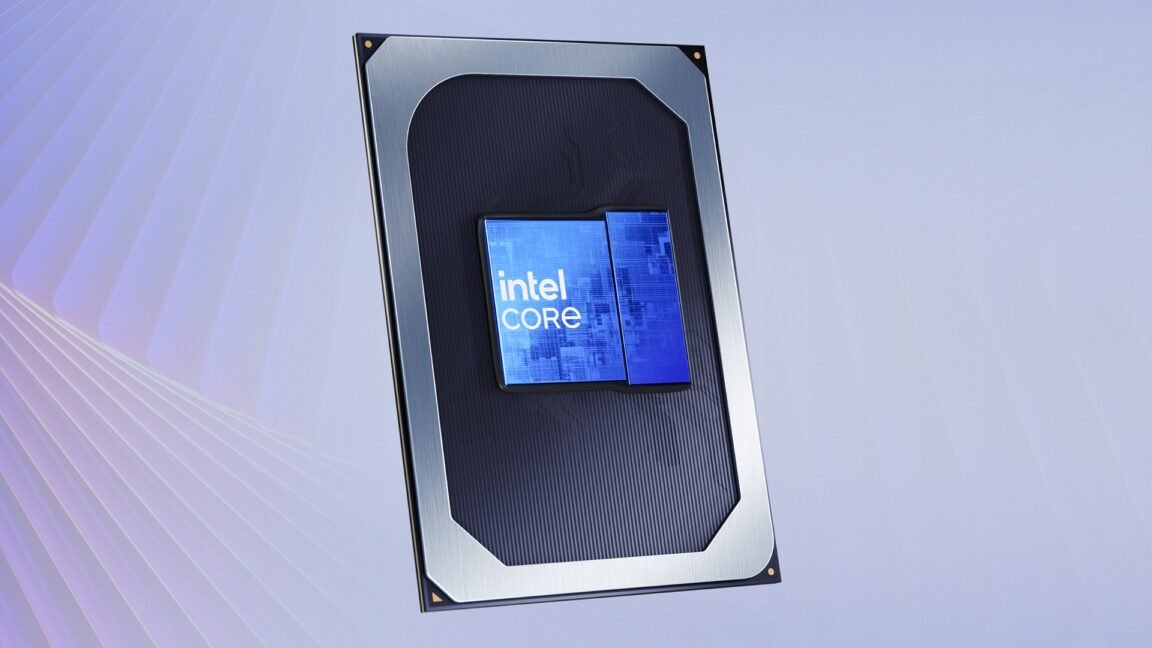
Intel’s Core Ultra laptop CPUs have been its flagship since retiring the old generation branding scheme and i3/i5/i7/i9 branding a few years ago. The Core Ultra Series 1, Series 2 and Series 3 processors were new CPU and GPU designs and new manufacturing techniques.
Intel has also offered non-Ultra Core CPUs, but these have never been particularly interesting, mostly because both the Series 1 and Series 2 chips were based on Intel’s older Raptor Lake architecture. Raptor Lake was the code name for the 2023 13th generation Core family, and most versions of Raptor Lake were the same silicon used for the 2022 12th generation Core CPUs.
But the naming and naming of Raptor Lake obviously couldn’t last forever. Intel’s new, non-Ultra Core Series 3 processors are the new silicon, a return to the days when you could expect high-end and midrange Intel chips to incorporate similar advancements despite their performance differences.
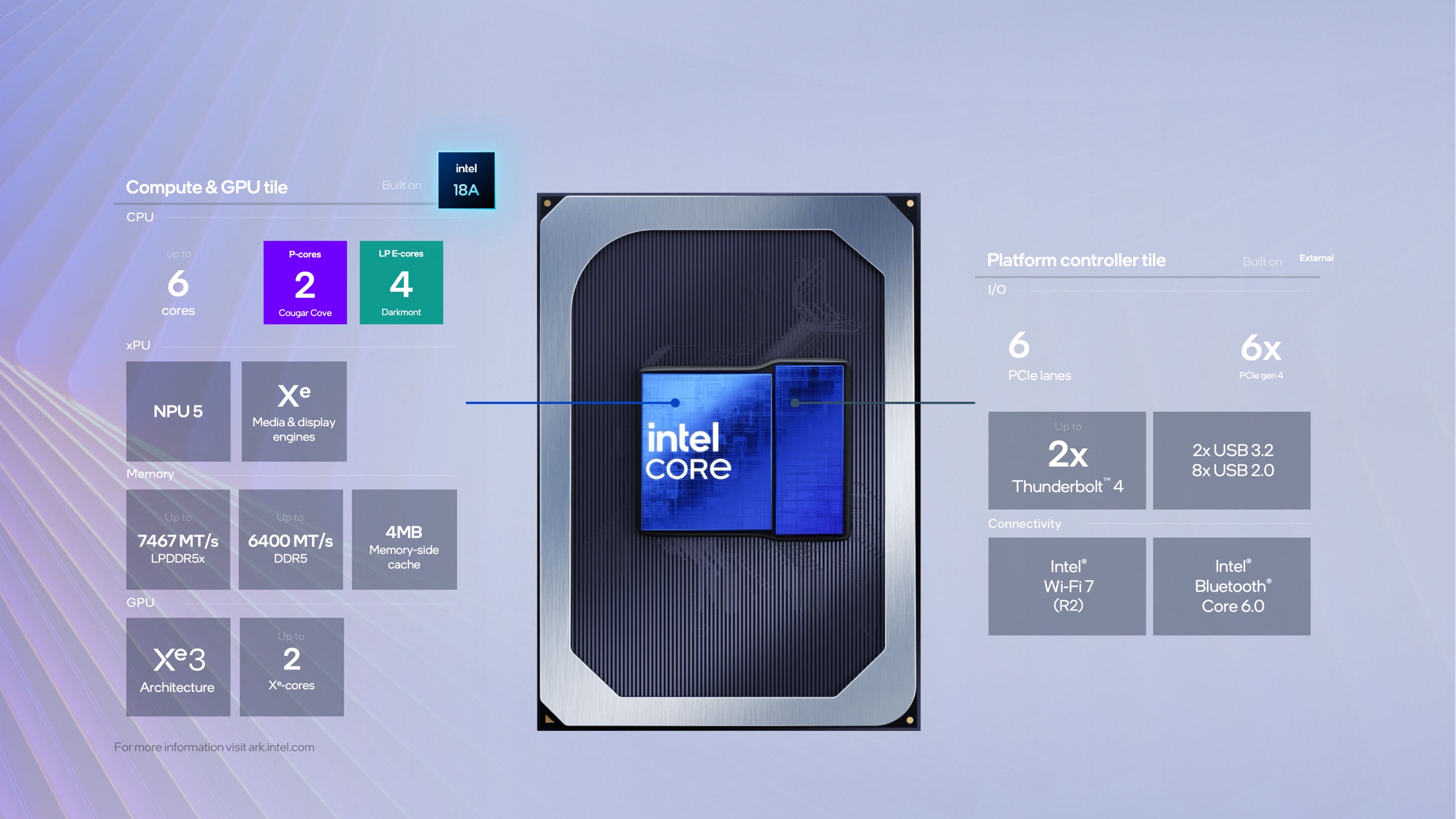
“Wildcat Lake” has some similarities with Panther Lake, but is a slower and simpler design.
Credit: Intel
“Wildcat Lake” has some similarities with Panther Lake, but is a slower and simpler design.
Credit: Intel
These new chips are codenamed “Wildcat Lake” and while there are some similarities with the Core Ultra Series 3 CPUs (aka Panther Lake), the non-Ultra CPUs use a simpler design with much less computing power.
Each chip uses two silicon tiles: a compute tile consisting of a CPU with two Cougar Cove P-cores and four Darkmont E-cores; An integrated GPU with one or two of Intel’s latest generation Xe3 GPU cores; And (typically) an NPU is capable of up to 17 trillion operations (TOPS) per second. A separate platform controller tile built on an unspecified non-Intel process offers two Thunderbolt 4 ports, Wi-Fi 7 and Bluetooth 6.0 connectivity, and six PCIe 4.0 lanes for external connectivity. All chips support up to 48GB of LPDDR5X-7467, or up to 64GB of DDR5-6400, and use a base power level of 15 W and a maximum boost power level of 35 W.
<a href