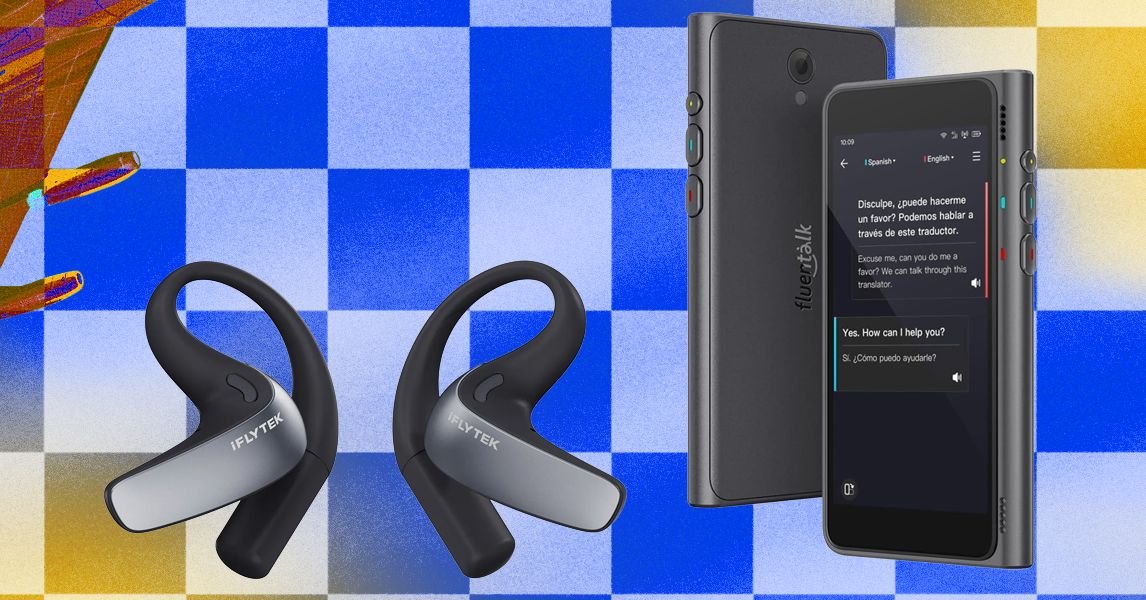
Earbud-based translators are the next game changer. These are over-ear devices that come in a pair – one for you, one for your conversation partner. Each of you wears one earbud, and your phone’s software handles the translation both ways, behind the scenes. The best earbud translators make for the most natural way to communicate with someone in a foreign language that I’ve found to date, though handhelds have more capabilities. (Earbud-based designs seem to be the direction the industry is going.)
When shopping for a handheld translator, be wary of expensive subscription plans. Many devices come with free service, but only for a short period of time, and reimbursing the service after the trial period ends can be expensive. Check the fine print before purchasing. Also, make sure the translator you are considering covers all the languages you need. Note that although some translators support hundreds of languages, they may be limited in the language pairs they can translate between.
Who really needs a handheld language translator?
Then, if you need casual translation for occasional or emergency use, you can definitely make do with a free translation app on your phone. Translation tools are best for frequent users who expect to have frequent conversations with speakers of other languages over time.
Those scenarios might include attending a reunion with your Swedish wife’s extended family or a lengthy workshop series with colleagues from other parts of the world. These tools are also often marketed to first responders who need to quickly assess a situation when human translation services are not available.
In situations where you may need to communicate with multiple speakers, each of whom speaks a different language, a portable translator can be even more useful. If you expect your travels to take you to remote areas or completely off the grid, where Internet service may be poor or non-existent, a translator can be a helpful tool to have in your travel bag, even if you expect to only use it for emergencies.
Which handheld language translators are best?
After testing several handheld translators, I recommend this trio. Which one you choose will depend on how you want to use it—and what your budget is.
Best stand-alone translator
The Timekettle T1 is a reasonably affordable and very pocketable device that can easily be added to your travel kit. Built for two users to communicate, each with access to half the screen, the T1 translates each side of the conversation – written or spoken – into that user’s own language. It can be a little tricky to use: A color-coded button on the side of the device or a virtual button on the 4-inch touchscreen must be pressed to tell the T1 which language to listen to. But once you understand it, the system works very well.
Accuracy is solid, and translations are fast, coming up in under a second. One challenge I had with the device was related to its small screen. Like most translators, the T1 supports photo-based translation via its 8-megapixel camera, but the 540 x 1080-pixel screen is too small to display much text at once. Also, while the unit includes a global eSIM with two years of free service ($50/year after that), I encountered a lot of signal lag, even in my own home. The good news is that if Wi-Fi is available, that works too. The unit also supports 31 offline language pairs (10 in combination with English), so if you plan in advance, service issues may not be an issue.
Best translator earbuds

iFLYTEK
iFLYTEK AI Translation Earbuds
If you want to upgrade your translation experience and make it more immersive, you may want to invest in a pair of earbuds, which give you a more personal and natural way to communicate. As described above, the reputable way to use these is to keep one on yourself and give the other to your friend. An app on your phone handles the two-way translation back and forth.
These 12-gram on-ear earbuds are the best I’ve tested, mainly because once configured, they work completely hands-free. There’s no need to click a button or tap the side of your head whenever you’re ready to speak: The earbuds understand who’s talking and when, and they work at remarkable speed, almost like a professional interpreter whispering in your ear.
<a href