
Photograph: Scott Gilbertson
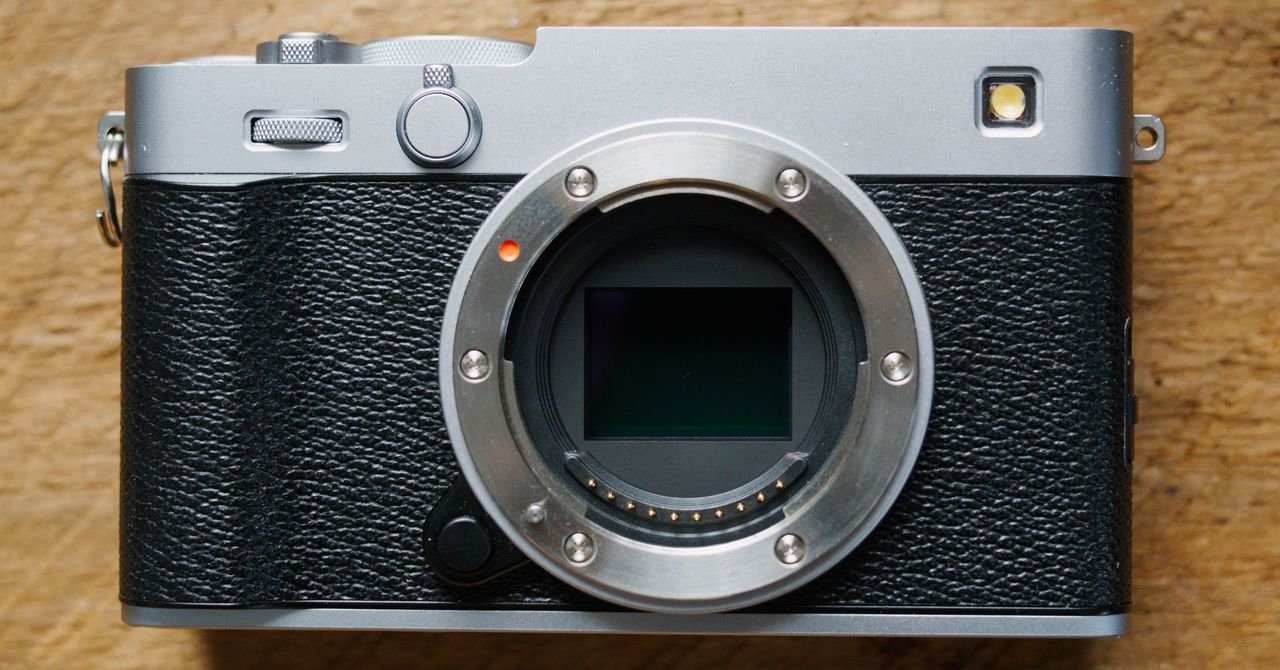
The overall build and build quality of the X-E5 is also a huge leap forward. Unlike the X-E4, which felt plasticky, the X-E5 is solid and well built. The top plate is now a single piece of aluminium, which goes a long way in giving the camera a sturdy, high-end feel. If you throw a pancake lens in there, like the new 23mm f/2.8, it feels more like the X100, which wasn’t true of the previous model.
My favorite thing that the X-E5 stole from the X100 is the fake self-timer switch on the front of the camera. (The I set the self-timer as a shortcut to access the ISO to solve that problem.
In other button updates, the X-E5 regains the X-E3’s twin, press-able command dials (the X-E4 was missing the rear dial). The AF mode switch is also back, allowing you to switch between manual focus, single-shot autofocus or continuous autofocus via a button instead of having to go into a menu.
Simulacra and simulation

Photograph: Scott Gilbertson

Photograph: Scott Gilbertson
Then there’s the new dedicated film simulation dial.
Let me say upfront that I would have less problems with this dial if there was an ISO dial. It would still be embarrassing in some vague way that I can’t put my finger on, but eh, I could stick a piece of tape over it and forget about it. But there’s no ISO dial, and adding a hardware dial for something as trivial as switching film simulation, while not having a dial for something you change all the time (ISO), is inexcusable in my book.
<a href