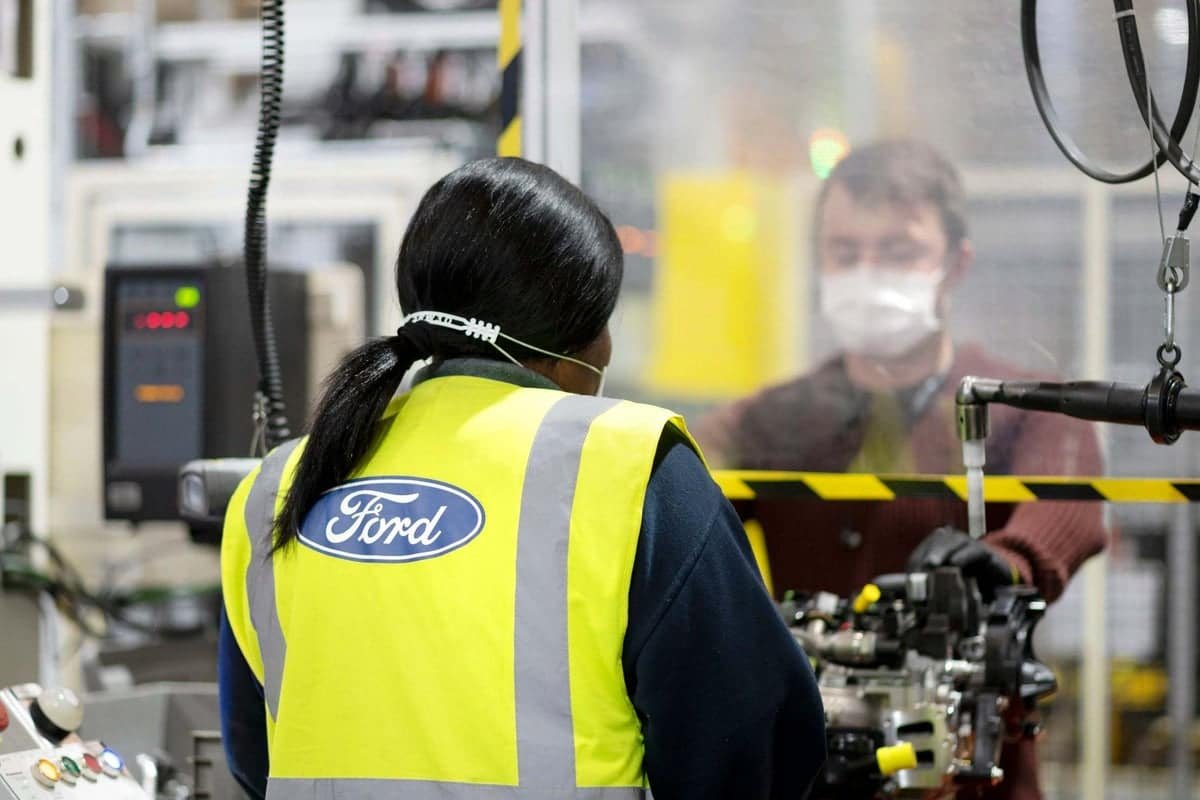
Ford has admitted to rehiring hundreds of human workers after its aggressive AI adoption strategy failed.
The US automaker has hired more than 350 experienced engineers, known internally as “grey beards,” over the past three years to address mistakes made by automated systems.
The staff will lead quality reviews after automation issues cost the company billions of dollars, Bloomberg reported, while some employees will also help improve and train AI systems.
“We were relying more and more on automated quality systems and were not getting the desired results,” said Kumar Galhotra, Ford’s chief operating officer.
“We brought technical experts back in and they look for failure points before a part reaches the plant floor.”
Ford was increasingly relying on AI-powered inspection systems to streamline production and address quality control issues, although the firm acknowledged that AI lacked nuanced judgment when it came to complex problems.
After rehiring experienced engineers, Ford experienced a significant improvement in its quality standards.
According to the latest J.D. Power Initial Quality Survey, an annual automotive benchmark that measures the quality of new vehicles, Ford remains at the top among mainstream brands – the first time it has achieved this milestone in 16 years.
Ford continues to have quality problems with its older vehicles, and it remains the most recalled automaker in the US, although executives have attributed this to past issues related to automation rather than the reassignment of humans.
The company said it will not abandon the use of AI, but now plans to use it with human oversight and experience.
“Artificial intelligence is a fantastic tool, but it’s only as good as the information you use to train it,” said Charles Poon, Ford’s vice president of vehicle hardware engineering.
“Over the years, we have not paid as much attention as we should to the experience of our most knowledgeable engineers who have been with us through multiple product cycles.
“Mistakenly, we thought that just by introducing artificial intelligence and meeting the design requirements we had, it would create a high quality product.”
<a href