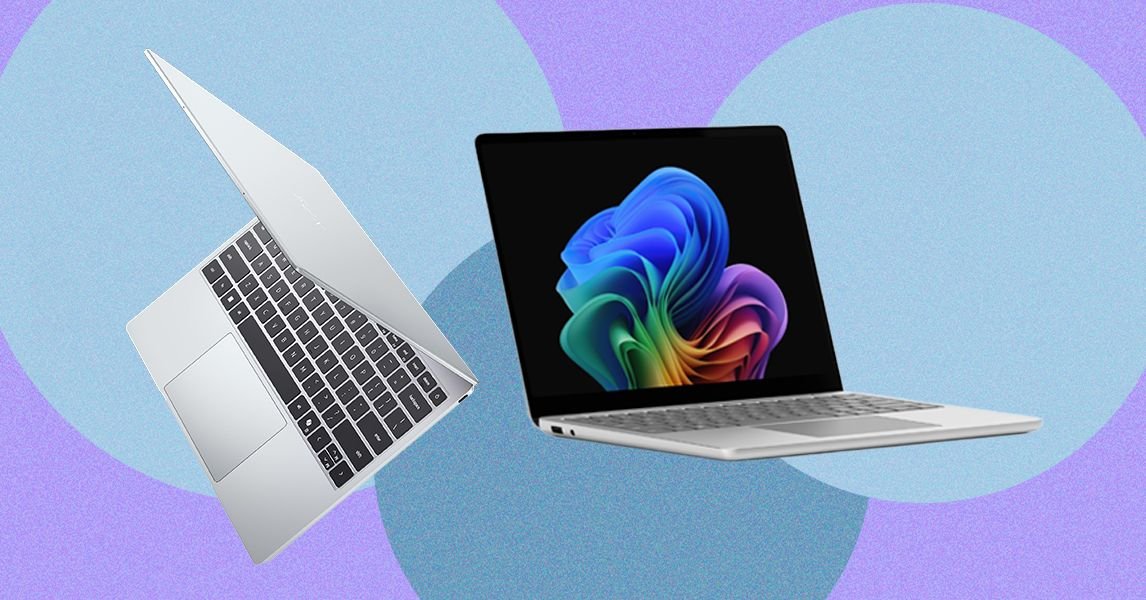
Yet it’s only $699 (or $599 for students). The XPS 13 makes the same trade-offs as the MacBook Neo. First of all, it starts with only 8 GB RAM and 256 GB storage. It also starts with the slower Intel Core 5 processors (note: not Intel Core Ultra). I’d be interested to know how performance and battery life compare to the MacBook Neo, but Dell is clearly taking notes from Apple, which used a slower iPhone chip in the Neo instead of an M-series laptop-grade processor.
However, the nice thing about the Dell XPS 13 is that you can scale it up appropriately. The MacBook Neo is limited in both storage and memory, but the XPS 13 can be configured with up to 32GB of RAM and 1TB of storage.
I’ve been testing a ton of $500 to $600 laptops lately from companies like Acer, Lenovo, and HP, many of which take a more traditional Windows approach to take on the MacBook Neo by offering better specs at lower prices. They all have 16GB of RAM and also use more powerful chips. But no one can challenge MacBook Neo in display quality and chassis materials. That doesn’t mean there’s no room for something like the HP OmniBook 3, but it doesn’t play to the same audience as the Dell XPS 13 and MacBook Neo.
the wrong direction
Inevitably there will be some company that thinks it can ride the success of the MacBook Neo without understanding what’s so special about it. Last week, Microsoft announced two versions of its Surface Laptop for business PCs: a high-end 13.8-inch model and a cheaper 13-inch device. The 13.8-inch model is a more standard refresh, implementing Intel’s new Core Ultra X7 368H Panther Lake chip — and most notably, it still starts with 16GB of RAM.
The smaller 13-inch model is where things become problematic. Despite the starting price of $1,200, this configuration only comes with 8 GB of RAM. Don’t be fooled by the price, as business PCs always come with up charges. The initial RAM is an eyebrow-raising specification. Unlike the new Dell XPS 13, Microsoft isn’t offering it with a thinner chassis and upgraded screen — it’s just giving you less computing power and calling it good.
And to be fair, there is this “alternative” 8GB model coming later this year, separate from the 16GB and 24GB versions. But it’s hard to imagine that Microsoft would be willing to sell 8GB laptops in 2026 if Apple hadn’t paved the way for it. While there is no 2025 Surface Laptop 13 for business for direct comparison, the consumer version of the Surface Laptop 13 debuted with 16GB of RAM. This sounds like straight up generational decline.

<a href