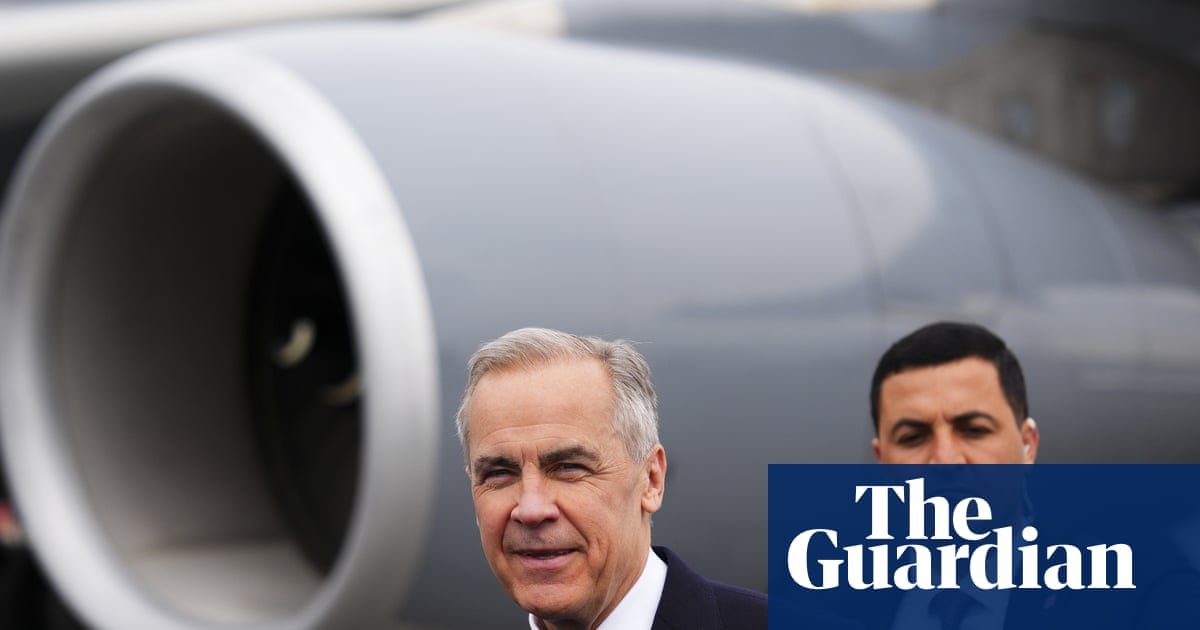
Canada will become the first non-European country to attend a meeting of the European Political Community when Prime Minister Mark Carney attends Monday’s summit of the group of more than 48 countries in Yerevan, Armenia.
Carney has said he is determined to build a new network of trade and diplomatic alliances after the damage to US markets under Donald Trump. Their presence would also represent a demonstration of Western support for Armenia in its efforts to distance itself from Russia at a time when Washington’s approach toward Moscow adversaries such as Ukraine is at its most ambiguous. Canadian diplomats have rejected suggestions that Ottawa might seek EU membership.
Trump’s plan to pull out more than 5,000 troops from Germany next year and the economic impact of a prolonged US-Iran conflict on Western economies will be among the main topics of discussion in Yerevan. Armenia shares a border with Iran, but unlike neighboring Azerbaijan, it has not alleged that Iranian missiles fell on its territory.
Yerevan was chosen to host the EPC – a body that has supported the French president, Emmanuel Macron, and which also includes the UK – to give Armenia a chance to demonstrate its strong ties with Europe, and therefore continue its slow decoupling from its former ally Russia.
Armenia’s Prime Minister, Nikol Pashinyan, has pursued a policy of diversification that in practice is gradually drawing his country into the European fold. His Civil Contract Party faces parliamentary elections in June, and is hoping for a landslide victory so he can continue efforts to make peace with Azerbaijan. Pashinyan faces three opposition parties more sympathetic to Russia.
Thomas de Waal, a senior fellow at Carnegie Europe who specializes in the Caucasus region, said: “European leaders will have to walk a fine line in Yerevan. As they hold what looks like a pre-election rally for Pashinyan, they will also have to have a bigger conversation about building a stronger and less polarized Armenia.
“The country itself deserves full European attention. It is on the brink of a painful but transformative peace deal with Baku that would reopen its two long borders with Azerbaijan and Turkey, closed since the 1990s. The country also has a historic opportunity to reduce its overdependence on Moscow as the war in Ukraine distracts and drains Russia.”
The day after hosting the EPC, Yerevan is expected to see the bloc offer additional funds to promote democracy as well as visa liberalization as a result of the first bilateral summit between Armenia and the EU on Tuesday. When the EU Enlargement Commissioner, Marta Kos, visited the country in March, she declared that “Armenia and the EU have never been so close”.
The country of 3 million people signed a comprehensive partnership agreement with the EU in 2017. Last year, it adopted a law formally declaring its intention to apply for membership of the bloc, taking the country in a very different political direction to neighboring Georgia.
Armenia is a member of the Russia-led Eurasian Economic Union and the Moscow-led Collective Security Treaty Organization (CSTO) alliance, although it ended its membership in 2024.
Vladimir Putin said in April that Armenia could not be a member of both the EU and the CSTO. “It is absolutely impossible by definition,” the Russian president told Pashinyan.
Macron has been a prominent champion of closer European-Armenian relations and his presence at the Yerevan summit is being accorded state-visit-level importance. He is also expected to attend a concert in Gyumri, Armenia’s second-largest city
The EPC, which was set up in 2022, brings together full members of the EU and a large group of countries outside the Brussels bloc, including the UK, Turkey, Norway, Switzerland, Iceland, Serbia and the other Baltic countries.
The group has no formal secretariat and often avoids lengthy communiques in favor of bilateral leader-to-leader discussions.
The EPC faced skepticism at its inception, with some fearing that it was a concession to countries that had been waiting years for their applications for EU membership to progress. But the willingness of European leaders to attend the summit shows that the gatherings serve a purpose.
With Trump’s support, Armenia and Azerbaijan brokered a peace deal in Washington last August. The Azerbaijani side said it would sign the peace agreement in its entirety after Armenia changes its constitution, claiming it includes territorial claims against Azerbaijan, which Armenian officials have repeatedly denied.
<a href