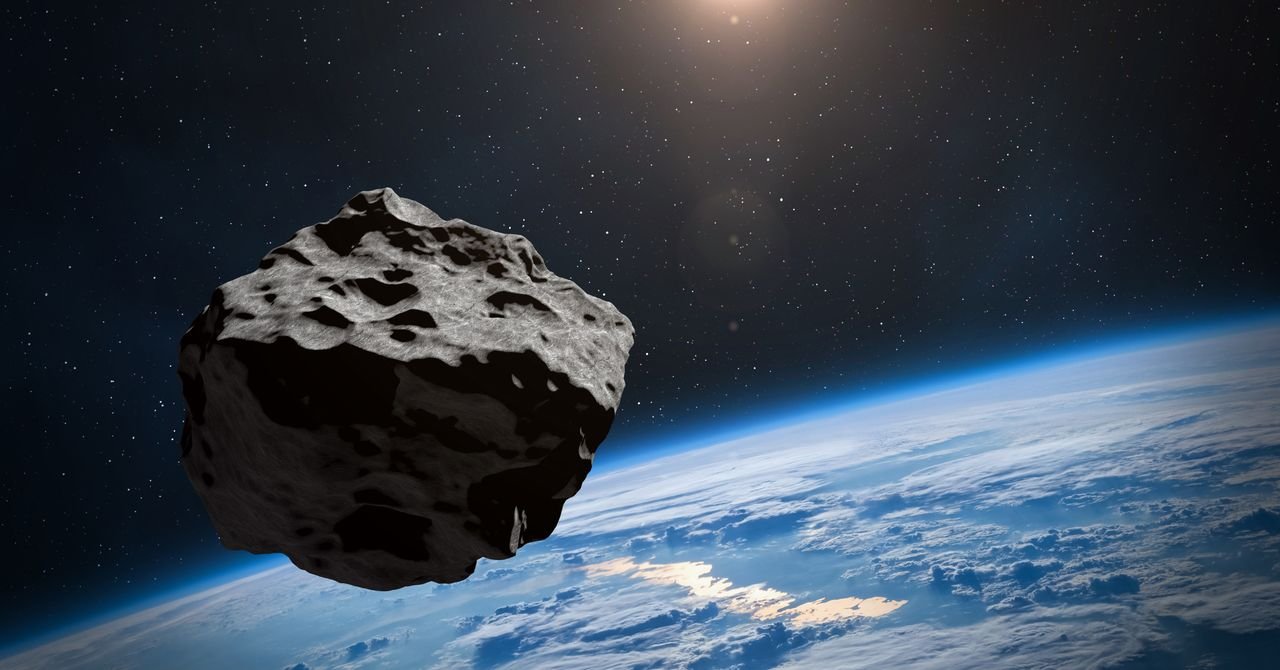
The object will pass at a minimum distance of about 57,000 miles from Earth – very close to the Moon, which is about four times farther. Of the tracked near-Earth objects, or NEOs, that will fly by the planet in the next few months, this will be the closest it will come.
There are thousands of NEOs, which are generally of no particular concern; Of course, they are monitored, and some have a (small) risk of impacting Earth in the next few years. According to New Scientist, 2026 JH2 is not among them, despite the widespread use of hyperbolic words like “grazing” to describe how close it will come.
an apollo-type neo
Asteroid 2026 JH2 is technically an Apollo-type NEO according to the classification system, which takes into account the characteristics of the object’s orbit. An Apollo-type object has a semi-major axis larger than Earth’s (and therefore more than one astronomical unit, the distance that separates us from the Sun), and a perihelion (shortest distance from the Sun) of less than 1.017 astronomical units. (All asteroids and comets with a perihelion less than 1.3 astronomical units are considered NEOs.)
Its path, while notable, is not rare; In fact, in the last year, many things have come very close, if not closer. Notable among these was, for example, the passing of the small asteroid 2025 TF at a distance of about 260 miles from the Earth’s surface.
This story originally appeared on WIRED Italia and is translated from Italian.
<a href