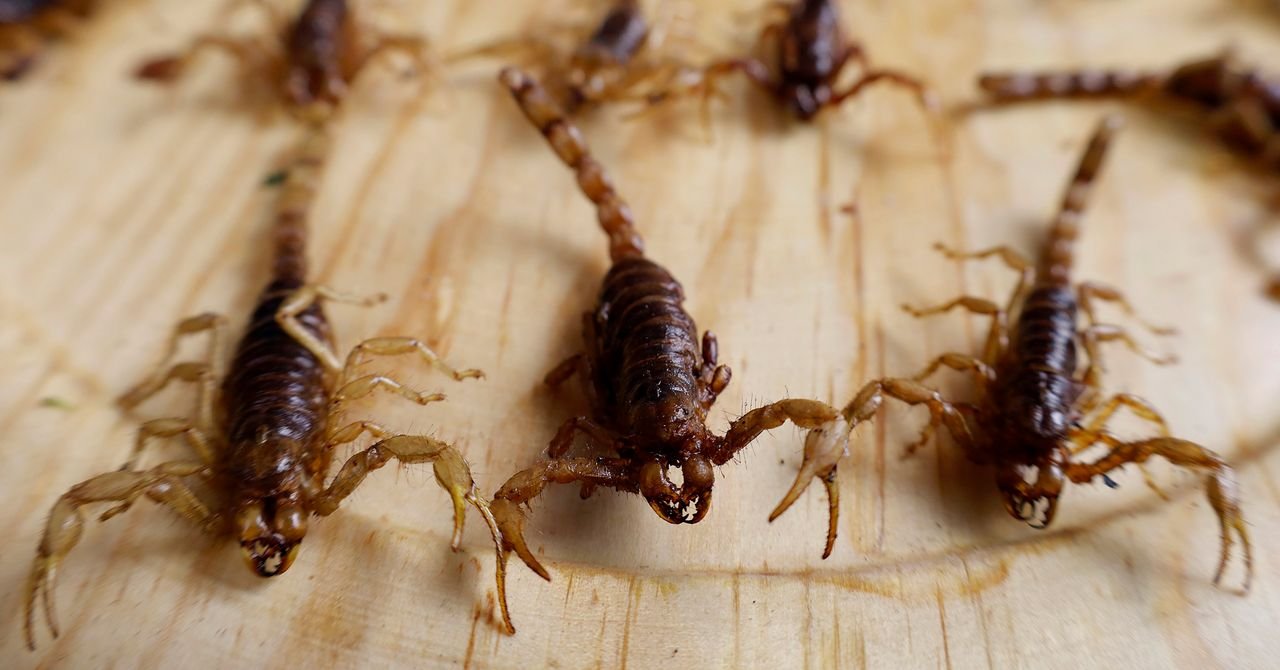
A team led by Lorival Domingos Posani Poste from the Morelos campus of the Institute of Biotechnology created two drugs that demonstrated efficacy against the bacterium. Mycobacterium tuberculosisresponsible for tuberculosis, as well as against Staphylococcus aureusA microorganism that can cause a variety of clinical complications in hospital environments ranging from skin infections to potentially fatal diseases such as pneumonia, meningitis, septicemia and endocarditis.
Antibiotics were obtained from scorpion venom diplocentrus melisiiNative of the state of Veracruz. The team was able to isolate two colorless molecules called benzoquinones – heterocyclic compounds that do not contain amino acids – from the arachnid’s venom.
These molecules have a special property: when they come in contact with air, they oxidize and change color. One turns blue and the other red. This behavior allowed scientists to determine their chemical structure, synthesize them in the laboratory, and evaluate their biological properties.
The results showed that blue benzoquinone has the ability to act against tuberculosis-causing bacteria, while red benzoquinone is effective against the bacteria. Staphylococcus aureus. Richard Zere, a renowned expert in the field of physical chemistry and professor of chemistry at Stanford University, participated in the process, which strengthened the validation of the findings.
The project also included the collaboration of Rogelio Hernández Pando of the Salvador Zubiran National Institute of Medical Sciences and Nutrition, who evaluated the effects of blue benzoquinone in a mouse model with induced tuberculosis. After tests, they concluded that the molecule worked as a highly effective antibiotic against this disease.
Subsequently, the team conducted further tests and found that the same substance was also able to kill other bacteria, such as Acinetobacter baumanniiA highly resistant opportunistic pathogen often associated with infections in the blood, urinary tract, lungs, and wounds, especially in hospitals.
Molecules derived from scorpion venom have already been patented in Mexico and South Africa. Currently, researchers are working on the development of nanoparticles that act as stabilizers and protection systems, so that antibiotics can be safely administered into the body.
According to Posani Poste, the next step is to conduct clinical trials, although he admits there is a considerable investment involved. For this reason, they expressed interest in collaborating with a national pharmaceutical company to bring the compounds into mass production.
From sauce to antibiotic
At the same time, another group at the UNAM Biotechnology Institute identified a peptide in habanero chile bell pepper that has the ability to fight opportunistic bacteria that can cause serious infections, especially in patients with weakened immune systems.
This project, led by Gerardo Corzo Burguet together with Georgina Estrada Tapia from the Yucatán Scientific Research Center, focused on bacteria. pseudomonas aeruginosaIt is considered a high-priority pathogen by the World Health Organization due to its resistance to conventional antibiotics.
Scientists identified a peptide called defensin J1-1 in habanero bell peppers (capsicum chinense). Based on this discovery, they developed a biotechnology process to produce a drug called XisHar J1-1, which proved effective against it. pseudomonas aeruginosa And it has the ability to treat infections caused by fungus.
The process involved genetic modification of a bacterium to induce production of the J1-1 defensin. Next, the modified microorganism was cultured by submerged fermentation, an industrial technique that allows the production of compounds on a large scale. Finally, the peptide was extracted and purified for use as an antibiotic.
<a href