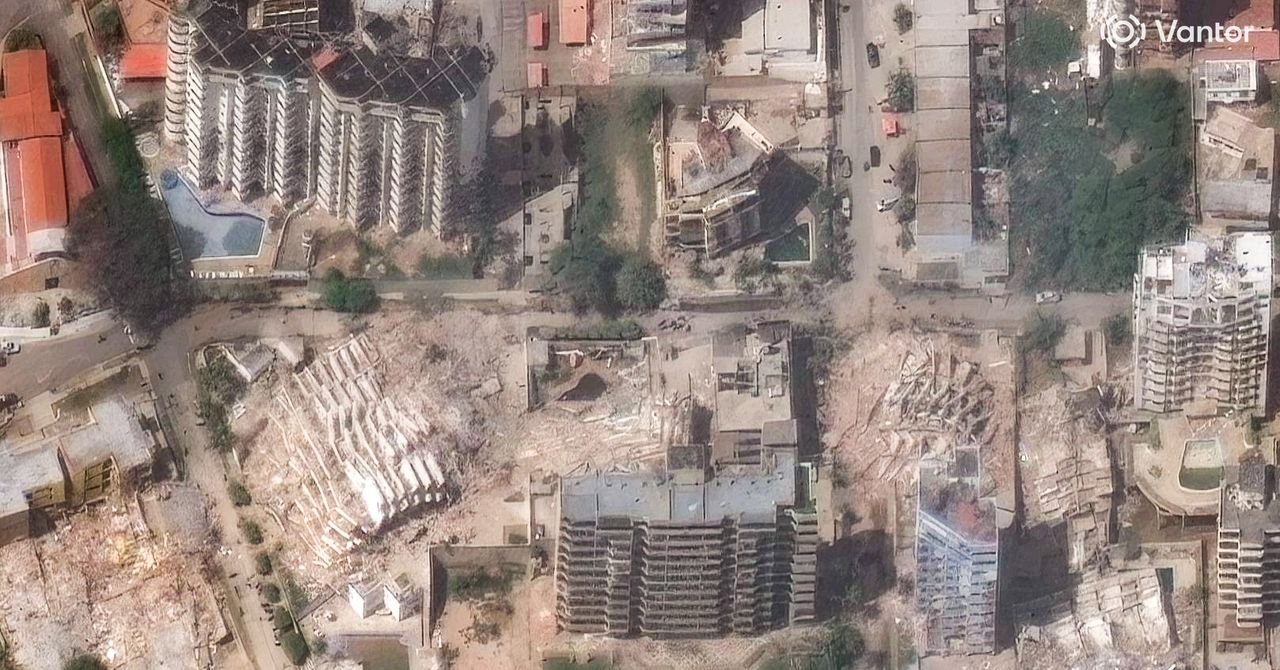
Following the twin earthquakes in Venezuela, the Copernicus satellite system activated its emergency mapping mode at the request of the European Commission’s Directorate-General for Civil Protection and Humanitarian Aid Operations. Using imagery collected by Sentinel satellites and sensors, the system has produced 10 products and 25 maps that enable real-time assessment of the extent of damage and how terrain has changed in 13 areas of interest. Additionally, these devices have helped authorities identify clear areas that can be used to land aircraft involved in rescue operations and delivering humanitarian aid.
Preliminary data from Copernicus shows severe damage in the cities of La Guaira and Greater Caracas, as well as impacts on communities in Aragua, Carabobo, Falcón and Miranda. The report said that, as of June 27, an estimated 1,300 buildings in the area were affected.

For its part, NASA activated its Disaster Response Coordination System to produce a series of maps that use data obtained by the NISAR mission to show how the earthquake displaced the Earth’s surface, “providing critical insights for emergency managers and scientists,” according to the agency.
The initiative includes a pilot project linked to Copernicus efforts to assess areas previously identified by the European system, using radar images captured by the Sentinel-1 satellite before and after earthquakes.

<a href