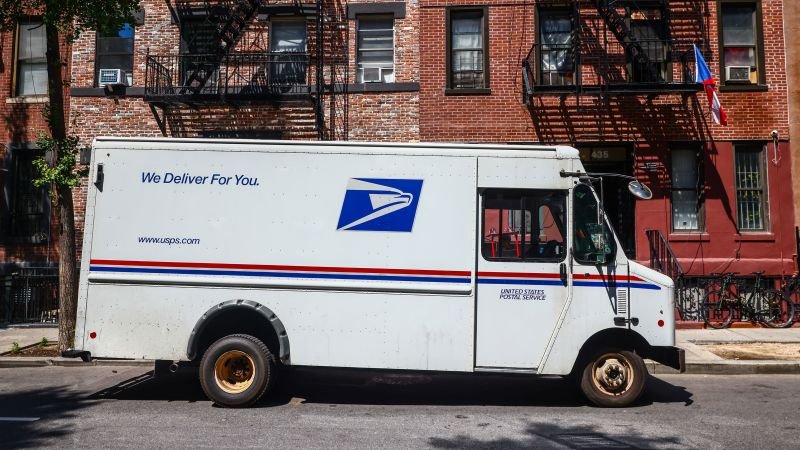
A federal judge blocked the U.S. Postal Service from completing its plan for President Donald Trump’s mail ballot executive order, finding that the proposal violated the agreement in a 2020 lawsuit against the agency.
Trump had directed the USPS to mail ballots only to states that submit their mail-in voter lists to the agency and that meet other requirements for their mail voting programs. Earlier, a judge in Boston had blocked the Postal Service from enforcing the order in two dozen states that had challenged it in court. But the new ruling by U.S. District Judge Emmet Sullivan, who sits in Washington DC, blocks the directives nationwide.
If the courts uphold Trump’s March 2026 order, it would give the federal government an unprecedented role in elections — and could put even more voter data into the hands of Trump officials looking for alleged election fraud.
Sullivan’s order stems from a lawsuit originally brought by the NAACP against the Postal Service in 2020 because of policy changes that slowed mail delivery as the pandemic approached the election. The 2021 agreement required the agency to publish guidance documents outlining how it would prioritize “the monitoring and timely delivery of election mail.” Part of the agreement gave the court authority to monitor USPS’s actions on this issue.
Sullivan wrote in Wednesday’s opinion that, under the agency’s proposed rules to enforce Trump’s executive order, ballots would not be delivered to voters if those ballots do not conform to the executive order’s requirements.
“The proposed rule violates paragraph 2 of the Agreement because the Postal Service cannot post documents reflecting ‘practices and policies for monitoring election mail and prioritizing timely delivery’ if its policies provide that it will not accept ‘non-compliant mailings’ and therefore will not deliver mail-in or absentee ballots to certain voters, and if it does not mail ballots to any voters in a state where the state ‘refuses to certify the rolls’ Or fails,'” Sullivan said.
Trump’s order would also require that mail ballot envelopes have individual barcodes for automated tracking. That policy is seen as a best practice for election administration, but many jurisdictions would face challenges in implementing it because of the cost of such a change.
It directs the Department of Homeland Security to gather lists of voting-age citizens in each state from federal databases, raising fears that the lists would be used for overly aggressive voter purges.
“This ruling in favor of the NAACP’s case is another major blow to Donald Trump’s effort to rig the election,” he said. NAACP President Derrick Johnson. “The President is failing, and the people are winning.”
CNN has contacted USPS for comment on the new decision.
This story has been updated with additional details.
<a href=