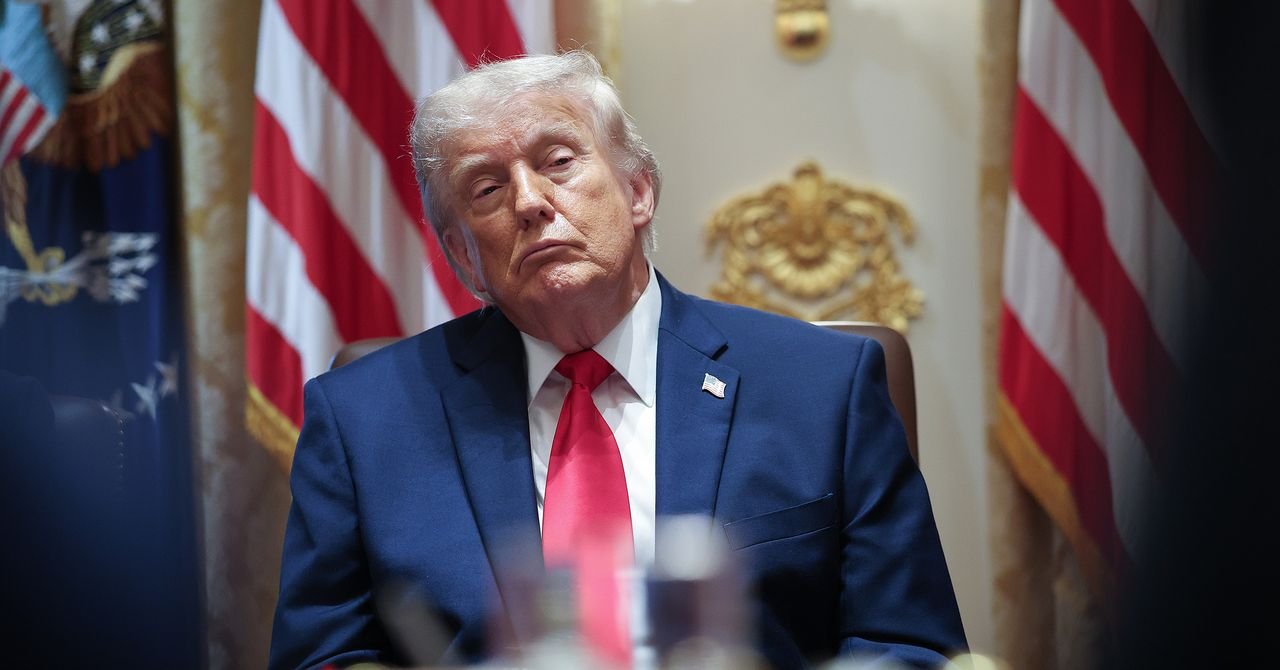
The revised order gives the federal government access to the most advanced artificial intelligence models 30 days before public release, which is less than an earlier proposal that would have required companies to provide access 90 days in advance.
In addition to shortening the review period, the administration made some significant changes to the original text. Trump approved the revised order on Monday night after a high-level White House meeting. Both officials told WIRED that aides drafted the final language on Tuesday morning.
The executive order is the first major AI regulation directive of Trump’s second term and reflects growing concern inside the administration that increasingly powerful systems, including Anthropic’s Cloud Mythos and OpenAI’s GPT-5.5, could be used to conduct cyberattacks against critical infrastructure.
The order does not impose formal regulation, but rather establishes a voluntary process to determine which AI models are the most powerful, and then grants the US government special access for 30 days to give officials time to identify and address potential vulnerabilities before they are publicly released.
The move also represents a victory for White House Chief of Staff Susie Wills, who worked with Treasury Secretary Scott Besant and National Cyber Director Sean Cairncross to revive the proposal, sources told WIRED, despite initial resistance from Trump’s former AI czar David Sachs, who is a leading skeptic of government intervention in the area.
With the order now in place, Besant can begin discussions with China about creating a similar cross-border framework for advanced AI systems, according to a person familiar with the matter. WIRED previously reported that those talks were on hold while the administration decided its domestic policy.
White House spokeswoman Liz Huston says the executive order reflects Trump’s “general vision of collaborating with industry to balance innovation and security, cementing America’s continued global dominance in AI and cybersecurity.”
Some big AI companies signaled their support for the executive order on Tuesday. “This executive order is an important step toward strengthening America’s leadership in AI. We look forward to collaborating with the White House to support its implementation,” Anthropic wrote in a post on Twitter.
Trump rescinded an earlier version of the order on May 21 after AI companies and Sachs warned that a 90-day review window would be too burdensome for the fast-growing industry, according to people familiar with the discussions.
But executives at several large AI companies told the administration that their models are only becoming more sophisticated and powerful, meaning the White House can’t put off an executive order forever, the people say.
He said administration officials worked on the matter throughout the weekend before the high-level meeting at the White House on Monday. Those present at the meeting included Wills and Besant, as well as Sachs, who was invited.
White House aides involved in the process told some AI companies that they expected Trump to eventually sign a framework, but they were unsure about the timeline. In the end, Trump felt there was enough buy-in from the industry for a 30-day period and gave his approval on Monday night, the people say.
The order calls for several federal agencies to create a classified process to determine which AI models the U.S. government wants access to, and select other “trusted partners” that can quickly gain access to those frontline models.
Beyond the early access framework, the order directs the Pentagon to strengthen its classified networks within 30 days and directs the Justice Department to bring criminal cases against people who use AI models to hack computer systems.
<a href