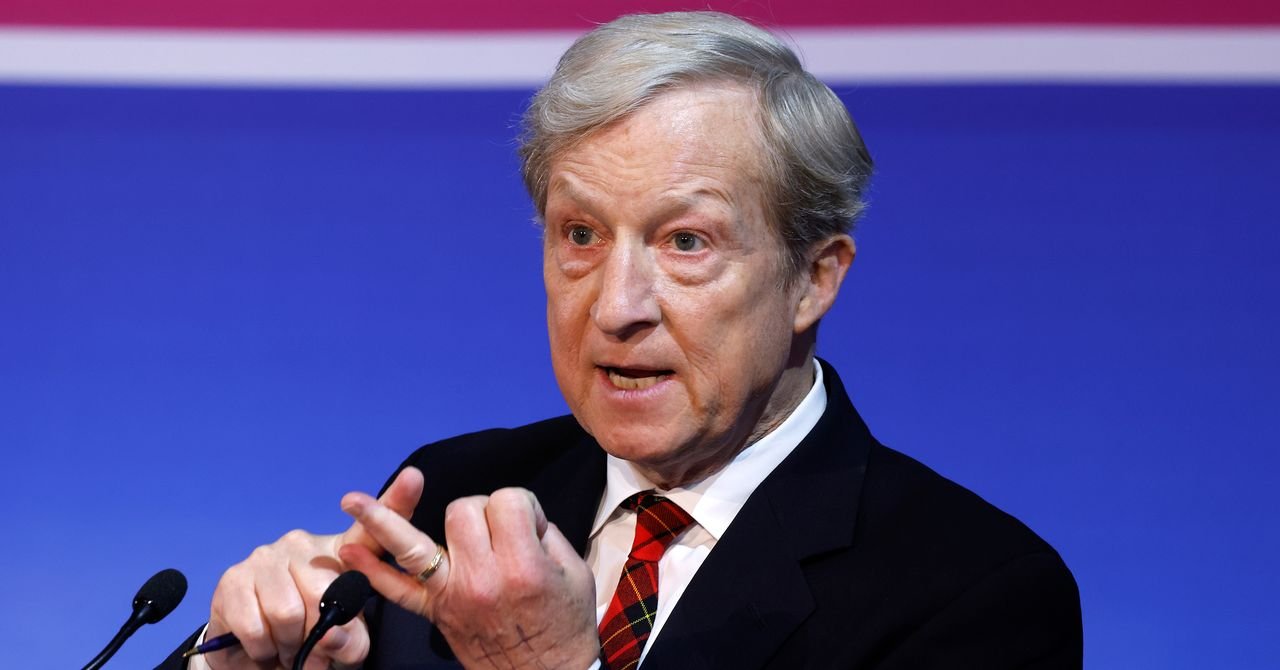
The plan, which is based on the comprehensive AI policy framework Steyer released in March, promises to make California “the first major economy in the world” to ensure “good-paying” jobs for workers impacted by AI. To do this, Steyer told WIRED he plans to build on a previous proposal to introduce a “token tax,” which would tax big tech companies “a fraction of a cent for each unit of data processed” for AI. The money generated by that tax will be created by what Steyer calls the Golden State Sovereign Wealth Fund, some of which will be earmarked for housing construction, health care and modernizing California’s energy infrastructure.
“The initiative will aim to strengthen the foundation of the state’s economy, invest in our communities, and create beautiful, vibrant public spaces,” a campaign memo seen by WIRED said. “To support these efforts, Tom will also invest heavily in training and apprenticeship programs across the state.”
The memo said the new plan also intends to expand unemployment insurance and establish a new agency called the AI Worker Protection Administration that will include union leaders, academics and technologists to adopt rules to protect workers’ rights.
“People all over the state are scared that AI will undermine this whole economy and they’ll lose their jobs. Young people are worried they’ll never get a job,” Steyer told WIRED. “We believe this can be a wonderful transformative technology in many ways, but we are not in the business of leaving people behind in California.”
Steyer’s job guarantee comes as lawmakers at the state and federal levels—and even some AI officials—are struggling to address the impacts of widespread AI adoption in the American workforce. In New Jersey, state senator Troy Singleton recently introduced a bill that would require companies that replace workers with AI to contribute to a fund that will pay to retrain those workers. In Congress, there are some proposals for grants and tax credits for companies to provide AI training to existing employees.
Anthropic CEO Dario Amodei first suggested the concept of the token tax that is now being proposed by Steyer. “Obviously, it’s not in my economic interest,” Amodei told Axios last year. “But I think it would be a reasonable solution to the problem.” In April, OpenAI proposed a public funding fund similar to the plan launched by Steyer.
Steyer’s announcement comes days after Democratic primary rival Xavier Becerra—the former Health and Human Services secretary under President Joe Biden—offered his own AI plan. In that proposal, Becerra calls for “workforce investments and transition support” but does not provide any specific funding mechanisms.
“Displacement without support is abandonment,” Becerra said in a Monday memo outlining his plan. “I will work with the Legislature, the California public education system, and industry partners to create accessible, stackable workforce programs that will prepare Californians for the AI economy and support workers in the role transition.”
Over the past few months, the White House has threatened to take action against states that choose to regulate AI. In December, President Donald Trump signed an executive order that could revoke federal broadband funding from states that approve “tough” AI laws. It’s happening in local races, too: In New York, a super PAC backed by several Silicon Valley powerhouses, including OpenAI co-founder Greg Brockman, has targeted Alex Borres, a Manhattan congressional candidate who has made AI regulation a centerpiece of his campaign.
“Not regulating AI doesn’t seem fair at all,” Steyer says. “But if California wants to lead, we need to have a vision for the future that includes something that isn’t about letting entrepreneurs get rich at the expense of everyone else.”
<a href