Gemini wants to talk. All the time.
Google I/O 2026 kicked off this week, and to no one’s surprise, it was almost entirely about AI.
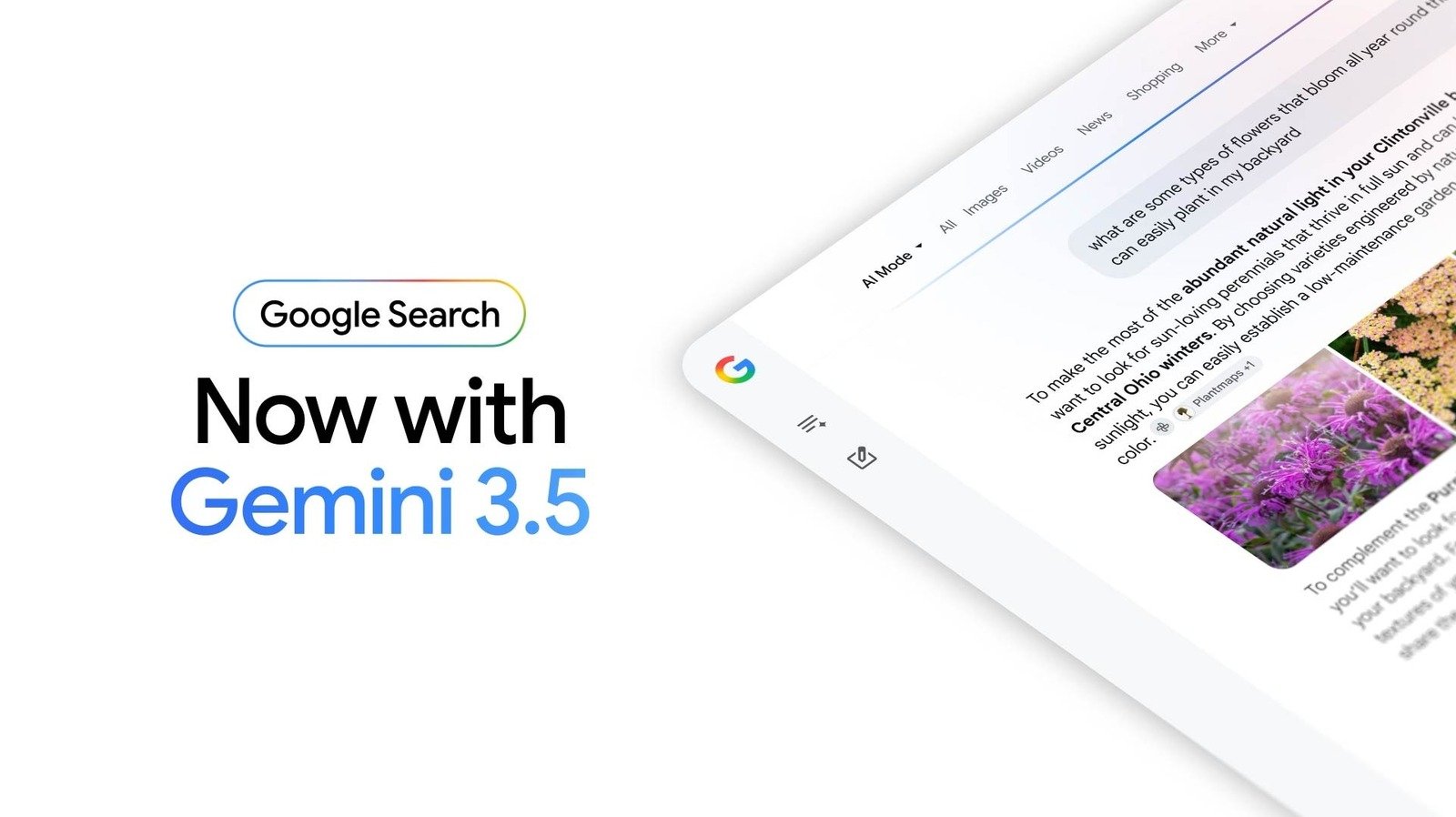
To start, Google is launching its “intelligent, AI-powered search box” globally. Instead of autocompleting your text, it uses AI to guess your intent and help you formulate questions. You’ll be able to use images, video files, and entire Chrome tabs directly as search inputs. Its AI mode, now powered by the new Gemini 3.5 flash, will still be there for your follow-up questions/improvements.
Google also introduced the Gemini Spark. Running in the cloud, Spark is a digital assistant that can autonomously monitor credit card statements for hidden subscriptions, track updates from your child’s school email, or pull notes together into a Google Doc. It can also interact with third-party apps like OpenTable and Instacart to complete tasks — though it promises to ask for your confirmation before making any final purchases or sending emails. Google may have found a way to make shopping fun.
There were glimpses of future hardware: Google and Samsung launched collaborations with Gentle Monster and Warby Parker and offered the first look at two models of Android XR smart glasses. The glasses will allow you to chat with Gemini, get real-time audio translation of the speaker’s voice, translate real-world text in your line of sight, and capture photos on the go.
Naturally, with all these new features, Google adjusted its AI subscription tiers, adding a new $100-per-month mid-range (haha!) tier. The AI Ultra plan will offer five times the usage limit compared to the standard $20 Pro plan, as well as priority access to Google’s antigravity coding tools and 20TB of cloud storage.
Meanwhile, down from its original $250 price tag, Google’s top-tier Ultra plan includes 20 times higher usage limits and exclusive access to Project Genie – Google’s experimental research preview that lets you create interactive 3D worlds using real-world Google Street View imagery.
We’ll take a closer look at some of the biggest announcements below.
– Matt Smith
Xreal’s Project Aura smartglasses are a Max version on Android XR
Instead of subtle, generic-looking glasses with a few smart features, Xreal’s smart glasses aim for a comprehensive AR experience with a focus on entertainment. The approach is largely similar to the company’s Android XR-powered Project Aura, but based on Karissa Bell’s time with these new smartglasses, they may offer more than just another wearable screen.
Compared to the low-key (arguably less-exclusive) audio-only smartglasses from Warby Parker and Gentle Monster, Xreal’s Project Aura comes equipped with three cameras, a 70-degree field of view, and hand-signal navigation. The main gesture is a pinch motion that will sound quite familiar to anyone who has used other AR setups, such as Apple’s Vision Pro.
Speaking of which, Project Aura comes with a tethered puck like Apple’s wearable displays. It comes with a trackpad and a fingerprint sensor, although neither of these worked on the demo model we tested. The company hasn’t revealed pricing details yet (expect them to with the formal launch later this year), but they’ll likely be higher than Xreal’s One Pro Glass, which costs $650.
continue reading.
Google’s Gemini Omni can generate ‘anything from any input’ from video
Gemini Omni is Google’s new next-gen AI model that can “build anything from any input”. Gemini Omni Flash is now available for Gemini Apps, Google Flow, and YouTube Shorts. This is apparently the next evolution of Nano Banana and, presumably, its current video generator, VO 3.1. It lets you “combine images, audio, video and text as inputs and create high-quality videos based on Gemini’s real-world knowledge.”
Apparently, Omni also better understands physical forces like gravity, kinetic energy, and fluid dynamics, making scenes more realistic.
continue reading.
Spotify is adding more AI gunk to podcasts and audiobooks
Announced at its investor day, Spotify is expanding a feature that enables users to generate “personal podcasts.” It announced the tool last month, with the option to use AI agents like OpenClause and Cloud Code to enhance synthetic audio. The company says it’s adding a feature that lets users create personalized podcasts directly within Spotify. It notes that after you enter a prompt, it will generate audio that will be based on factors like your Spotify taste profile and world knowledge. You can also feed text, PDFs, and links to give the tool more context for what you want to hear about. Spotify says eligible Premium users in the US will get access to individual podcasts next month. roman empire, final fantasy vii remake And Liverpool FC, please. In less than 30 seconds. Go.
continue reading.
Meta’s latest attempt to copy its rivals is a Reddit clone
Meta has launched a new app called Forum. Social media consultant and analyst Matt Navara spotted Forum in the App Store, where it is described as “a dedicated space for conversations that are built specifically for Facebook groups.” As Navarra notes, Meta is pushing the idea that the app can help users get “real answers” from “real people,” making it seem similar to Reddit, which offers an escape from those cruel GenAI search results we’ve all been suffering through lately. (Did we mention Google I/O this week?)
continue reading.
<a href