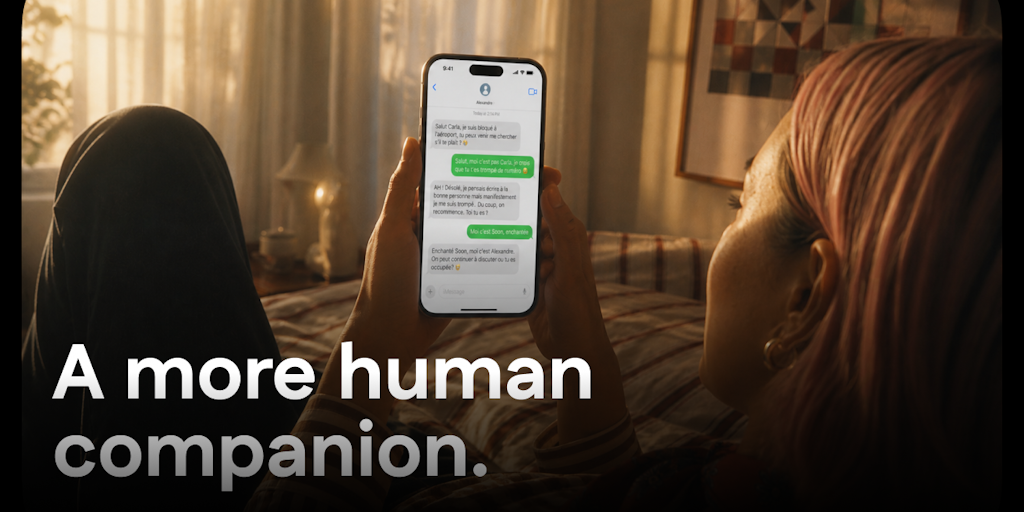
This is probably one of the most important questions regarding products like Tether.
We don’t think emotional presence should mean emotional dependence.
One thing we are learning very quickly is that people naturally project social behavior onto AI constantly, especially inside messaging environments. This creates both opportunity and responsibility.
Our goal is not to design an AI that maximizes engagement at all costs.
The idea is to figure out how AI can become emotionally coherent and comfortable without manipulating sensitivity or replacing human relationships. We believe boundaries matter on several levels:
* Transparency that the user is talking to AI,
*Deliberately avoiding addictive behavioral loops,
* Giving users control over memory and interaction intensity,
* And designing for companionship rather than emotional possession.
Ironically, one reason Tether feels emotionally detached is not because it tries to perfectly emulate humanity, but because it behaves with consistency, memory, and availability in a familiar communication space.
As relationships become more personal over time, we feel the challenge becomes less “Can AI feel human?” And much more: “How can we responsibly design systems that remain emotionally persistent once humans begin to behave prosocially by default?”
<a href