If you add nuclear, the US is on track to reach a 40 percent emissions-free grid in the first nine months of 2025. This is only 1 percent more than the same period last year. And because coal emits more carbon than natural gas, it’s likely the U.S. will see a net increase in electricity-related emissions this year.
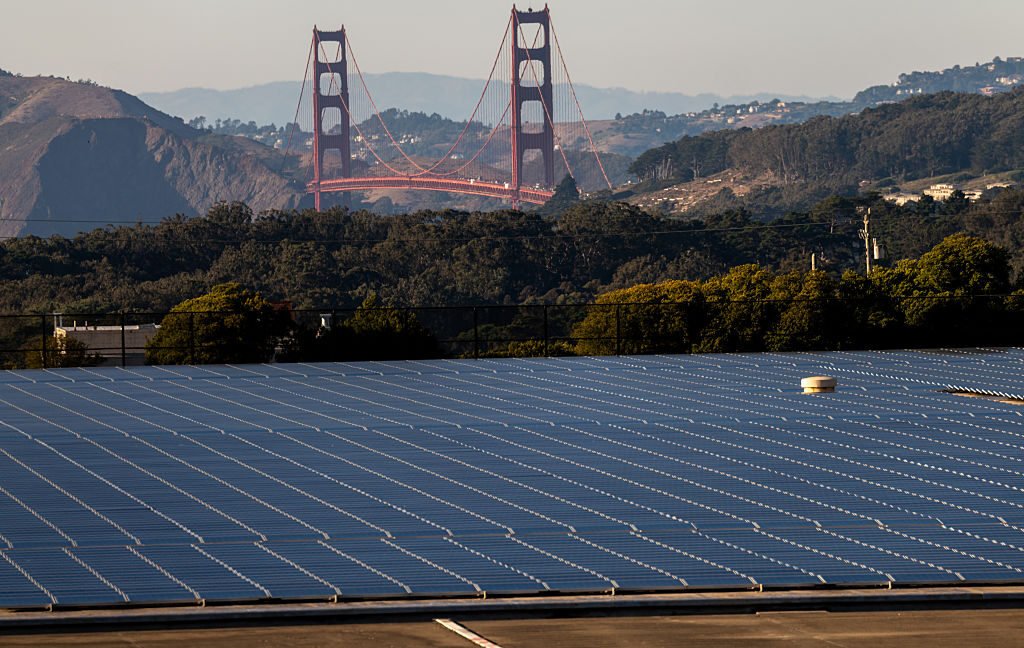
However, if you want reason to feel somewhat more optimistic, the EIA used new data to release an analysis of the state of the grid in California, where generation from utility-scale solar power has nearly doubled over the past five years, thanks to a 17 percent increase so far in 2024.
By 2023, due to increased demand, it was hard to discern any impact of that solar production on the rest of the grid. But since then, natural gas use has declined significantly (by 17 percent so far in 2025), putting it at risk of being displaced by solar as California’s largest source of electricity as early as next year. This displacement is occurring even as California’s total consumption is projected to increase 8 percent so far in 2025 compared to the same period last year.
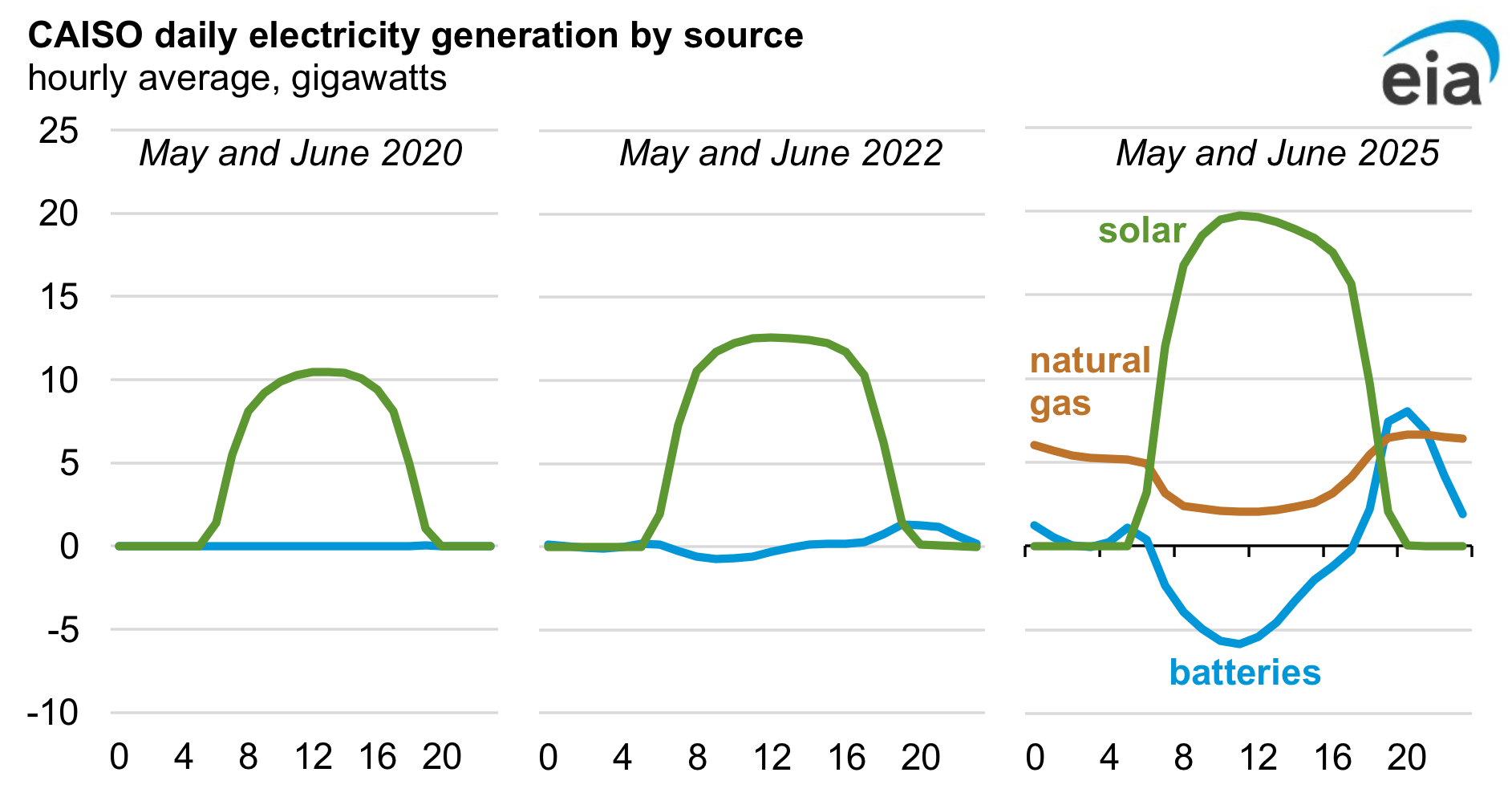
The development of large-scale solar power and batteries means less natural gas on California’s grid.
Credit: US EIA
The huge increase in solar power has resulted in overproduction of electricity in spring and autumn, when heating/cooling demand is lowest. That, in turn, has led to an increase in battery manufacturing to absorb cheap electricity and sell it back after the sun sets. It was almost impossible to understand the impact of batteries as recently as 2023, but data from May and June of 2025 shows that batteries draw too much electricity in the afternoon, and use it all in the evening, to make up for what otherwise would have been a huge increase in natural gas use.
Not every state has solar resources available like California. But the economics of solar energy suggest that this type of growth is likely to occur in other states in the coming years. And, while the Trump administration has been openly hostile toward solar energy since coming to power, there is no sign of that hostility at the grid level so far.
<a href