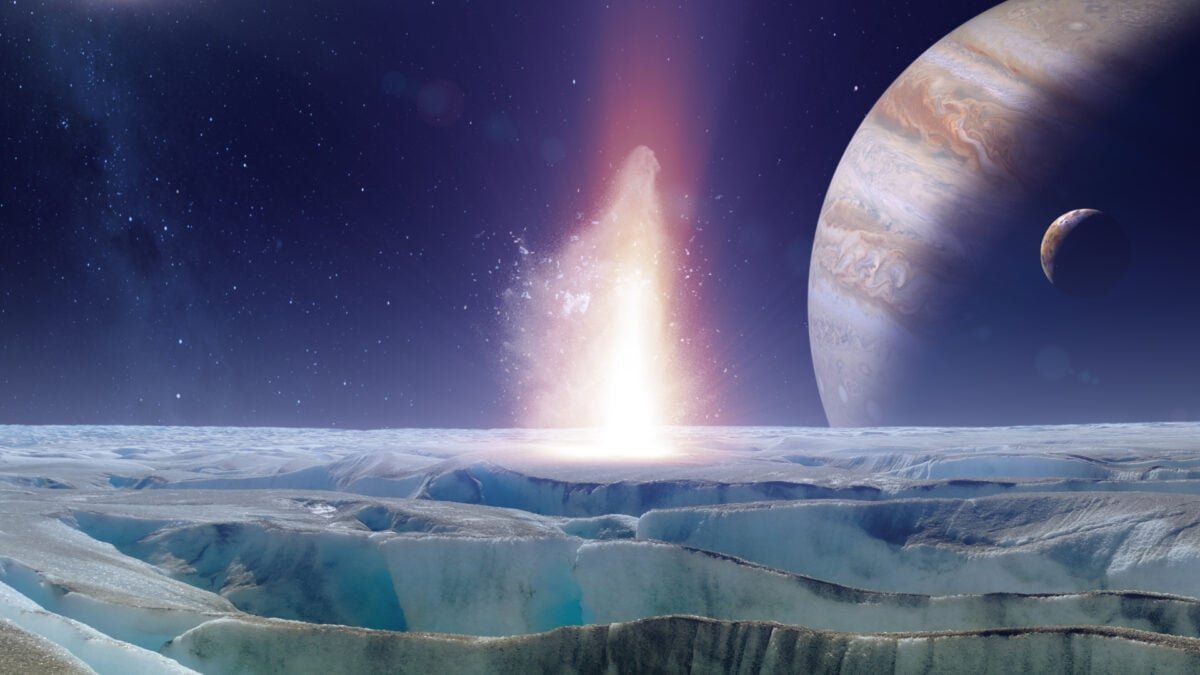
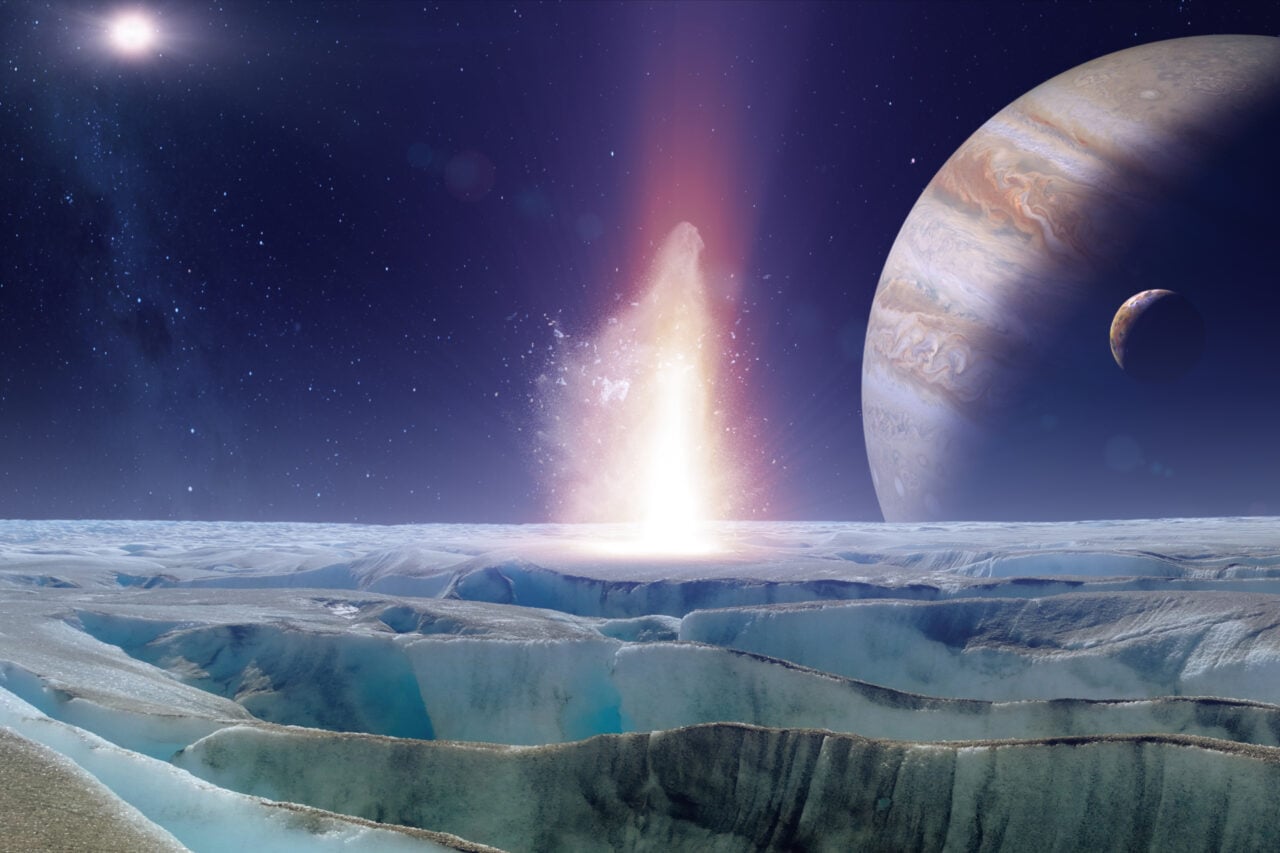
The findings, presented at the 248th meeting of the American Astronomical Society, show that the way Europa’s surface scatters radio waves is completely different from those seen on the rocky world. Overall, the data are consistent with major radar studies of Europa, which took place between the 1980s and 1990s. However, the latest observations “are more numerous and cover a much broader rotational phase of Europa,” Tunhui Xie, a PhD student at the University of California, Los Angeles who was involved in the work, told during the presentation.
distant snowy world
Jupiter, the largest planet in our solar system, has 101 moons. But of particular interest to scientists are Europa, Ganymede and Callisto, which researchers suspect host subsurface oceans beneath their icy layers. Naturally, astronomers are paying close attention to whatever data they can gather from these moons. Currently, NASA’s Europa Clipper and ESA’s Juice are on their way to study this neighborhood up close.
There are only so many geologic features that can tell us about anything deep below the surface, the National Radio Astronomy Observatory (NRAO) said in a statement on the findings. And that’s where things like radar come in, Xie said in the NRAO statement. “Radio waves can penetrate the ice and pick up information about its internal structure and purity,” Xie said.
as the waves bounce
The new study looked at 13 years of data collected between 2011 and 2024. One fascinating observation concerns Europa’s radar albedo, a measure of how bright the moon appears to radar. Notably, Europa’s radar albedo was much higher than that of planets and rocky worlds. The NRAO reported that the way Europa scattered radar signals resembled “multiple scatter detections inside clean, porous ice”.
Additionally, the team confirmed that despite changes in observing angle between the transmitter, Europa, and receiver, Europa’s radar brightness remains more or less consistent. This trend allowed the team to effectively set a new limit on how transparent Europa’s ice will be and, therefore, how far beyond the surface radio telescopes will be able to see, the statement said. This knowledge will be vital in ensuring that current and future missions to Europa make the most of their time studying the distant moon.
Related Articles: Missions to ocean moons face a strange threat that scientists didn’t expect
<a href