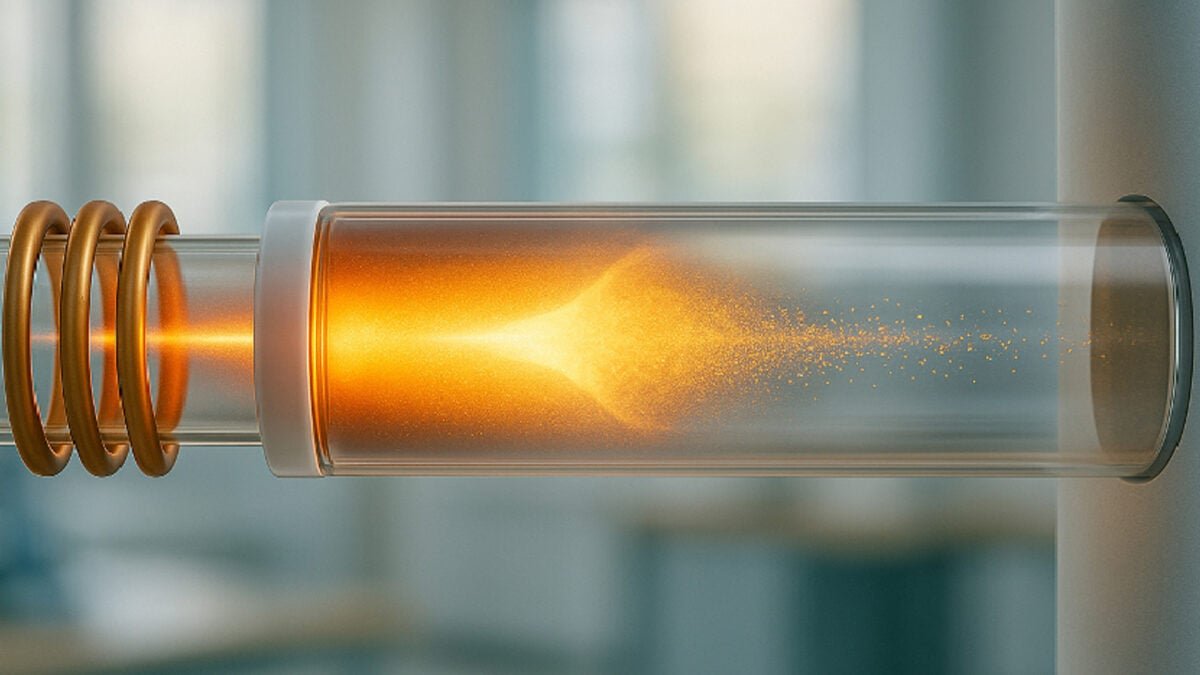
Researchers at Lawrence Livermore National Laboratory (LLNL) created a miniature replica of the fireball that triggers nuclear fallout inside a plasma flow reactor. The carefully controlled experiment allowed them to investigate how uranium, cerium and cesium vaporize and behave. As a result, the team was able to identify limitations in the current fallout model under more realistic conditions. They published their findings in a recent Analytical Chemistry paper.
“By studying these processes in a controlled system, we can replace assumptions with measurements, improve the models used to explain nuclear debris, and support decision making when it matters most,” Rakiya Dhaoui, first author of the study and LLNL scientist, said in a statement.
a mini fireball
For the experiment, the team adapted a plasma flow reactor to different temperatures and oxygen fugacities (i.e., how easily chemicals move and react) to be independently programmed. According to LLNL, the miniature represents a portion of the fireball process that triggers nuclear fallout by expanding and mixing with air after a nuclear accident.
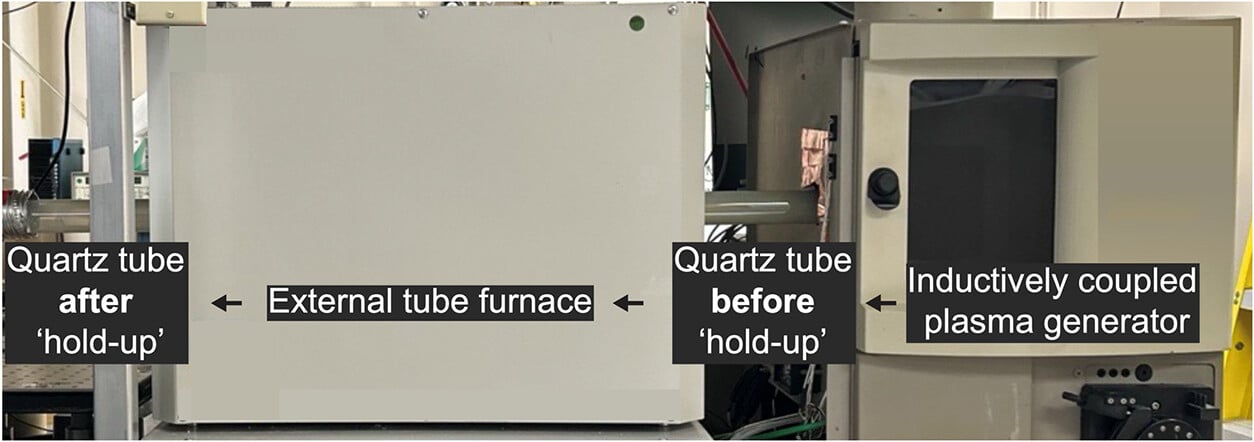
Specifically, fallout occurs when the fireball begins to cool and condense into small solid particles, so the experimental setup was designed to replicate these steps. According to the study, the researchers set up two scenarios: one reduced the temperature continuously along the tube, while the other kept the heat at about 2,060 degrees Fahrenheit (1,127 degrees Celsius) before rapidly quenching.
“Historical fallout studies indicate that the path the material takes as it cools is important,” Dhaoui said. “Cooling rate and time at elevated temperatures can alter chemical specificity and particle formation.”
a thorn in the fire
Laboratory tests found that all three elements studied behave differently. Uranium condensed early, cerium also condensed in the same temperature range. The chemistry of the two elements varied depending on the cooling scenarios. Cesium, on the other hand, takes longer to condense and reacts more with other elements when kept at higher temperatures for longer periods of time.
“These results show that fallout formation depends not only on the condensation of the elements, but also on how the elements interact chemically during cooling,” LLNL reported. This is in contrast to existing models that consider each element individually, but according to the paper, these complex interactions are likely “essential” to improving predictive models of processes related to nuclear fallout.
<a href