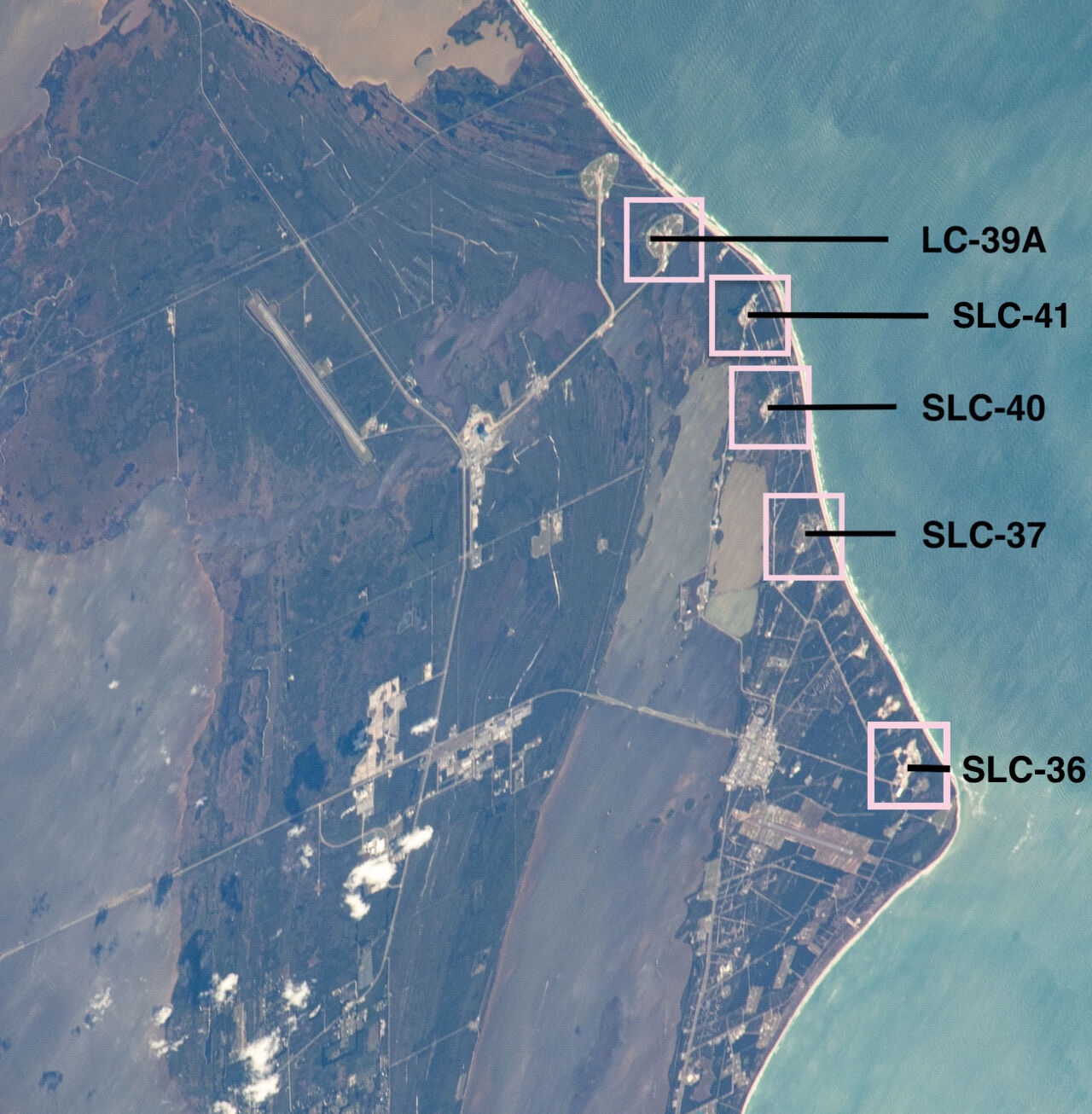
SpaceX is developing Starship launch infrastructure at Pad 37 and Pad 39A, which is also used by the company’s Falcon Heavy rocket. SpaceX launches Falcon 9S from Pad 40. United Launch Alliance flies Vulcan and Atlas V rockets from Pad 41, and Blue Origin bases its New Glenn rocket on Pad 36. Stokes and Relativity are building pads between Pad 36 and Pad 37.
Credit: NASA (Labeled by Ars Technica)
SpaceX is developing Starship launch infrastructure at Pad 37 and Pad 39A, which is also used by the company’s Falcon Heavy rocket. SpaceX launches Falcon 9S from Pad 40. United Launch Alliance flies Vulcan and Atlas V rockets from Pad 41, and Blue Origin bases its New Glenn rocket on Pad 36. Stokes and Relativity are building pads between Pad 36 and Pad 37.
Credit: NASA (Labeled by Ars Technica)
When Starship arrives in Florida, Chatman said the initial BDA will extend an average distance of about 6,000 feet from the pad when the rocket is fueled, with an overall diameter of about 12,000 feet. The exact size may change depending on environmental conditions each day. Roads, waterways, and facilities within that footprint will not be accessible during Starship testing, launch, and return.
The Commercial Space Federation, a lobbying group whose members include SpaceX, Blue Origin and other companies with methane-fueled rockets, has argued that the government should set its TNT blast equivalence to no more than 25 percent, a change that would greatly reduce the size of keep-out zones around launch pads.
“We know our approach is conservative,” Chatman said. “We know we’ll be able to bring that BDA down… We don’t know how far we’ll be able to bring it down. We’re going to make data-driven decisions about how much we reduce the BDA, but until we have all that data fed into the model and done the right analysis, we’re going to continue the conservative approach that we have with 100 percent blast TNT equivalence because we just validated it (with the Blue Origin blast)… We had zero casualties, zero injuries across the board.”
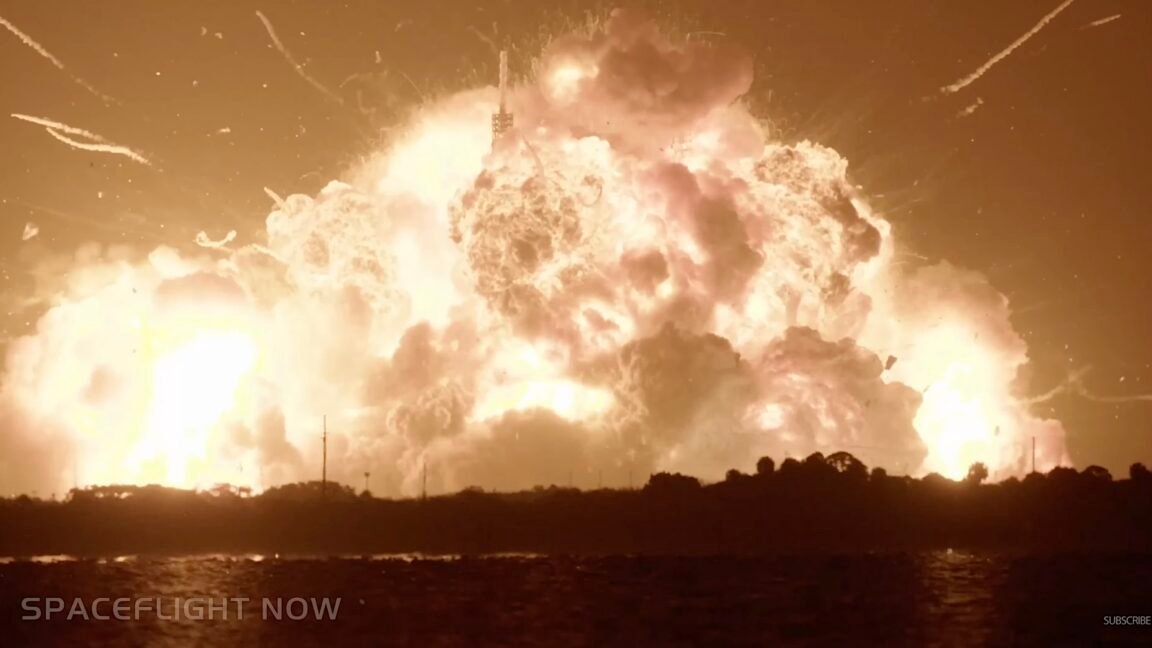
Outside the launch pad, Chatman said the extreme pressure of the New Glenn explosion caused windows to shatter in the Space Force hangar, which is now used as a museum about a mile from the pad. A weather balloon facility at the base was also damaged. Blue Origin is willing to pay for any repairs to property outside the pad, Chatman said, because it is for the construction of the pad itself.
“The rebuilding of Launch Complex 36, that’s on Blue, and we’ll look to Blue to support them in continuing the work while they rebuild that pad,” Chatman said.
Story updated at 3 PM EST (20:00 UTC) to include the FAA’s role in the methane explosive analysis.
<a href