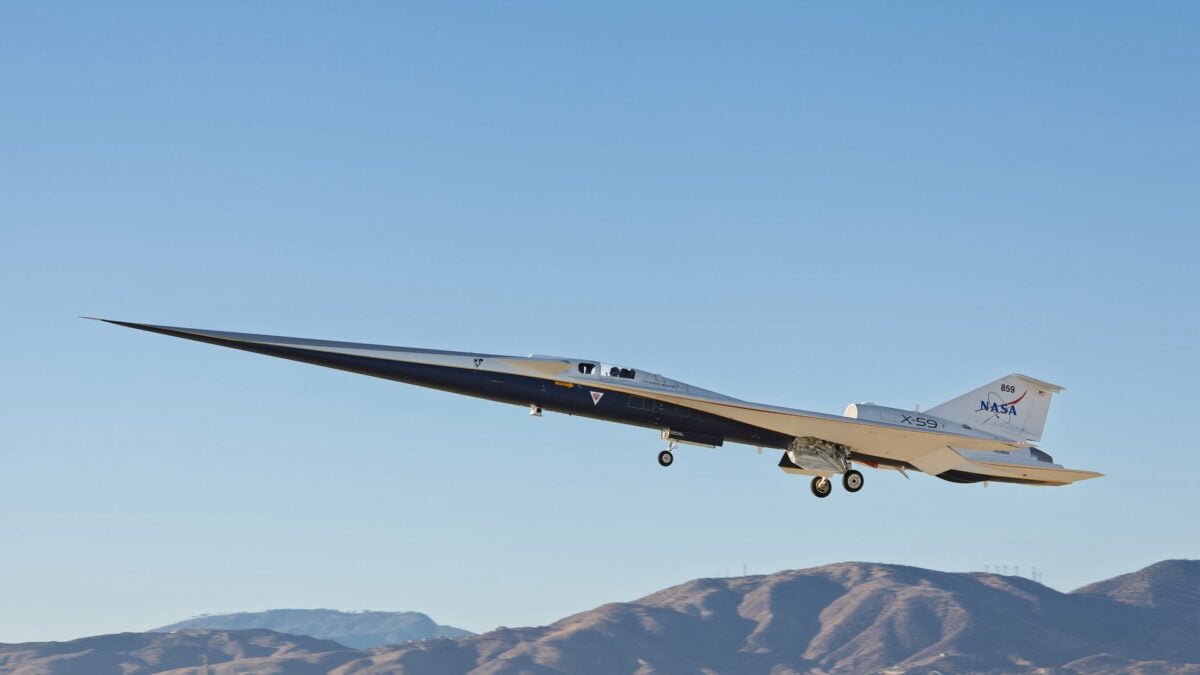

The X-59 took to the skies for its inaugural flight on Oct. 28, spending about an hour in the air before landing near NASA’s Armstrong Flight Research Center in Edwards, California. The experimental vehicle is designed to break the sound barrier without making a loud, explosive sound, known as a sonic boom, making quiet supersonic flight a viable option for commercial aircraft.
The aircraft, built by aerospace contractor Lockheed Martin, took off from the company’s Skunk Works facility in Palmdale, California. The nearly two-minute long video captures the extremely thin, pointed plane emerging from its hangar and sliding down the runway before taking off. The
“All the training you do, all the planning prepares you and there comes a time when you realize the importance of that moment. But then the mission is over.” Larson said in a statement. “The checklist starts. And it’s almost like you don’t even realize it until it’s all over – it’s done.”
Although there are no forward-looking windows in the cockpit, NASA has developed an external vision system using cameras and advanced high-definition displays that allows the pilot to see ahead and below the aircraft.
cool pace
Last month’s test flight is the first in a series to verify the X-59’s performance. During upcoming flights over the next few months, the aircraft will attempt to reach its desired speed and altitude while NASA measures its sound signature and conducts community acceptance testing.
“The X-59 is the first aircraft of its kind and is a major breakthrough for America toward commercial air travel that is quieter and faster than ever before,” Acting NASA Administrator Sean Duffy said in a statement.
NASA began work on the X-59 about a decade ago and tasked Lockheed Martin with developing a quiet supersonic aircraft. When planes fly faster than the speed of sound, Mach 1, or about 767 mph (1,234 kph), they create loud, explosive noises due to the shock waves generated by the extreme speed.
The X-59’s fast design is meant to minimize pressure changes flowing over the ground. The X-59’s engine is mounted on top of the aircraft, reducing the amount of noise reaching the ground from the aircraft. Earlier this year, NASA completed a series of tests on a single modified F414-GE-100 engine powering the entire aircraft and its subsystems. Engine testing ultimately paved the way for the X-59 to fly.
“In this industry, there’s nothing like a first flight,” Brad Flick, NASA Armstrong center director, said in a statement. “But there’s no recipe for how to fly an X-plane. You have to figure it out, and adapt, and do the right thing, and make the right decisions.”
<a href