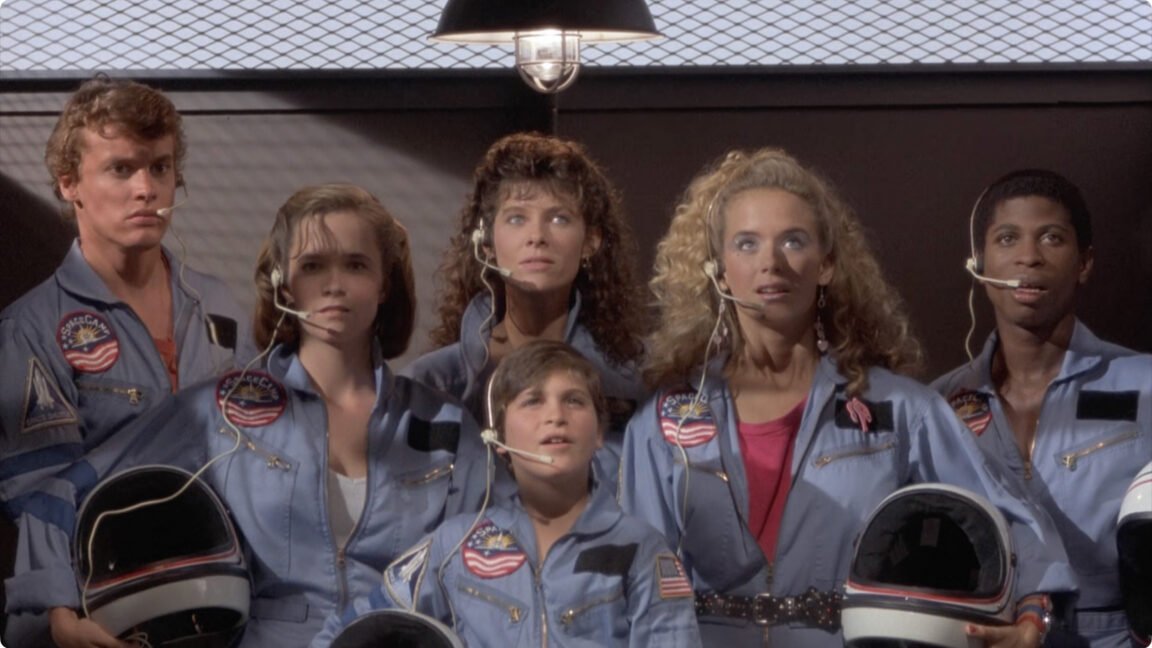
And into that post-Challenger disillusioned summer of 1986, Hollywood brought us SpaceCamp. It had all the right ingredients: A stacked cast with a solid leading duo (Kate Capshaw and Tom Skerritt), tons of real NASA location footage, and a big, brassy score by none other than John Williams. The film was completed before the Challenger disaster, leaving 20th Century Fox with something of a nightmarish choice on their hands—to shelve the film and lose millions, or send it to theaters and risk a PR disaster.
For better or for worse, Fox chose to release the film, which ultimately made about $9.6 million on a reported $25 million budget. Ouch. Audiences, it seemed, weren’t really interested in watching a bunch of kids in peril on a space shuttle. Today, on the rare occasions SpaceCamp comes up in film discussions at all—usually among geeks of a certain age who encountered it when they were younger—it’s often spoken of with derision. Kids! Robots! Thermal curtain failures! Preposterous!
But is it really a bad movie? It’s not currently available for streaming, but this is exactly the kind of scenario that physical media is made for. And so, with the movie’s 40th anniversary looming, Senior Space Editor Eric Berger and I grabbed the DVD and watched our way through it—and this is what we thought.
How about you? You watched it a lot as a kid and were right in the key demographic, a pre-teen in Houston. Does it hold up?
20th Century Fox
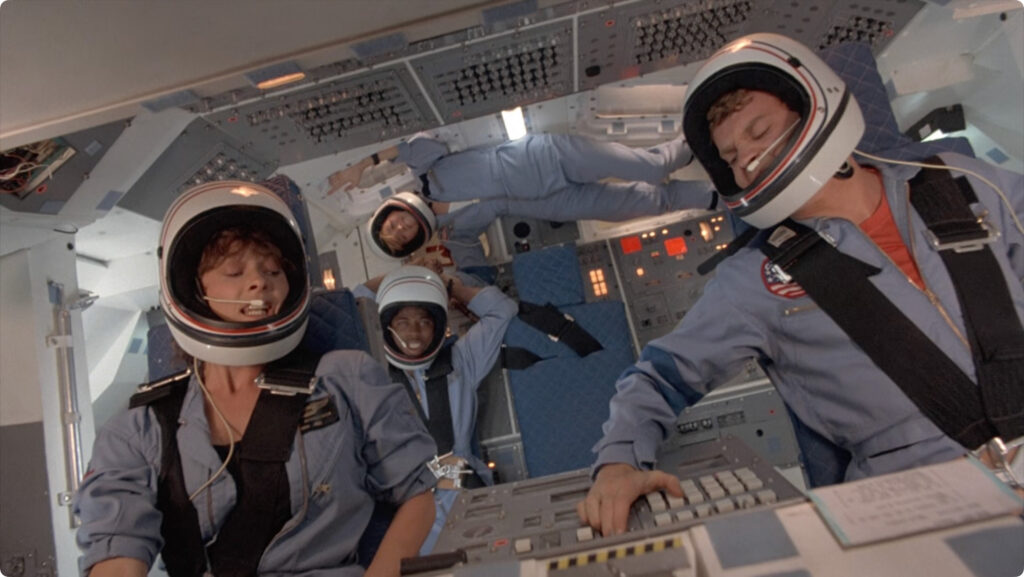
Kevin (Tate Donovan) separates the SRBs during launch. The shuttle flight deck and mid-deck sets were extremely realistic and built to spec.
20th Century Fox
Lee Hutchinson
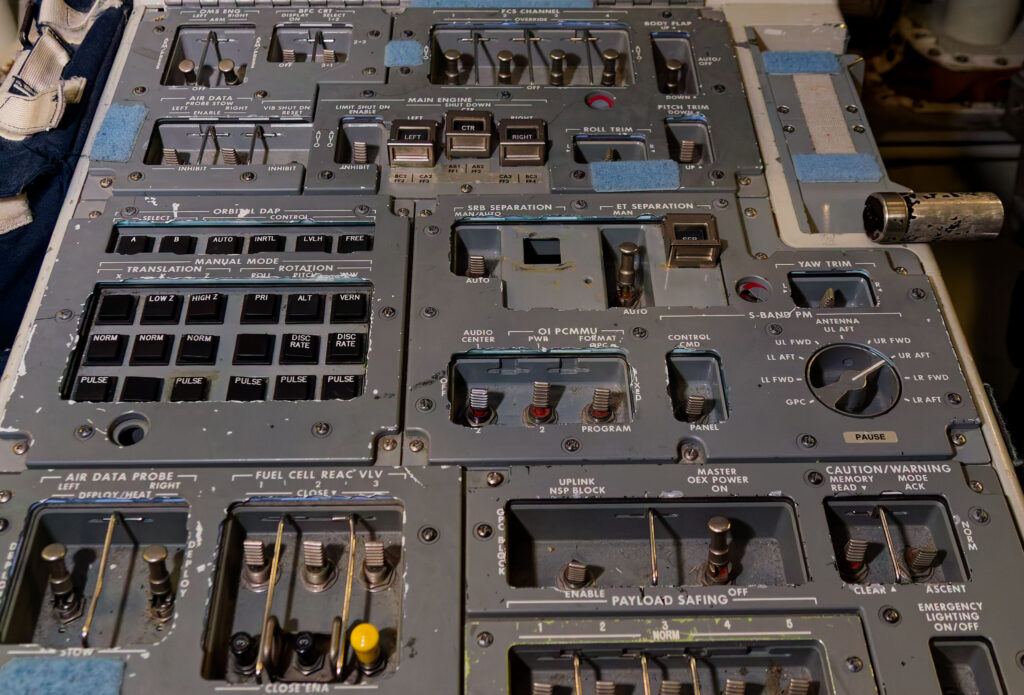
This 2013 image of shuttle Crew Compartment Trainer 2 at the Johnson Space Center shows that Kevin was more or less hitting the right buttons!
Lee Hutchinson
Kevin (Tate Donovan) separates the SRBs during launch. The shuttle flight deck and mid-deck sets were extremely realistic and built to spec.
20th Century Fox
This 2013 image of shuttle Crew Compartment Trainer 2 at the Johnson Space Center shows that Kevin was more or less hitting the right buttons!
Lee Hutchinson
For folks unfamiliar, the film depicts a group of five kids and a rookie astronaut who are accidentally shot into space when a routine main engine test of the orbiter Atlantis goes sideways. (The root cause of the problem is Joaquin Phoenix’s robotic best friend Jinx, which…well, we’ll get to Jinx in a minute.) Stranded in low Earth orbit without a functioning space-to-ground voice link and with dwindling oxygen, it’s up to lone adult astronaut Andie Bergstrom (Kate Capshaw) and her husband, camp director Zach Bergstrom (Tom Skerritt) to bring the stricken shuttle home.
It sounds like an ’80s-flavored recipe for success! And, shot on location at the actual Space Camp facilities in Huntsville and the actual Launch Control Room at the Kennedy Space Center in Florida, it should have performed well—except for that pesky real-life shuttle explosion.
Credit:
20th Century Fox
“Welp.”
Credit:
20th Century Fox
Speaking of liberties taken by the writers, shall we talk about the biggest one? As an adult, what did you think about the mechanism by which NASA launched five kids into space?
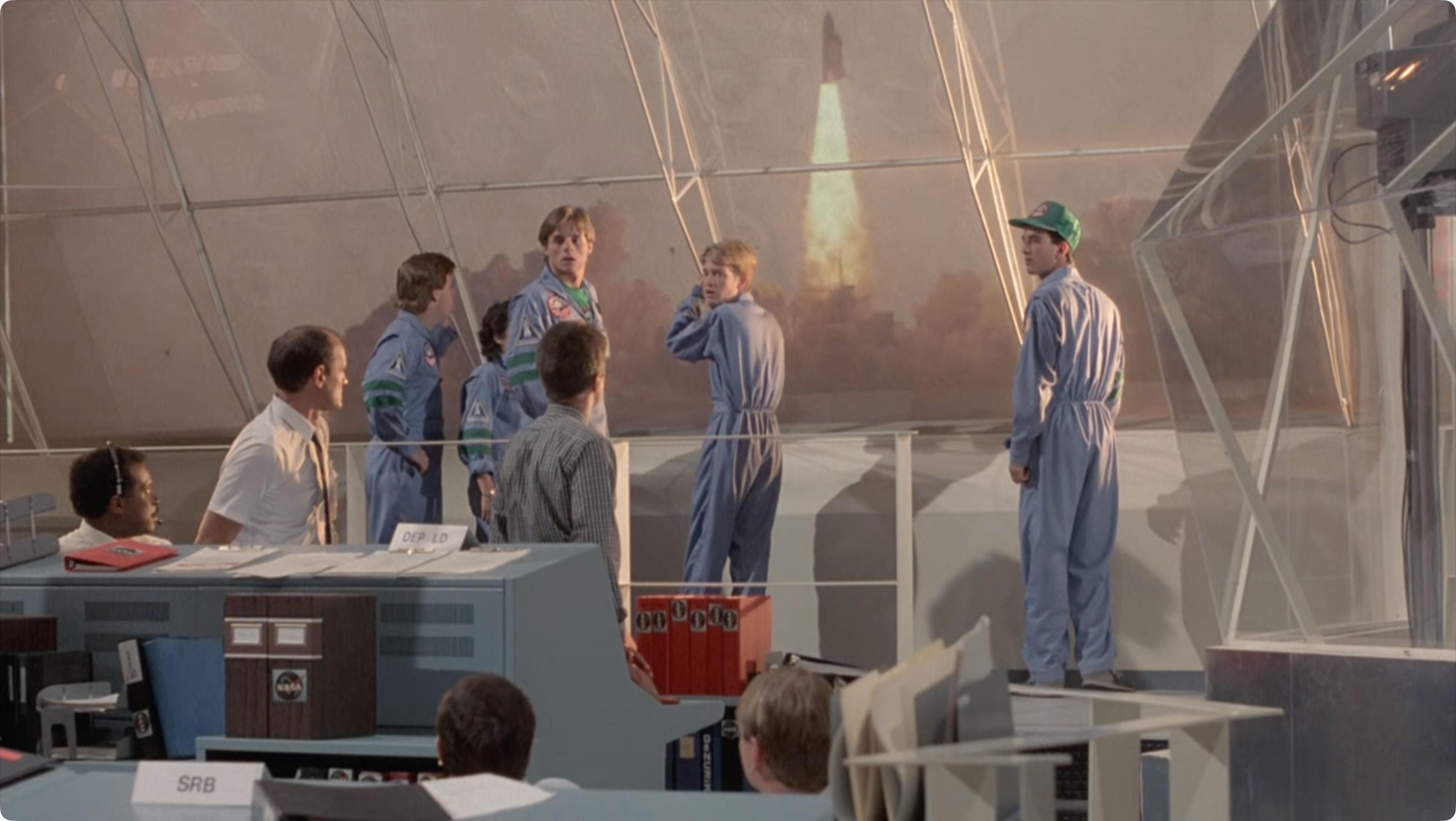
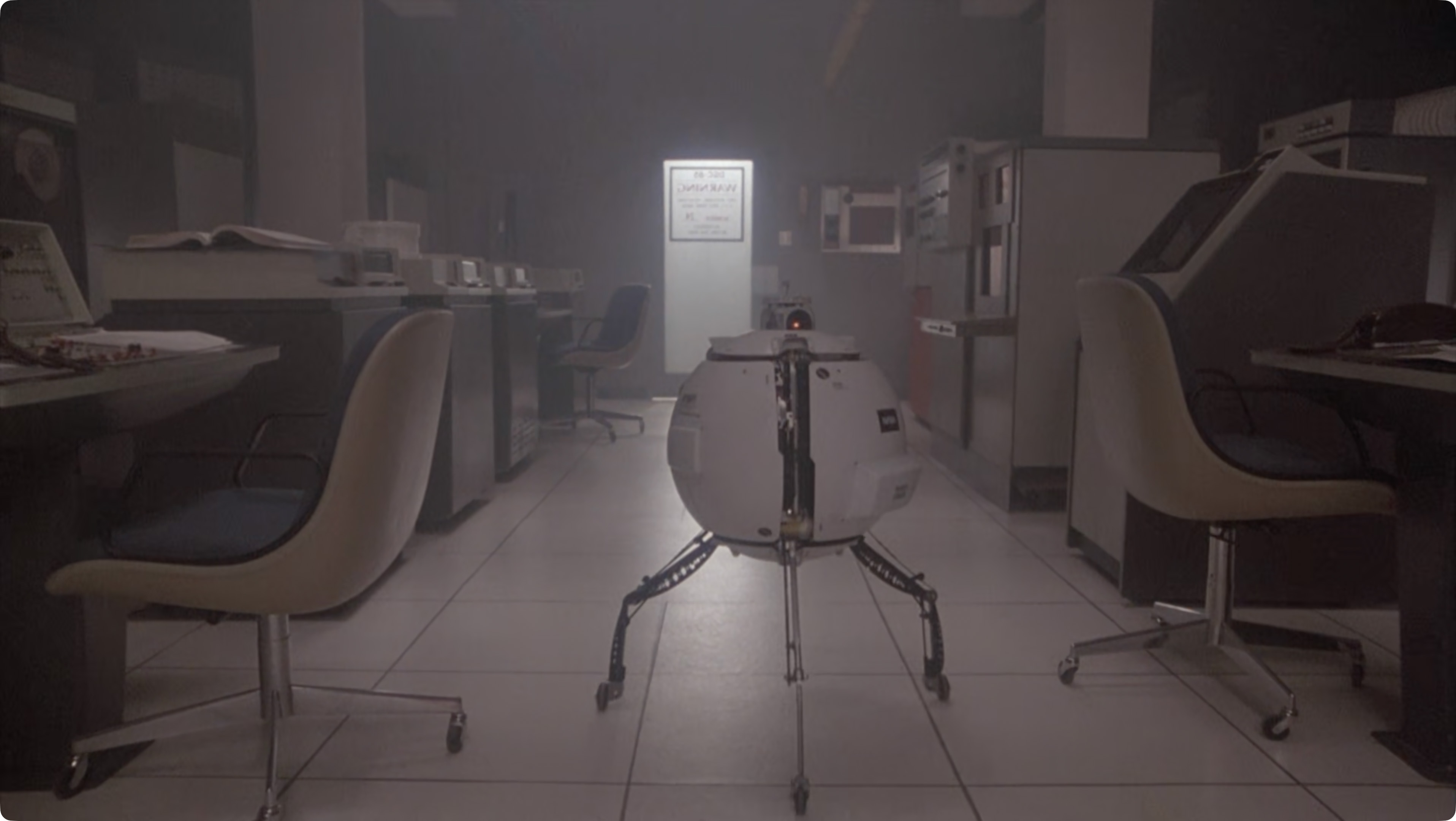
Of course, as noted above, the conversion of “FRF” into “actual launch” is the fault of Jinx, a spherical maintenance robot apparently exhibiting full artificial general intelligence (in 1986, no less!) and seemingly given unrestricted access to the entire space center. Jinx and Max (the aforementioned Joaquin Phoenix, credited as “Leaf Phoenix”) are friends forever, and Jinx conspires with the all-powerful NASA mainframe computer (another runaway AGI!) to arrange a “THERMAL CURTAIN FAILURE.” And just like that, Jinx puts Max in space, along with Bergstrom and four other campers chosen to ride out the FRF on board Atlantis.
I have to wonder if Jinx is supposed to be under the control of a project officer or a principal investigator somewhere, and if that person’s career survived this incident.
What’s your take on the FRF shown in the film? Did NASA do these kinds of tests on the shuttle fleet, and how often?
Credit:
20th Century Fox
It wouldn’t be an ’80s adventure without a schlocky, dumb robot sidekick.
Credit:
20th Century Fox
Astronauts were typically on board for these tests, so the idea that people would be on the shuttle during a flight readiness firing is plausible. However, I think you and I both know just how restricted access to the Space Shuttle was during the run-up to missions, so “campers” from Space Camp never would have been allowed near the vehicle, let alone on board during such a dynamic test. And don’t get me started on “thermal curtain failure.” The solid rocket boosters were, of course, never ignited during a test like this, and I can’t really see how one of them could be ignited. There are a lot of other plot holes (like the total loss of voice communication with a hapless “Mission Control” being run out of the firing room at KSC), but all in all it’s good fun.
One theme of the movie is the desire of Lea Thompson’s character to become a space shuttle commander, and as part of that she has to learn to rely on other teammates. She also has trouble learning to fly the shuttle during reentry. And this represents the climax of the film, when Thompson (Kathryn Fairly in the movie) must pilot the shuttle during peak heating. How did you feel about this?

20th Century Fox
20th Century Fox

NASA
Columbia undergoes a real-life FRF in February 1981. Columbia sports white FRF OMS engine covers, similar to Atlantis.
NASA
20th Century Fox
Columbia undergoes a real-life FRF in February 1981. Columbia sports white FRF OMS engine covers, similar to Atlantis.
NASA
But like you said at the outset, this movie wasn’t for us, the two old farts who can quote shuttle abort mode procedures at each other—it was for the kid I used to be in 1986, the kid who positively knew he could do a way better job in space than Phoenix’s Star Wars-obsessed Max, if only I’d been given the chance. The movie has faults, giant gaping faults, but it’s also trying to condense a ton of real (or at least reality-adjacent) space flight concepts into forms that are understandable by viewers who can’t tell an AJ10-190 from an RS-25. Which is most people! Some glossing over of the details is expected.

Credit:
20th Century Fox
Atlantis approaches “Daedalus,” a fictional space station resembling the early ’80s “Power Tower” station concepts.
Credit:
20th Century Fox
…though I still don’t like the autonomous AGI-exhibiting robot who can infiltrate NASA systems and launch shuttles at will. Seriously seems like someone would get fired over that.
When the film was done, we talked for a bit about what the aftermath of SpaceCamp might be like, if something as ludicrous as happened in the film had happened in real life. In a lot of ways, gaming that out was as fun as watching the movie. As someone who actively reports on NASA policy, what do you think might have happened if the agency had in fact accidentally shot five American teenagers into LEO?
If such a thing happened today, I have to believe the NASA administrator would be fired or resign, and similarly the launch director at Kennedy Space Center. Also whoever was responsible for the SRBs igniting. Then, as you say, there would be the program manager or PI responsible for a robot that, in 1986, can magically communicate wirelessly with NASA’s mainframe. Even R2D2 required a scomp link to plug into computers back in that era’s movies. That person may end up in jail.
It would be devastating for NASA in so many ways, and it would undermine the trust the public has long held in an agency known for having the right stuff. I wish we had seen how the movie handled this, but it cuts to the credits after the shuttle lands in White Sands, New Mexico.
I also have to imagine that SpaceCamp 2: The Joint Congressional Inquiry would be fascinating, as such things go. Watching the chairman of the Senate Committee on Commerce, Science, and Transportation rip Tom Skerritt’s character to shreds on live TV would make for extremely spicy viewing.
Credit:
20th Century Fox
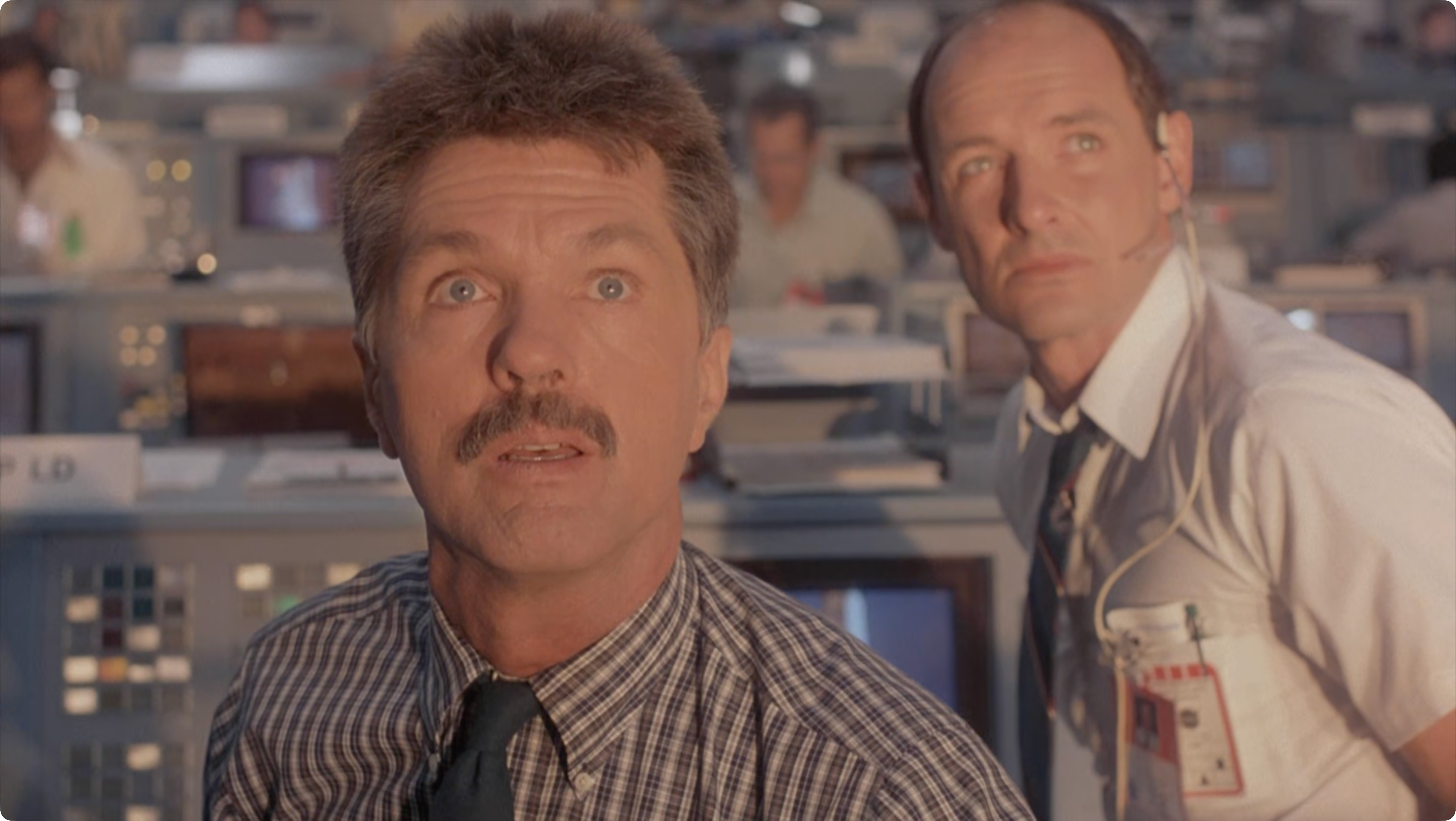
You think those flames are hot, Zach? Just wait until Congress comes for you…
Credit:
20th Century Fox
<a href