But the name that immediately comes to mind for many readers is the one synonymous with high fantasy literature: JRR Tolkien, Catholic author. lord of the rings.
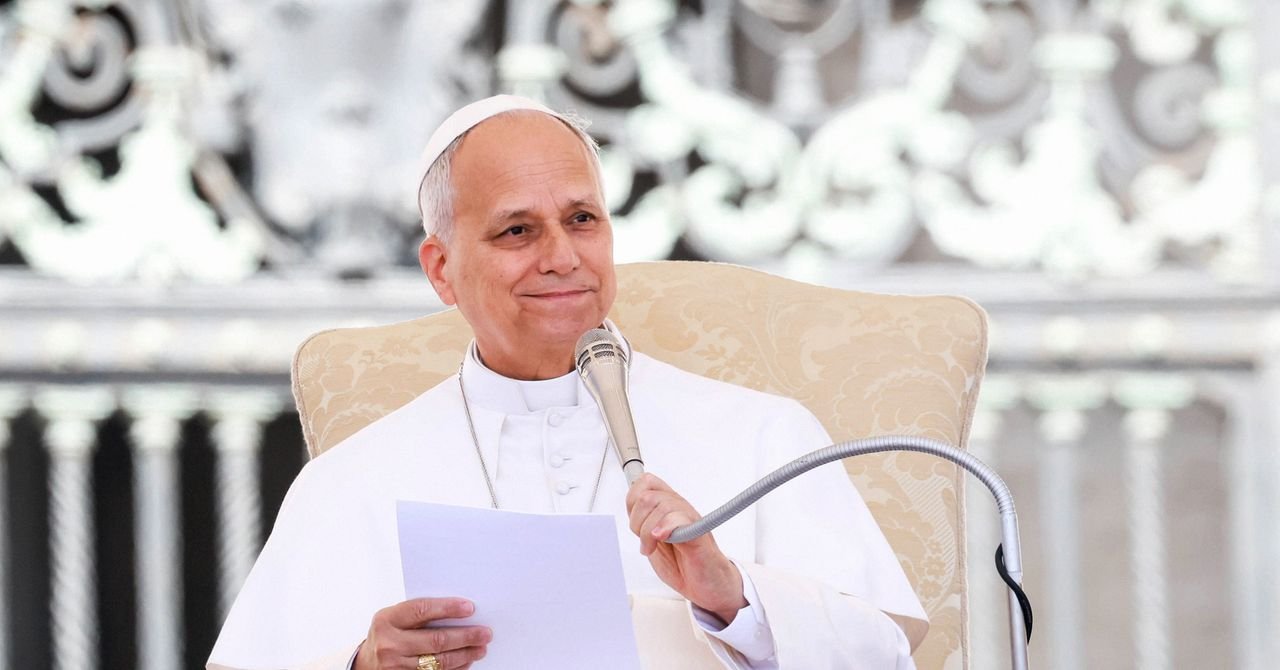
Leo’s letter deals with “the protection of the human person in the time of artificial intelligence”, a major theme of his first year as leader of the Catholic Church. Taking inspiration from his predecessor, Pope Francis, he warns of “the increasing dominance of a technological paradigm” that is “capable of turning creation into an object of exploitation and human beings into a mere cog in a system driven toward greater efficiency.” He again compared the rise of AI to the Industrial Revolution that spanned from the mid-18th century to the early 20th century, pointing to the teachings of his namesake, Pope Leo XIII, who in his 1891 encyclical stressed the importance of workers’ rights and dignity in a time of technological upheaval and a growing capitalist empire.
The longer text further solidifies Leo’s stance as an AI skeptic. But Tolkien’s nod is especially significant given some of the backward interpretations of the Middle-earth mythology by right-wing billionaires like Peter Thiel and Elon Musk, which have long been ridiculed by others. lord of the rings fan. One might even think that Leo is trolling. (The Vatican did not immediately respond to a request for comment.)
Clearly, the Pope is somewhat concerned about the intentions of technological oligarchs racing to develop artificial general intelligence that surpasses human capabilities. Do they really dream of using this device to cure diseases and solve climate change, or are they building an engine of unlimited profits and cultural dominance? Leo borrows an insight from Tolkien’s famous wizard, Gandalf, as he addresses our personal responsibility in challenging such dark forces: “It is not our part to overcome all the tides of the world, but to do what lies in us to help the years, to root out evil in the regions we know, that they who live hereafter may have clear ground to till.”
This text is miles away from what Musk and Thiel clearly see in Tolkien’s masterpiece.
Thiel named his data analytics firm Palantir after the crystal ball used as a spying tool by the traitorous wizard Saruman in the saga; He reportedly calls his venture capital firm, Founders Fund, “precious”, which the distorted and greedy character Gollum calls the One Ring, a magical instrument of totalitarian power. Almost anyone who encounters Tolkien (or an adaptation of his work) can see that he was writing about the corrupting influence of such power – in the novels, the temptation to rule inevitably destroys anyone who succumbs to it – yet Thiel enjoys the same possibilities of authoritarian control and omniscience as the villains.
Musk, for his part, has suggested that Tolkien’s epic could be read as an anti-immigration, wall-building parable: “When Tolkien wrote about Hobbits, he was referring to the gentle folk of the English Shires who do not realize the horrors that are afoot,” he posted on X in October. “They were able to live their lives in peace and quiet, but only because they were protected by the harsh people of Gondor.” He just presented a false memory lord of the rings In defense of Islamophobic far-right UK campaigner Tommy Robinson.
<a href