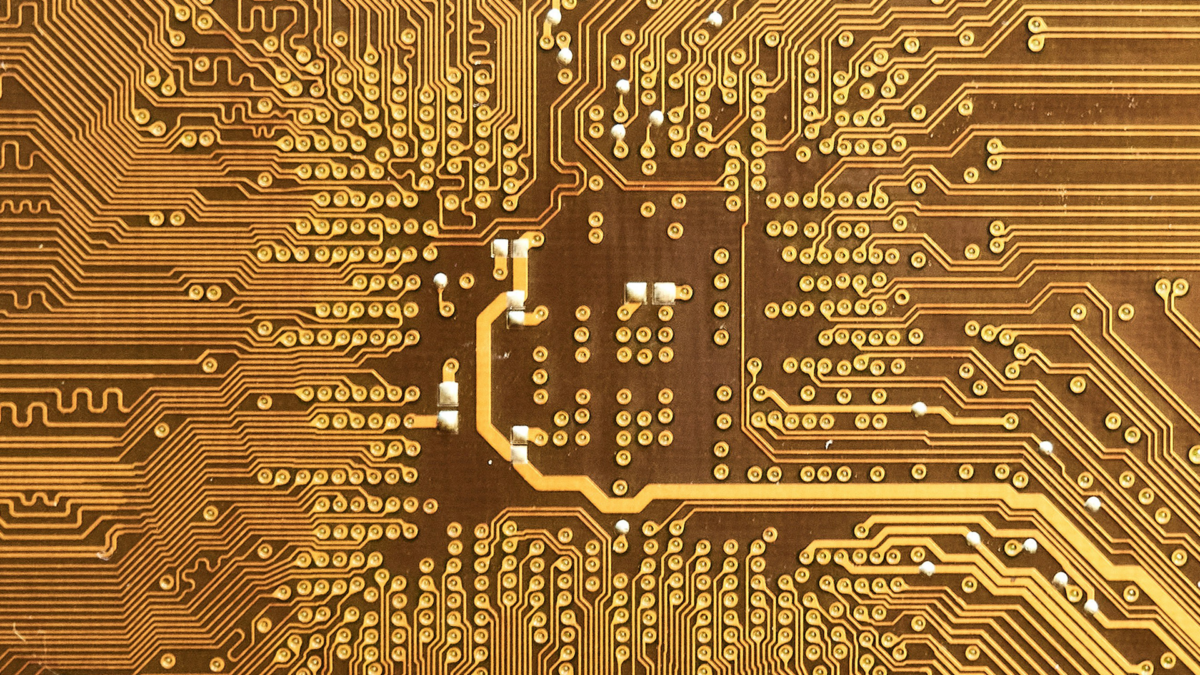
But is the transistor’s time in the sun about to end? The humble little switch has served us well extremely OK, but it imposes a limit on our ability to process data. If we want to process more data, we need more transistors. And if we want to process data faster, we need transistors that more quickly switch from on to off and back again. And if we want both, we need to cram more and more transistors onto our silicon wafers – while also making them smaller and faster.
We’ve spent decades making our transistors smaller and faster, but eventually the process begins to run up against the fundamental limits imposed by the laws of physics. One of these is heat generation: switching current produces heat, and the faster your transistors are switching, the more heat you generate. (Here’s a good Explain It Like I’m Five post about this phenomenon.)
Figuring out how to overcome these limitations in an efficient and practical way is the holy grail of computing research, and a new paper published this month in Science describes a promising new idea. The paper describes how a team from the University of Tokyo took a revolutionary approach to the problem: They worked without transistors entirely. Instead, their “non-volatile quantum switching element” uses the spin of an individual electron to represent the state of a given bit.
(A brief aside: Spin is a quantum mechanical property that is analogous to the way a macroscopic ball can spin around a given axis – it can spin in one of two directions. However, electrons do not actually spin, because if they did, their surface would travel faster than the speed of light. Trying to wrap one’s head around quantum spin is difficult, but for the purposes of this post, the point is that an electron has two spin states. can be one of , and they can be used to encode 1 or 0.)
It turns out that flipping the spin states of electrons is faster and more energy efficient than turning transistors on and off. According to the paper, it takes 40 picoseconds to process one bit of information with a quantum switching element. (A picosecond is one trillionth of a second, or 1 x 10-12 sec.) This is an extremely small amount of time; For comparison, even today’s fastest computers require on the order of a nanosecond, which is 1 x 10⁻⁹ seconds, to do the same thing—so we’re talking about several orders of magnitude worth of improvement here.
There are some other exciting aspects to this technology as well. The electrons remain in their assigned spin state until something changes them again, which means that information stored in this way is non-volatile: the data remains stored without power. It also seems extremely durable: the paper describes how the switching element remained stable even after 100 billion transitions, which is again several orders of magnitude better than current technologies, where heat causes progressive degradation and eventual failure.
Of course, the usual disclaimers apply about this being essentially a proof of concept, and there’s no guarantee that anyone will be able to manufacture chips in a cost-effective manner using this technology. But it points to a way that we may be able to move beyond the limitations of our current computing technology.
<a href