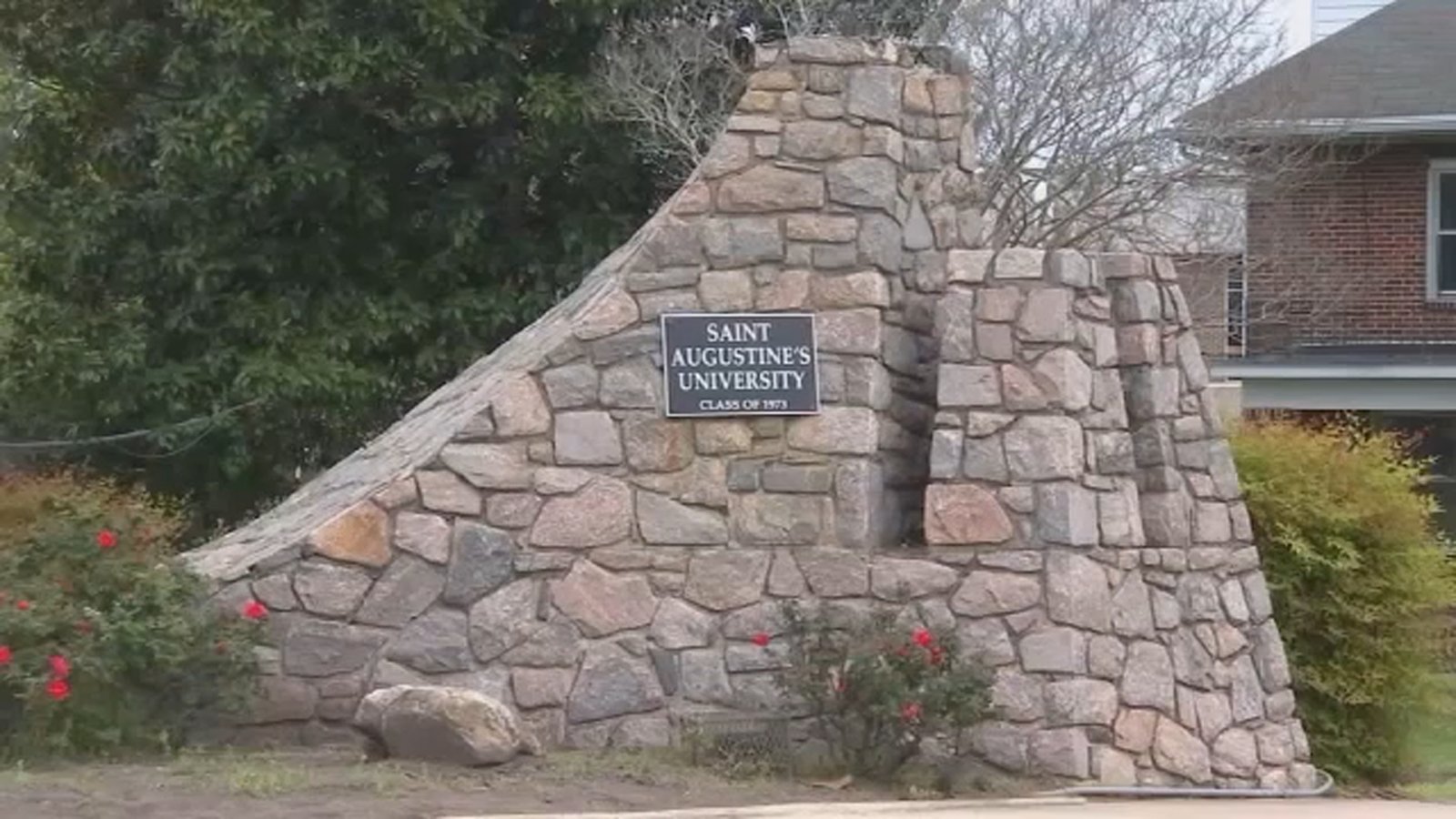
RALEIGH, N.C. (WTVD) — St. Augustine’s University in Raleigh has filed for Chapter 11 bankruptcy, according to documents obtained Tuesday by ABC11.
According to those documents, the university reported owing creditors between $50 million and $100 million. In a statement, the school described the move as a “voluntary bankruptcy filing” and said it hoped to “strengthen its financial foundation” in the long term.
A spokesperson also said that the university would no longer pursue litigation related to its accreditation status, a significant change after more than two years of legal efforts to maintain that status.
“After careful evaluation, the board determined that continuing with the litigation would not be a prudent use of resources,” the university said in its statement. “SAU will instead focus on supporting students through teach-out agreements, developing non-degree certificate and apprenticeship programs, and creating a path toward re-accreditation.”
Financial records show the university estimates it has 200 to 999 creditors, whose assets are valued between $1 million and $500 million. The filing also indicates that the school owes $14.4 million to the Internal Revenue Service.
The university confirmed that Interim President Dr. Jenny Ward Robinson has stepped down and is being replaced by Dr. Vergenis Peoples as interim president.
St. Augustine previously won an injunction in August, allowing it to maintain accreditation and move forward with the fall semester.
St. Augustine’s alumni say the school’s financial crisis could have been avoided, saying they have raised concerns for years about the future of their alma mater. Now, the historically black university is bankrupt.
“This was theft of the university,” alumnus Steve Williams said as news of the filing spread among graduates. “You have alumni who were screaming. You have many alumni who were screaming for help.”
ABC11 spoke with bankruptcy attorney David Mills, who explained what the filing means.
“Chapter 11 is specifically designed to allow organizations like St. Aug’s to restructure their debt, get rid of unprofitable leases and contracts, and restructure,” Mills said.
University board members say the filing offers a comprehensive path to addressing financial challenges and moving forward on stronger footing. The university says it will continue to operate during this process but will not pursue further litigation related to its accreditation status, which is scheduled to expire on May 15. The accrediting agency had previously voted to revoke the university’s accreditation, citing ongoing financial issues.
Mills said bankruptcy is often misunderstood.
He said, “Is it liquidation? Loss of assets? Are they going out of business? They certainly could be going out of business, but that doesn’t mean it has to be.”
There were few signs of activity on the campuses of private HBCUs on Tuesday. Buildings appeared closed, windows were dark and foot traffic was minimal. It’s an atmosphere that is a stark contrast to the once-busy campus. However, Duke Energy confirmed that electric service remains active.
Asked about the future of the university, Williams said, “I don’t know.”
Mills said the university has 14 days, unless an extension is granted, to submit a complete accounting of its assets and liabilities to the court.
Dark outlook?
A Howard University law professor said the university’s recent bankruptcy filing signals serious financial distress, while school leaders call it a step toward stability.
Matthew Bruckner, a law professor who teaches bankruptcy, said there are few examples of universities completing the process successfully.
“There aren’t a lot of examples of universities going into bankruptcy,” he said.
Bruckner said filings typically signal a closure rather than a restructuring of an institution.
“Most bankruptcies are over. This is a way to wind down the proceedings,” he said.
He said that although bankruptcy can reduce debt obligations, it cannot resolve the school’s underlying financial challenges.
“Bankruptcy doesn’t create money. Bankruptcy will allow them to eliminate some debt payments, but it will not generate new revenue for them, and they will certainly need new revenue to become a significant entity,” he said.
However, the university framed the filing as a path to resetting its financial foundation.
Another blow came on Wednesday, when a school spokesperson confirmed that the university would no longer continue the fight for its affiliation. Students graduating next month will receive a degree from an accredited institution, but future classes will need to transfer to an accredited school.
Williams said the developments were devastating.
He said, “It was the death of a university. You had an alumnus who was screaming, you had multiple alumnus who were screaming for help. But because we are a private university and not a public university, that’s what happens.”
The bankruptcy process may also affect faculty and staff. The university’s board has not ruled out layoffs, and Bruckner said attorneys would need court approval to continue paying employees.
“They have to ask the judge to allow them to spend the money to pay the payroll,” Bruckner said.
The university has not announced when additional decisions will be made as the case moves forward.
Be sure to download the ABC 11 mobile app. ABC11 North Carolina Apps for Connected TV, Mobile News, Echo
Copyright © 2026 WTVD-TV. All rights reserved.
<a href=