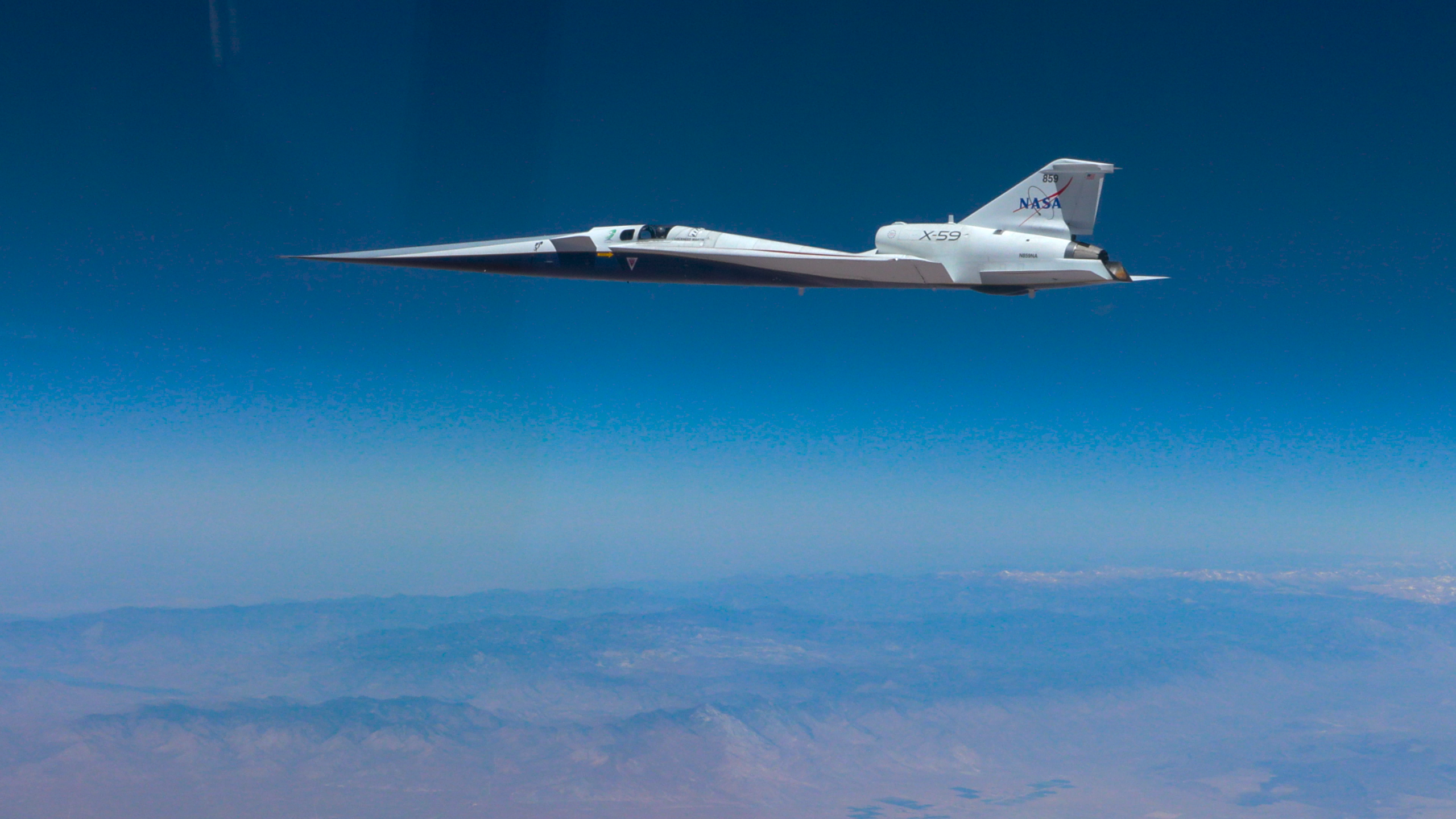
going on a national tour
The ultimate test of the success of the X-59 design will come in Phase 3 of the program, when NASA plans to fly the aircraft over communities throughout the United States. The agency wants to conduct X-59 flight tests in communities that are broadly representative of the United States, taking into account demographics, building construction, climate, geography, and many other characteristics.
The ground microphone array will be deployed once again, but NASA also plans to recruit community members who can share their feedback on the sounds they hear every day during flight tests. Each community may experience about a month of continuous flight tests, Coen said, during which they may hear quiet and loud sounds ranging from 70 PLdB to 90 PLdB.
“Each day, we will fly over the community [fly] The X-59 is a little different, so each flight will produce either a quiet sound or a loud sound,” Coen said. Many people may not hear anything at the low end, but a loud rumbling sound can be “something that is quite irritating”.
For the first community test, the
But follow-on tests elsewhere in the United States would require airfields capable of supporting the X-59’s runway requirement of 10,000 feet. Although NASA has not yet finalized its list of designated communities for flight tests, dozens of major airports have runway lengths capable of accommodating the X-59.
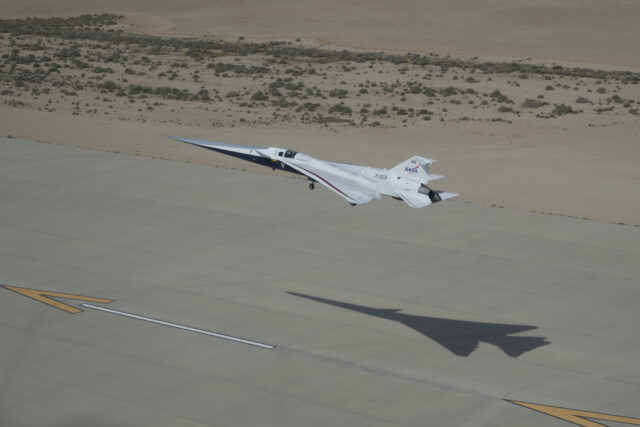
NASA’s X-59 quiet supersonic research aircraft approaches landing at Edwards Air Force Base, California, Thursday, March 26, 2026.
NASA’s X-59 quiet supersonic research aircraft approaches landing at Edwards Air Force Base, California, Thursday, March 26, 2026.
Credit: NASA | carla thomas
Community feedback and other data from the
“The objective is to come up with a standard that enables innovation and allows us to have supersonic flight in the future but still protects the public on the ground,” Coen said. “Phase 3, where the public is allowed to learn what they heard and how it affected them, is something I’m personally really looking forward to.”
<a href