Now that Artemis II is complete, NASA has begun a post-game performance analysis of all the systems that worked together to safely deliver and return four astronauts to the Moon earlier this month. In addition to taking humans further afield than ever before, Artemis II serves as a vital test flight for upcoming crewed missions, planned for 2027 and 2028, with NASA’s ambitious goal of later landing astronauts on the lunar surface. So far, the Orion spacecraft and SLS rocket have performed quite well.
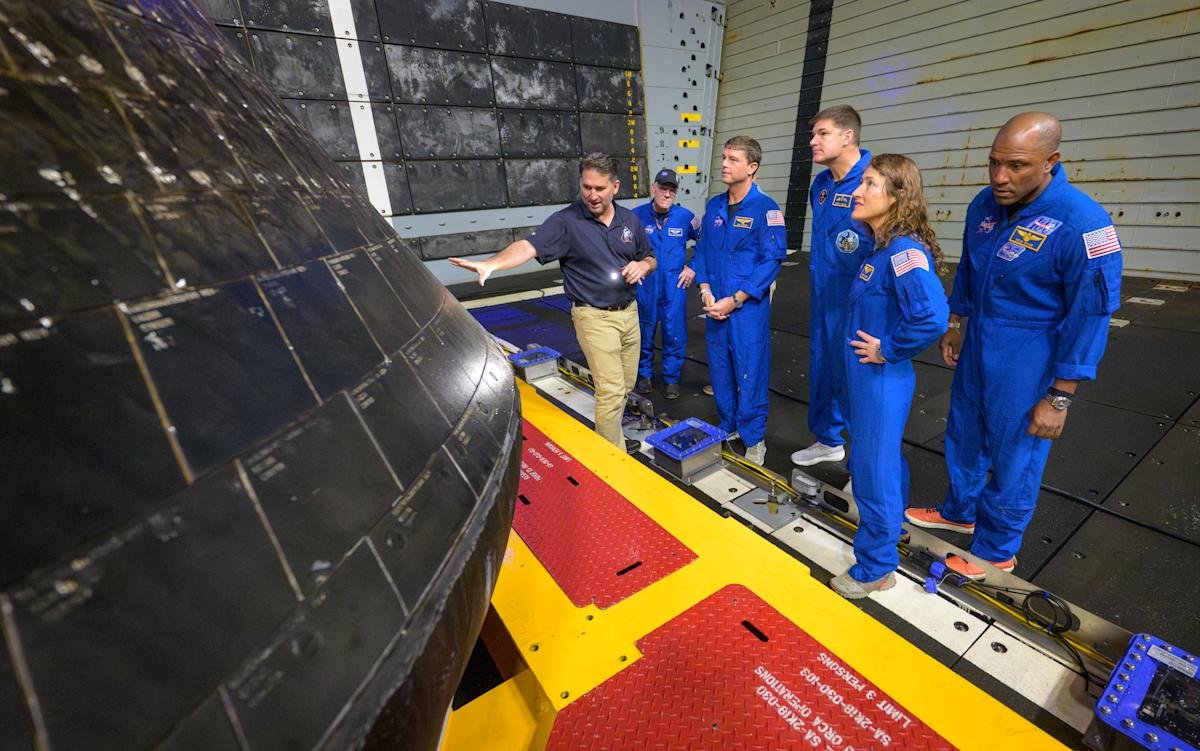
NASA says initial assessments of the crew capsule show that its heat shield is “functioning as expected, with no abnormal conditions identified”, and that it did not exhibit as much water loss as was seen in the uncrewed Artemis I test. (Navy divers took some very nice photos of the heat shield after it was splashed down underwater, as seen below). According to NASA, the splashdown occurred as planned, Orion landed 2.9 miles from its targeted landing site, and its entry interface velocity was “within a mile per hour of predictions.”

NASA says the SLS rocket also performed well. There are still tests to run, but, “At main engine cutoff, when the core stage’s RS-25 liquid engines are shut down, the spacecraft was traveling at more than 18,000 mph, achieving its insertion velocity to orbit, and executing a precise bullseye to its intended location,” the space agency noted in a blog post.
one thing we know Did However, some problems were caused by toilet arrangements. Shortly after launch, the astronauts reported problems with the urine vent line, which mission specialist Christina Koch was able to troubleshoot with the help of the ground crew. But everyone would like to avoid this on the next mission, so NASA now has teams examining the hardware and data to figure out what went wrong and how to prevent it.
see earthset
The Artemis II astronauts continue to share glimpses of their journey around the moon, and this week, the mission’s commander, Reed Wiseman, posted an incredible video of Earth setting behind the moon, as seen from the Orion spacecraft. Humans have not observed that phenomenon directly in the more than 50 years since the last Apollo mission. Read more about that here.
Although ten days may not seem like that long to be in space, it still takes work for the body, and returning to Earth has been a bit of an adjustment for the crew. Astronaut Koch had posted a video of himself struggling during a tandem walk exercise with his eyes closed after returning to Earth last week. “When people live in microgravity, the systems in our bodies that have evolved to tell our brains how we are moving, the vestibular organs, do not function correctly,” he explained in the caption. “Our brains learn to ignore those signals and so when we first get back to gravity, we rely heavily on our eyes to orient ourselves visually.”
Before you go, be sure to check out these stories too:
<a href