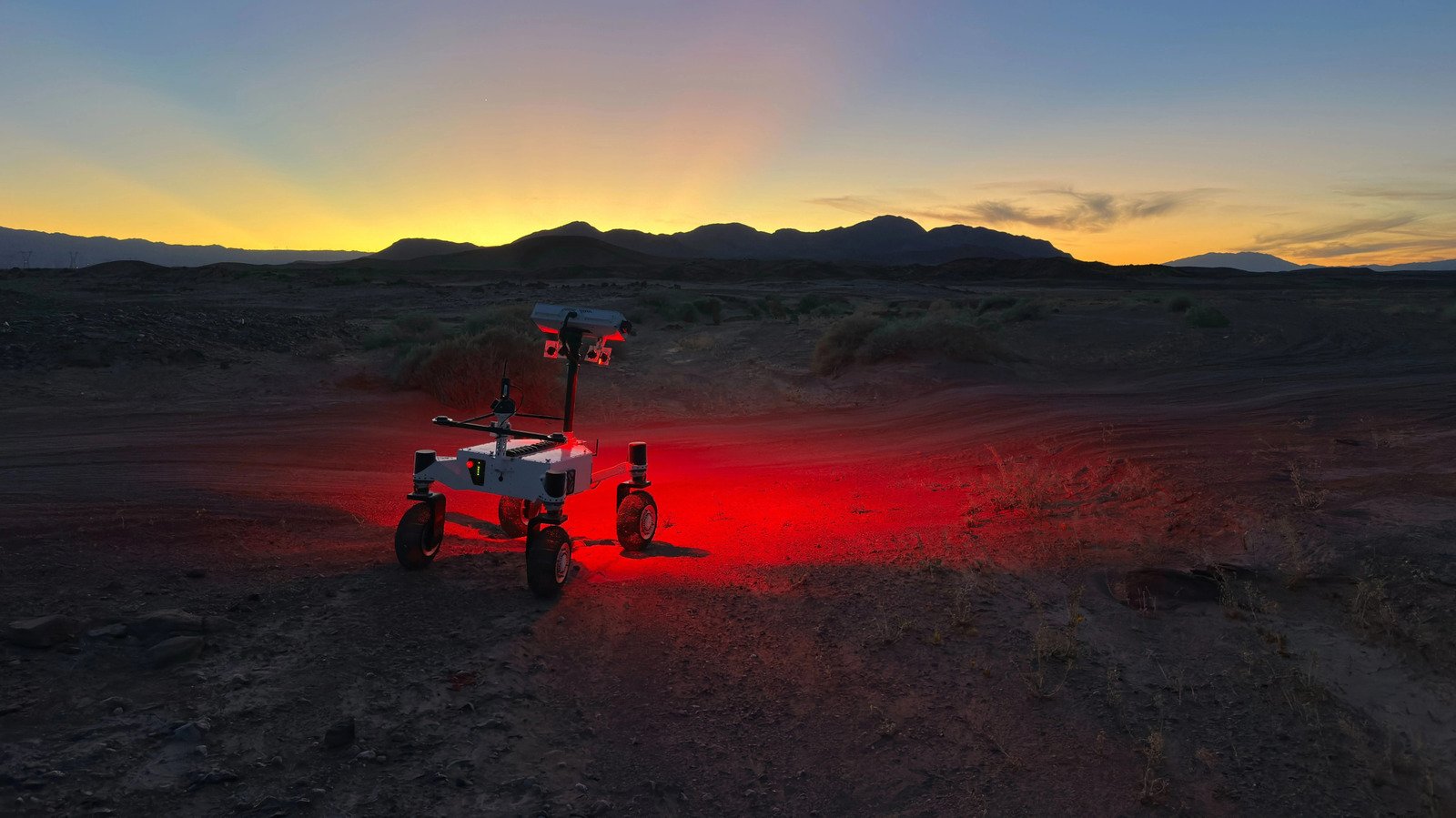
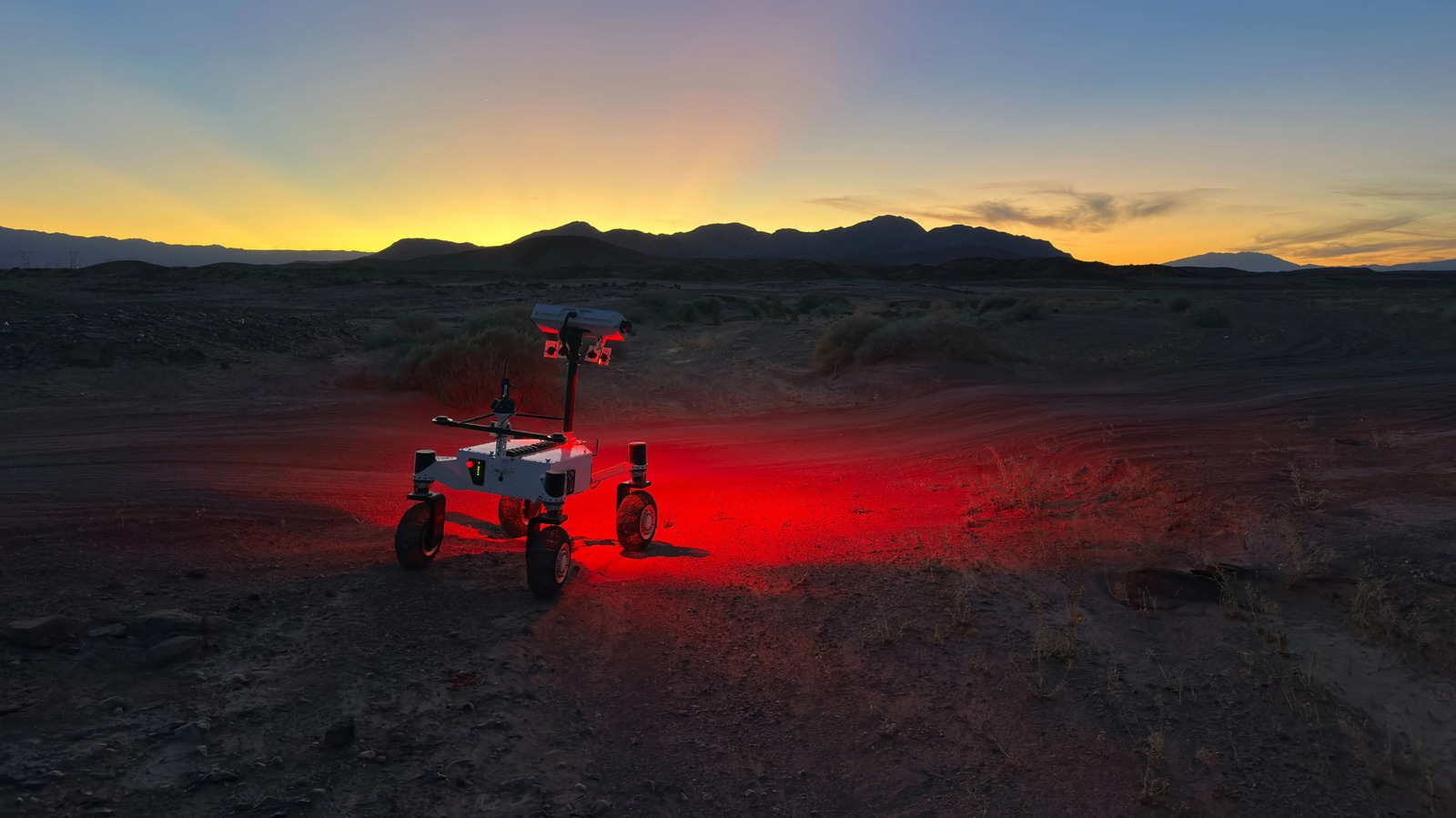
NASA’s Mars rovers have accomplished a lot since they first landed on the Red Planet in the late ’90s, but the newest members of the fleet still have a lot of limitations. For one thing, they are very slow; Perseverance, which NASA considers “exceptional”, achieves a top speed of just less than .1 mph on level ground. In addition, the rough terrain is hard on the rovers’ wheels, and steep slopes with hazards such as rocks and sand present a real challenge, sometimes requiring long detours to reach some targets. But this week, NASA showed off its progress on a prototype that boasts more advanced capabilities: the Exploration Rover for Navigating Extreme Sloped Terrain, or Ernest.
The space agency is testing Ernest in the Colorado desert, exploring new methods that could be used for future missions to Mars and the Moon. Ernest has four wheels, unlike current Mars rovers’ six, and is four feet long, although the version used for the actual mission will be twice that size. And, it can individually lift its wheels to step over or jump over obstacles. In recent tests in the desert, the prototype covered a distance of about 16 miles for a total of more than 37 hours over seven days, according to NASA. Its maximum speed was about .6 mph.
“You could take a science road trip to the Moon – or Mars – with this vehicle,” said James Keane, a JPL planetary scientist working on the lunar mission. Going back to NASA’s Sojourner rover, Mars rovers have relied on a passive suspension system, the rocker-bogie system, to keep weight stable on their wheels. However, now engineers are trying active suspension with Ernest to achieve greater mobility. “Two powered joints at the front articulate a gimbal that allows the rover to drive using different maneuvers such as walking, wheel-running, and obstacle-climbing,” NASA says.
It can switch between active and passive suspension depending on the task and energy requirements, and thanks to its four steerable wheels, it can drive in any direction. The Ernest prototype has already gone through several iterations since the program began in 2022, and the team has tested nearly a dozen active suspension configurations. The latest version also has “enhanced independent decision-making capabilities.” The goal with ERNEST is to develop technology for rovers that can cover more ground than the rovers that came before them, and faster, with less reliance on human controllers on Earth.
<a href