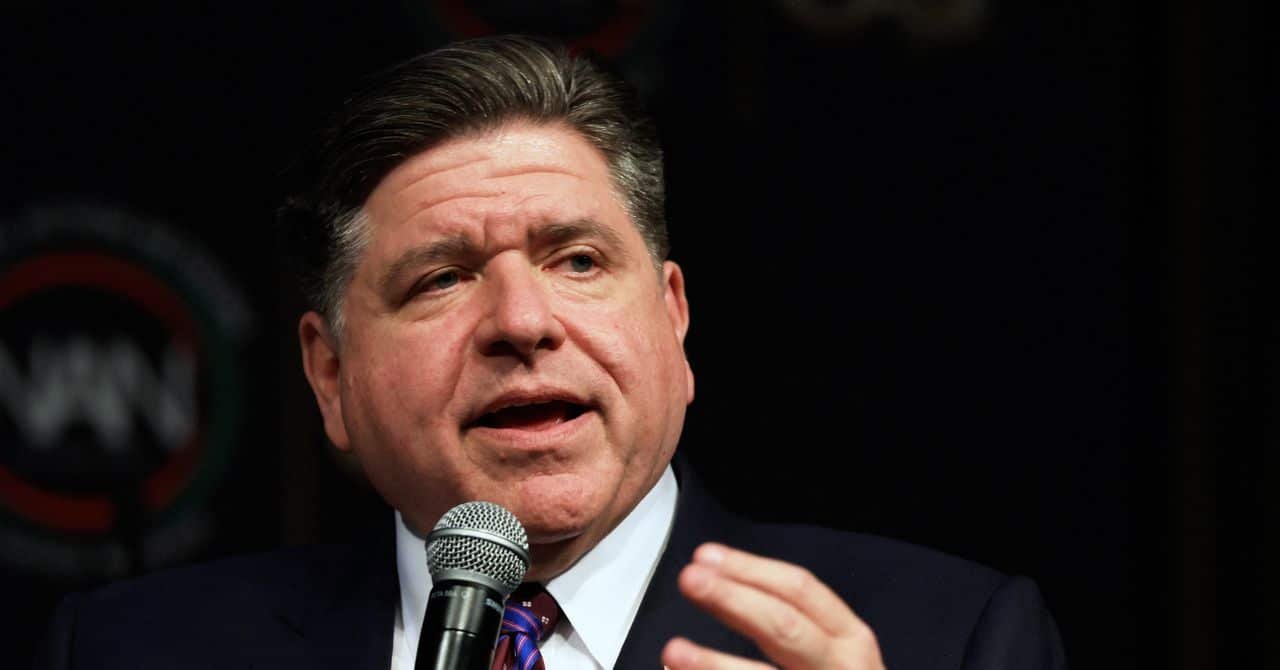
The bill, SB 315, is now headed to Governor JB Pritzker’s desk. In a post on social media on Wednesday, Pritzker cited the need to hold Big Tech accountable and said he planned to sign the bill.
Since Congress has yet to pass any meaningful AI safety legislation, state lawmakers have happily stepped in in recent years to promote bills that show their constituents they are keeping Silicon Valley in check. As AI tools become increasingly popular, and the companies behind them race toward massive IPOs, surveys show that US voters are looking for more AI regulation.
As a result, security advocates and tech companies have focused on state legislatures as the primary battleground for deciding what these laws should look like. Chris Lehane, OpenAI’s head of global affairs, told WIRED last week that the company’s AI policy is now focused on passing a series of similar state laws.
California and New York have the strongest AI security laws, requiring tech companies to provide information about model guardrails and publish reports on security incidents. Illinois’ bill goes a step further, requiring independent auditors to verify that an AI lab is following its own security standards. Previously, there was no need for an independent body to hold an AI lab accountable for its security claims.
“We’re in a situation where AI companies do their own homework,” says Scott Weiser, policy director of the Secure AI Project, a nonprofit that supported SB 315.
Weiser says it’s broadly expected that, under SB 315, AI labs could use the Big Four accounting and auditing firms—Deloitte, EY, KPMG, and PwC—to audit their security practices. He also says it’s possible that AI labs could tap members of the AI Evaluators Forum—a coalition of smaller research organizations including METR, Transluce, and Avery—to assess their adherence to safety standards.
Illinois state representative Daniel Didech, who sponsors SB 315, tells WIRED that state legislatures are playing an important role by shaping America’s AI policy and serving as a testing ground for any future federal legislation. “Laws like this create a world where the federal government is more likely to pass something,” Didech says.
corporate interests
Illinois has emerged as a key region in the ongoing battle over state AI laws. OpenAI previously supported a bill in Illinois that would allow AI labs to avoid liability if their models cause catastrophic harm. However, Lehane has since said that company-wide support for the bill was a mistake, and that he never supported the liability shield in the bill. Most recently, OpenAI supported SB 315.
“The Illinois General Assembly has shown real bipartisan leadership in advancing SB 315 and developing a thoughtful framework for frontier AI security. As AI systems become more capable, there are clear expectations in terms of security, transparency, incident reporting, and accountability,” Lehane said in a statement to WIRED.
<a href