The problem lies here. We have two small children at home, and we live in a townhouse in the city that isn’t big at all. With this comes a lot of “shared space” – also known as partially controlled chaos. The room we have colloquially named “the office” is hardly a dedicated work space. I couldn’t live without the blur background function in Zoom and Teams. The closet is a storage space, and in addition to our standing desk, which is usually filled with laptops, monitors, laptop stands, and various peripherals I’m testing, we also have some non-work items scattered throughout the room. Some of them include a play kitchen, toy food boxes, an entire crate of Duplos, a modular play couch, and many other weird things that are a pain to step on.
Relocation is not an option—at least, not an easy one. I can definitely close the curtains, but this is where my 5-year-old displays his Lego creations. And doing so gives me terrible track lighting, especially on the ceiling – which, again, is behind me. This is a mixed-use room, and I’m sure some of you can relate to its limitations.
I’m back to buying a webcam. After all, an external webcam doesn’t need to stuff all its parts into a tiny camera module squeezed into the top bezel of the screen. It might be wrong to expect too much from these little laptop cameras at first. I collected every possible webcam I could find. There are plenty of options out there, ranging from cheap 1080p cameras to spending hundreds of dollars on 4K options with AI features. But I was less concerned about specifications like resolution, megapixels, aperture, and field of view, and found that I wanted to improve the frustrating situation I was facing in my office.
lights, Camera, Action

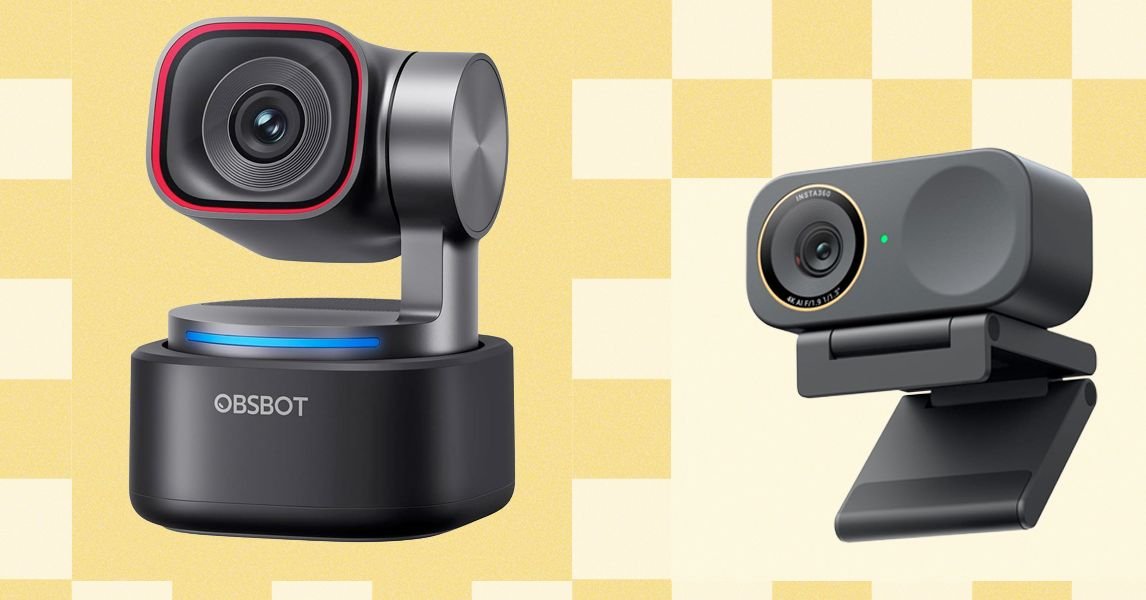
All of the nearly dozen webcams I tried looked great under ideal lighting. I spent some time working in a separate room next to a window, and it seemed important to upgrade to an external camera. With all that light to work with, high-end cameras with large 1/1.3-inch image sensors handled the conditions beautifully. To get the detail on my face, it didn’t need direct blasts of natural light to show the wide dynamic range of shadows and highlights. Having more natural light in the room improved every webcam I tried, but they also better demonstrated how powerful some of these higher-end cameras really are, like the Insta360 Link 2C Pro or the ObsBot Tiny 3. These are the scenarios in which most webcams are tested, making them all look more or less adequate.
<a href