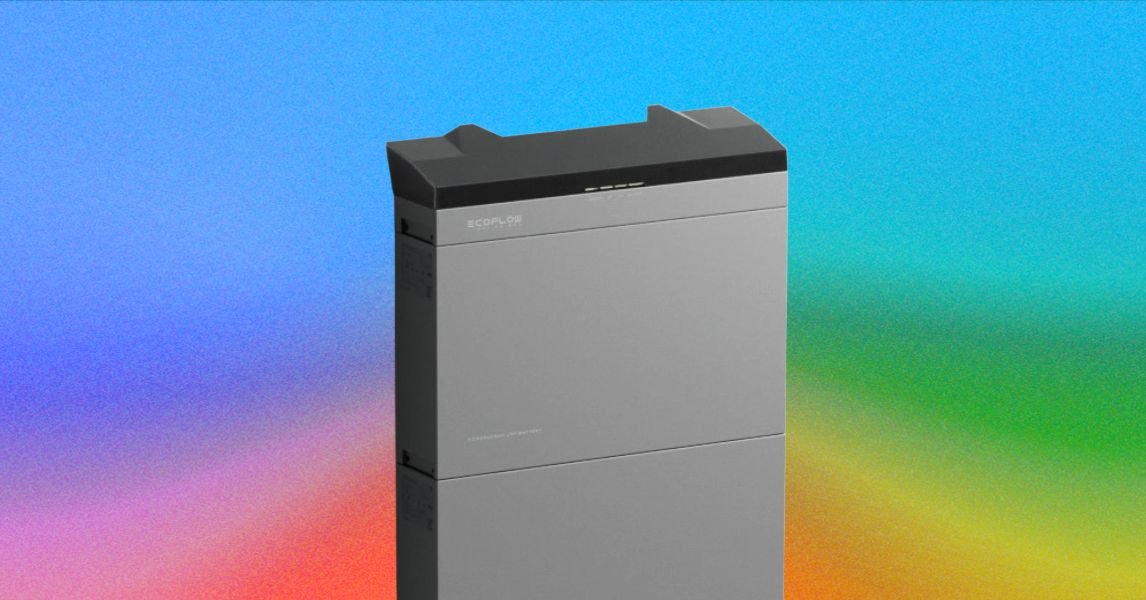
I’ve spent several months researching home batteries, talking to people who use them, and then installing one myself, and I have tips for anyone interested in getting their own home battery.
Why would you want a home battery?
There are several reasons why you might want to invest in a home battery, and they’re not mutually exclusive:
- You want to store excess electricity from your solar panels.
- You want to live off-grid.
- You want to avoid power cuts.
- You want to buy electricity at a cheaper rate and store it for later use.
Home batteries are a win-win, potentially benefiting power companies too, as battery storage is an essential part of grid balancing and can help manage and maximize the use of intermittent electricity generated by renewable energy (solar, wind, wave).
How do home batteries work?

Photograph: Simon Hill
A home battery is like a big power bank for your home. But instead of lithium-ion, they contain lithium iron phosphate (LFP or LiFePO)4), because it is safer, more durable, and less prone to thermal runaway. In other words, there is less chance of overheating and causing a fire. Some manufacturers are working with sodium-ion (Na-ion) batteries, which are potentially cheaper, more environmentally friendly (they don’t need lithium), and perform better in the cold, but they are also larger and don’t last as long.
Home battery technology is often similar to what you’ll find in electric vehicles. Some people have also suggested using EV batteries as home batteries. But there are some potential problems, not least your car battery dying in the morning. EVs are also advancing technology toward solid-state batteries, which are smaller for the same capacity, safer because they don’t have liquid electrolytes inside, and last longer.
Many home batteries come in modular systems, so you can add the capacity you want, but they require an inverter to convert the stored DC (direct current) power into AC (alternating current) power that you can use. People who have solar panels, or who plan to add them in the future, should opt for a hybrid inverter, which can also convert power from the panels for use or storage.
Inverters have different power ratings in kilowatts (kW) that determine how much power you can draw at any given time. Households with modest needs can make do with a 3.6-kilowatt inverter, but this limits your continuous usage to 3.6 kilowatts. They usually have a peak load capacity that tends to be higher, allowing you to pull more for a shorter period of time. If you have high demand devices like an EV charger or heat pump, you’ll want at least 5 kW, and those with larger demand or larger batteries will want to go higher (6 to 10 kW).
What should I look for?
There are several things to keep in mind when purchasing a home battery:
- Capacity: Measured in kilowatt-hours (kWh), this tells you how much total energy the battery can hold.
- power output: Measured in kilowatts (kW), this measures how much energy the battery and inverter can deliver at any given time.
- depth of discharge: This is how much of the battery’s capacity you can safely use without damaging it.
- Capacity: This is the percentage of the power you put into the battery that you can actually use, as some energy is always lost in the storage process.
- Guarantee: This is the minimum guaranteed performance you can expect before the battery degrades (they all degrade over time), and is often stated in years and charging cycles (whichever comes first). For example, EcoFlow promises at least 70 percent capacity after 15 years or 6,000 charging cycles.
How many home batteries do you need?

Ecoflow via Simon Hill
It can be difficult to calculate how much battery capacity you need, and it depends on your use case. If you want to avoid outages or live off-grid, you should consider how much electricity you use over time and the sum of your maximum electricity usage at any given time to make sure your capacity in kWh and output in kilowatts is enough. If the output is not high enough you may not be able to run power-consuming appliances at the same time, so you have to think about how you use your electricity.
For people like me, who want to buy at a cheaper rate to use when electricity is more expensive, any capability will benefit you. But, for example, if you have a cheap six-hour overnight rate, you’ll ideally want it to run for another 18 hours. It makes sense to get as much upfront as you can since installation costs are high. Even adding on to modular systems later on often requires professional installation to avoid voiding your warranty.
Do you need upgrades or permissions?
The home battery will connect to your main electrical panel via a cable, and may require some upgrades. When I got the home battery installed there was no room on my fuse board, so they had to install another breaker box.
Some inverters may require permission from your power distribution utility or local distribution company. Here in Scotland, the distribution network operator must approve your inverter, but you can install up to 3.6kW and then notify, whereas larger inverters require prior approval.
<a href