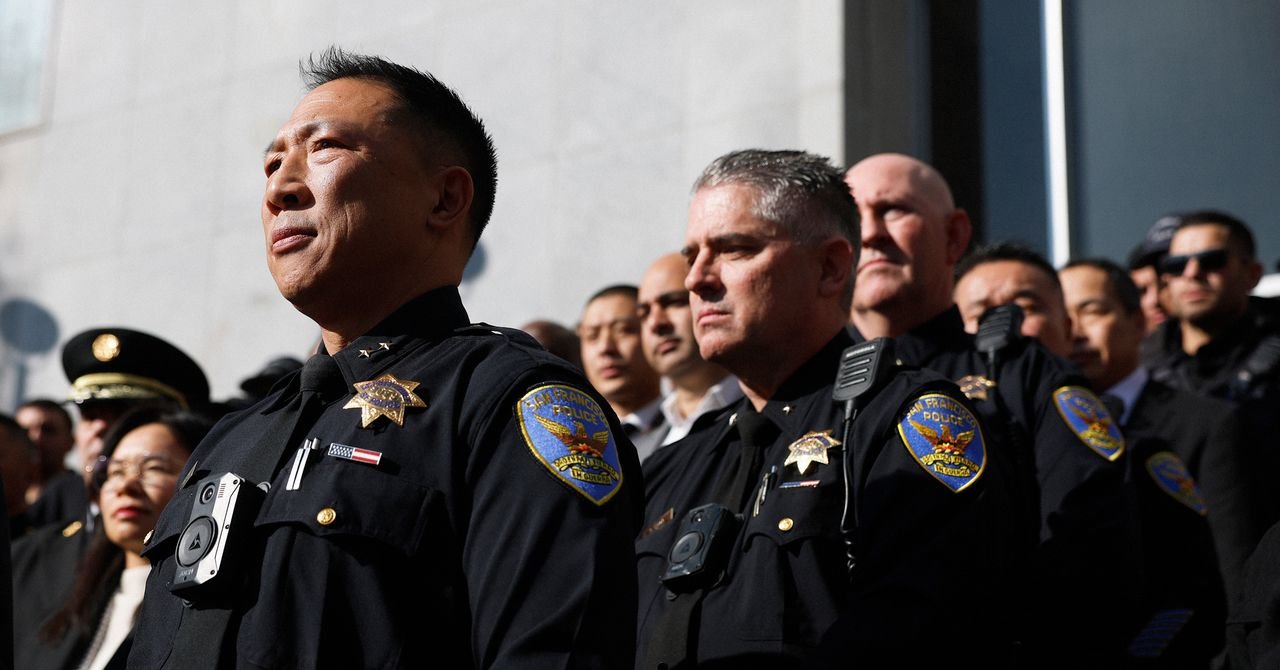
Airbnb and Salesforce are among the businesses that have contracted San Francisco police to protect their offices on a regular basis over the years, according to public records obtained by WIRED. For example, Airbnb spent approximately $428,443 for the presence of uniformed, armed officers in 2024, the most recent year for which complete data was obtained. Salesforce spent approximately $727,907 through a security vendor. The payment amount has not been previously disclosed.
Salesforce has hired police to protect its offices in San Francisco’s tallest structure, known as the Salesforce Tower, as well as a nearby building in the city’s busy downtown area. It spent about $41,000 for officials at the TrailblazerDX 2024 conference held at the city’s convention center.
The security practices of tech companies in San Francisco have drawn renewed attention in recent weeks after a man allegedly threw a Molotov cocktail toward the home of OpenAI CEO Sam Altman and tried to break into the company’s headquarters by ramming a chair through the building’s glass doors. Authorities allege the suspect wrote a document criticizing AI technologies that described Altman as the target of the assassination and referenced the names of other AI executives. He faces state and federal prosecution but has not yet entered a formal plea.
OpenAI and Anthropic, two major San Francisco-based generative AI model developers, have not been regular customers of the city Rent-a-Cop program, according to police spokeswoman Allison Maxey.
Salesforce, Anthropic and Airbnb declined to comment. OpenAI did not respond to requests for comment.
The contract program is known locally as 10B, which is also the section of city code that authorizes it. Any person, company, or organization that desires additional personnel or equipment for “law enforcement purposes” may request “such personnel to render such services” unless the Chief of Police first signs off on it. Under the law, companies pay officers the same hourly rates the city does, including overtime. Records show that as of early 2024, the hourly rate for a standard officer was $135 during the day, while a lieutenant received about $190 at night.
The program is often used by organizations hosting concerts, events and conferences, as well as sports teams that need additional security. The biggest spender in 2024 was the San Francisco Giants baseball team, with a bill of close to $1.9 million. That year, at least four National Basketball Association teams paid a collective amount of about $16,500 for police escorts.
Many tech companies have access to the program on a one-time basis through 2024. Records list OpenAI as paying $813.43 for unspecified coverage at an Asian art museum, Microsoft has a single bill of $1,622.16, and Zoox is running up a tab of $838.43. Occasional or one-time clients in prior years include Affirm, Cruise, Datadog, and Fanatics.
Zoox spokeswoman Marisa Wiggum said police had secured a large offsite gathering for employees and were prepared to use the event again if needed. Microsoft and Affirm declined to comment. Other companies did not respond to requests for comment.
Records show the program has been used more regularly by houses of worship, office building landlords, retail stores and bank branches including Apple, Bank of America, Best Buy, Bloomingdale’s, Chase, Lululemon and Sephora. The firm Security Industry Specialists paid more than $1.2 million for what police records described as coverage at three Apple stores in 2024, making it its second-biggest client of the year.
According to a survey conducted a decade ago by Seth Stoughton, faculty director of the University of South Carolina’s Excellence in Policing and Public Safety Program, an estimated 80 percent of police departments nationwide allow officers to moonlight, either informally or through formal policies like San Francisco’s. Some cities have raised concerns about conflicts of interest and liability risks arising from the arrangements. But agencies that allow them say they benefit community relations and officers’ pockets, Stoughton’s survey found.
<a href