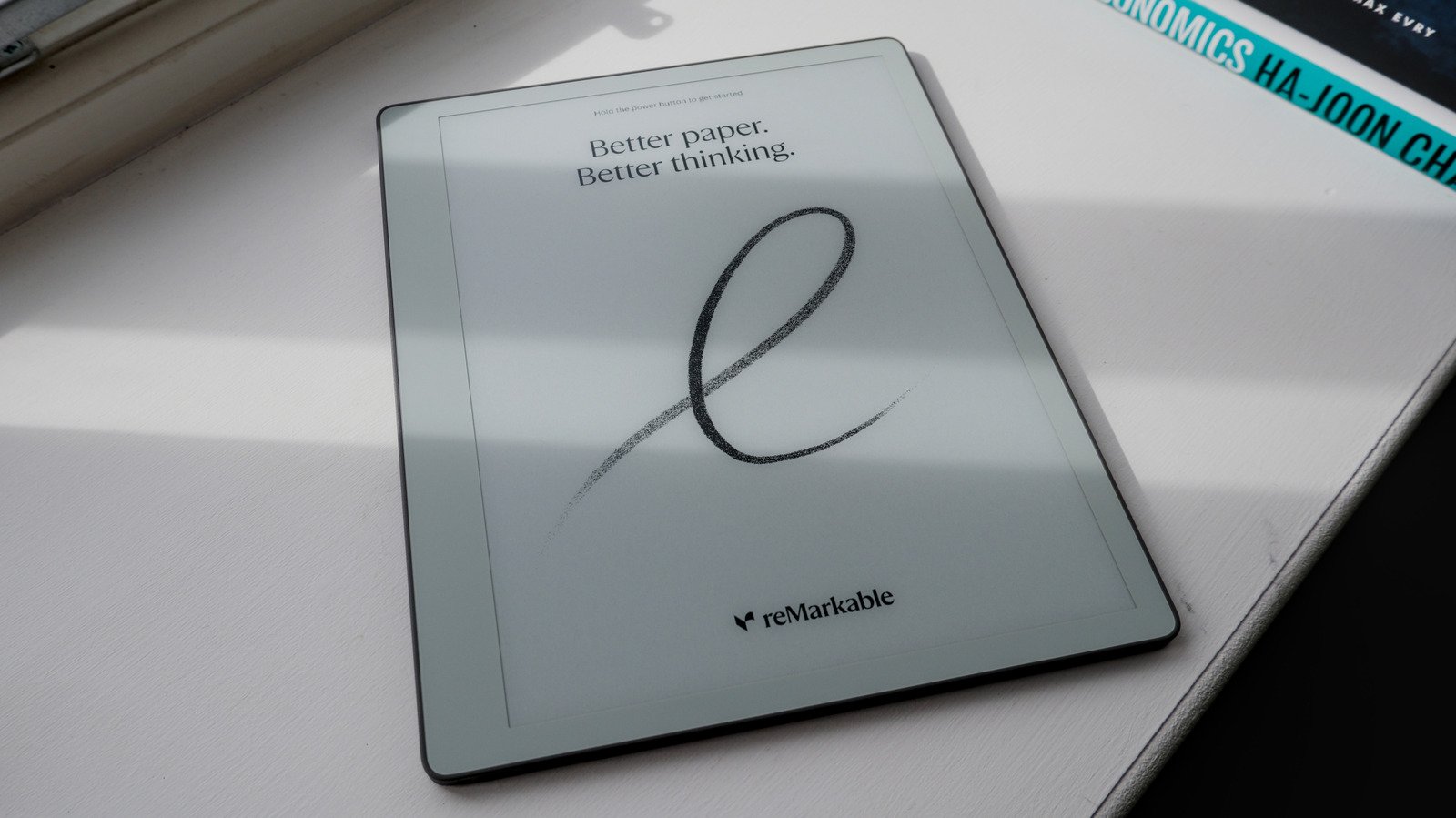
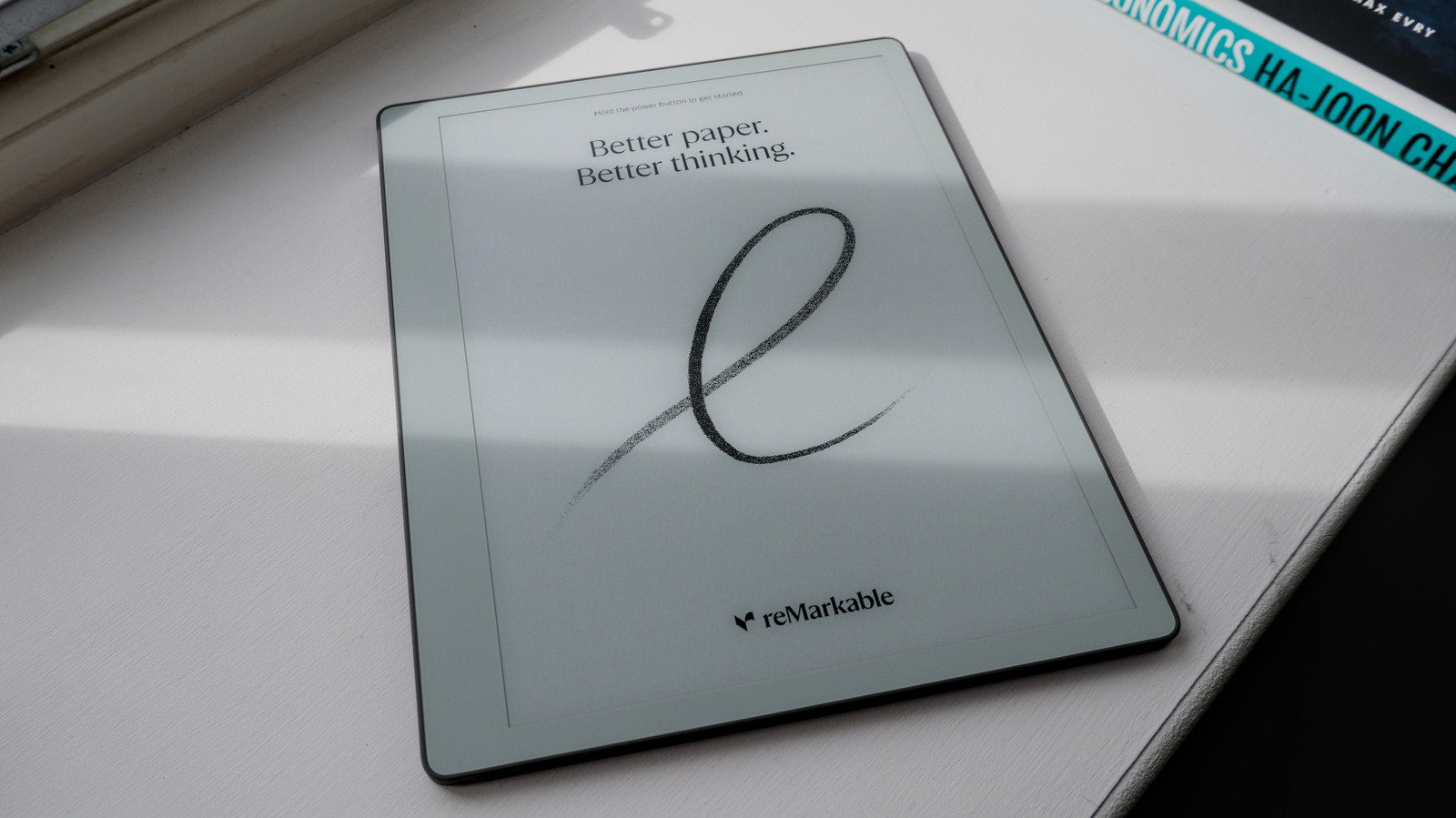
The Remarkable Paper Pure is, without a doubt, one of the best e-paper writing slates I’ve spent a lot of time with. The writing experience is more or less similar to that found on Paper Pros, and it is an extremely well-crafted experience. I’m a big fan of the display and I’m pretty sure it’s more responsive to page swipes and refreshes than its siblings. Considering what people will be using this device for, I’m not even sure they’ll miss the color display. I certainly didn’t, which surprised me too, but color is not a requirement for this type of slate. If you’re just taking long handwritten notes and editing, you probably aren’t stopping every few scrolls to change the ink color or highlight something.
I’ll go further and say that the Paper Pure is a far better tool than the Paper Pro Move, which I found too small to be useful. Finally, the move was likely a distraction if it prevented engineering resources from being able to access it. During my time with the Pure I found it very easy to lean back in my chair and think about my thoughts on this device. Plus, it’s an excellent e-reader that doesn’t strain your eyes, and it’s great for journaling and sketching out initial design plans for projects.
Remarkable’s intentions include AI: The company won’t be putting any general-AI nonsense in its gear, for obvious reasons. But it uses machine learning to analyze your handwriting and, when you upload your documents to Remarkable’s sharing page, it will create an AI summary and extract action items. Also, for example, if you upload a file to the design website Miro, the AI will try to extract your writing and diagrams, and digitize them for the respective platform. In my opinion these are all sensible and perfectly legitimate uses for technology, greasing the wheels of your workday rather than allowing you to outsource your thinking.
Basic things have not changed. You create notebooks using a variety of paper styles and templates. You can import .PDF and .EPUB files to read and modify, and edit text directly if you can brave the on-screen keyboard. If your handwriting is clear enough (and mine probably isn’t) you can convert your scrolls to text, and the system will even let you search your handwritten notes. Once done, you can share a .PDF of your work via email, Google Drive, Slack, or various other third-party clients.
Remarkable supports native import of .DOCX files, which you are able to edit with the stylus. When you want to export that file back to your computer, you’ll get an AI summary of the recommended changes. But, like exporting to .PDF and .EPUB files, you’ll still have to manually copy-paste those modifications into your original document. Which, if I’m honest, doesn’t seem like a particularly efficient way of working, especially considering what the company is presenting itself for now.
One of the new enterprise-friendly features is calendar integration, which will let you create and file specific meeting notes for each event. If, say, it’s a recurring meeting, the system will add them all together in a single workbook so you don’t have to keep looking for notes. Sadly, what you can’t do with this feature is automate some of the busy tasks that come with using Slate as a day planner. There is a small ecosystem of creators that sell custom .PDFs for use as planners or journals tailored to people’s specific use cases. This prompted Remarkable to launch Methods, a more dynamic system to perform the same task, but it lacks the thinking that such a feature could benefit from. After all, I’d love it if my Remarkable planner automatically filled in information from my integrated calendar.
You’ve been able to share your Remarkable’s screen to a computer for some time now but it’s become much more useful. To organize a presentation you can share it via a USB-C cable or wirelessly to the company’s web client. Even better, and another sign of the ReMarkable’s elegant design choices, is that if you move the stylus a few millimeters over the display, it will turn into a laser pointer with a slowly disappearing light mark. So, if you need to highlight something in your presentation or brainstorming session, you can do so without affecting what’s in your workbook.
Unfortunately, all of these innovations are so clearly aimed at companies that ordinary people may feel a little disappointed. It doesn’t help that while using the device itself is enjoyable, it’s becoming increasingly clear that the ecosystem that surrounds it is not as enjoyable. The friction inherent in moving a document on and off the slate, the extra steps it creates in the workflow, are fascinating only in isolation.
<a href