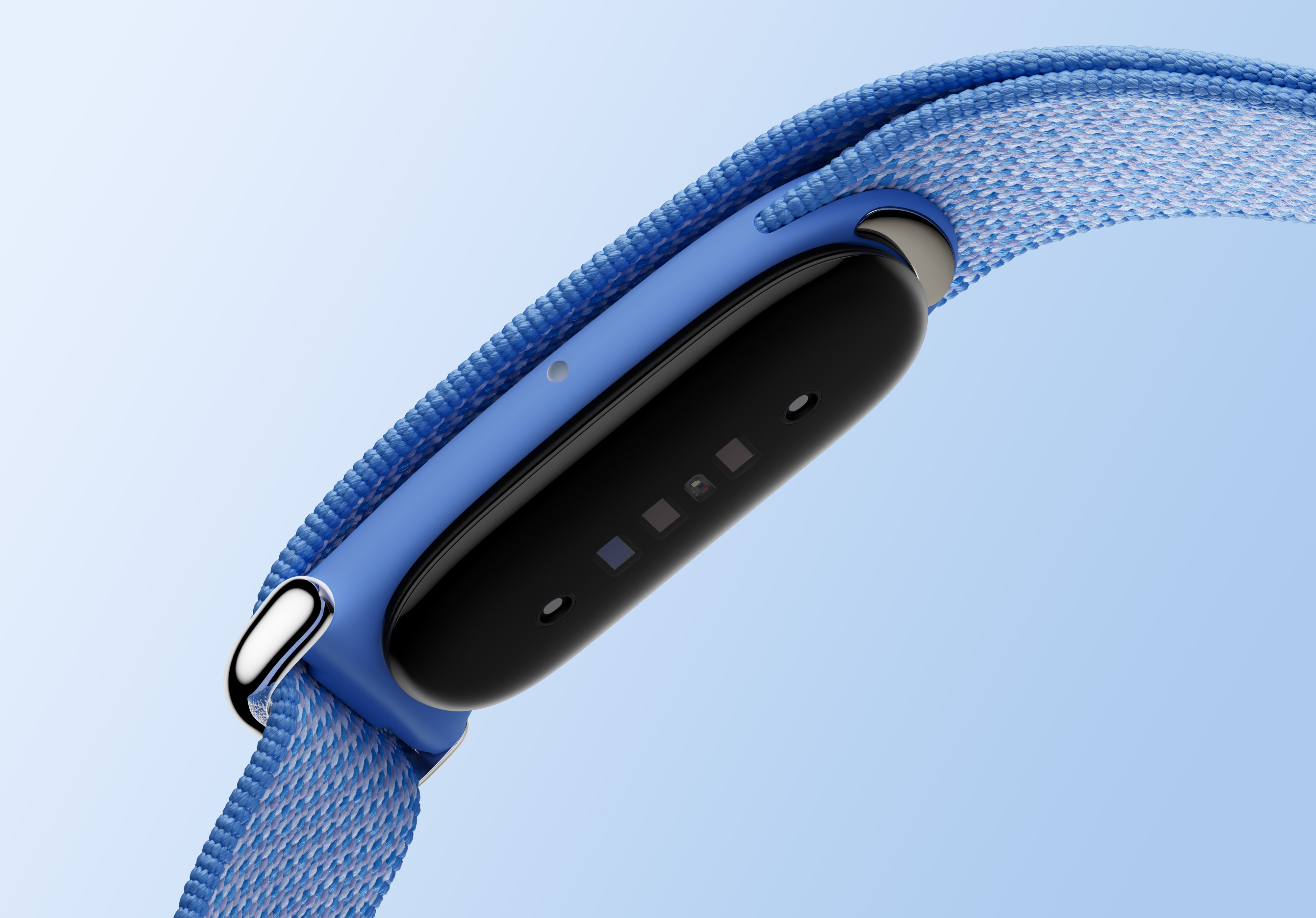
Air “pebbles” slot into the band from below.
Credit: Google
Air “pebbles” slot into the band from below.
Credit: Google
The Fitbit Air will have all the standard wearable health sensors: heart rate, accelerometer/gyroscope, infrared SpO2, and skin temperature. Google notes that the heart rate monitor isn’t as advanced as the latest Pixel watches, so the Air may not be as accurate during vigorous activity. The Air also has a vibration motor that can be used for alarms, but it won’t buzz for phone notifications like a smartwatch.
The Fitbit Air will launch with the Performance Loop band on May 26 for $99.99. It also features a silicone performance loop and elevated modern band options. The bands start at $34.99 and come in a variety of colors. Purchase of the Fitbit Air also includes three months of Google Health Premium (replacing Fitbit Premium), which now includes Google’s new AI Health Coach.
Goodbye, Fitbit… Hello, Google Health
The Fitbit app is getting a major makeover and a new name. An update in the coming weeks will turn that app into Google Health, adding a new interface with a more comprehensive content-expressive aesthetic and redesigned menus and tabs. You also won’t see Fitbit branding in many places—Fitbit Premium subscriptions will become Google Health Premium.
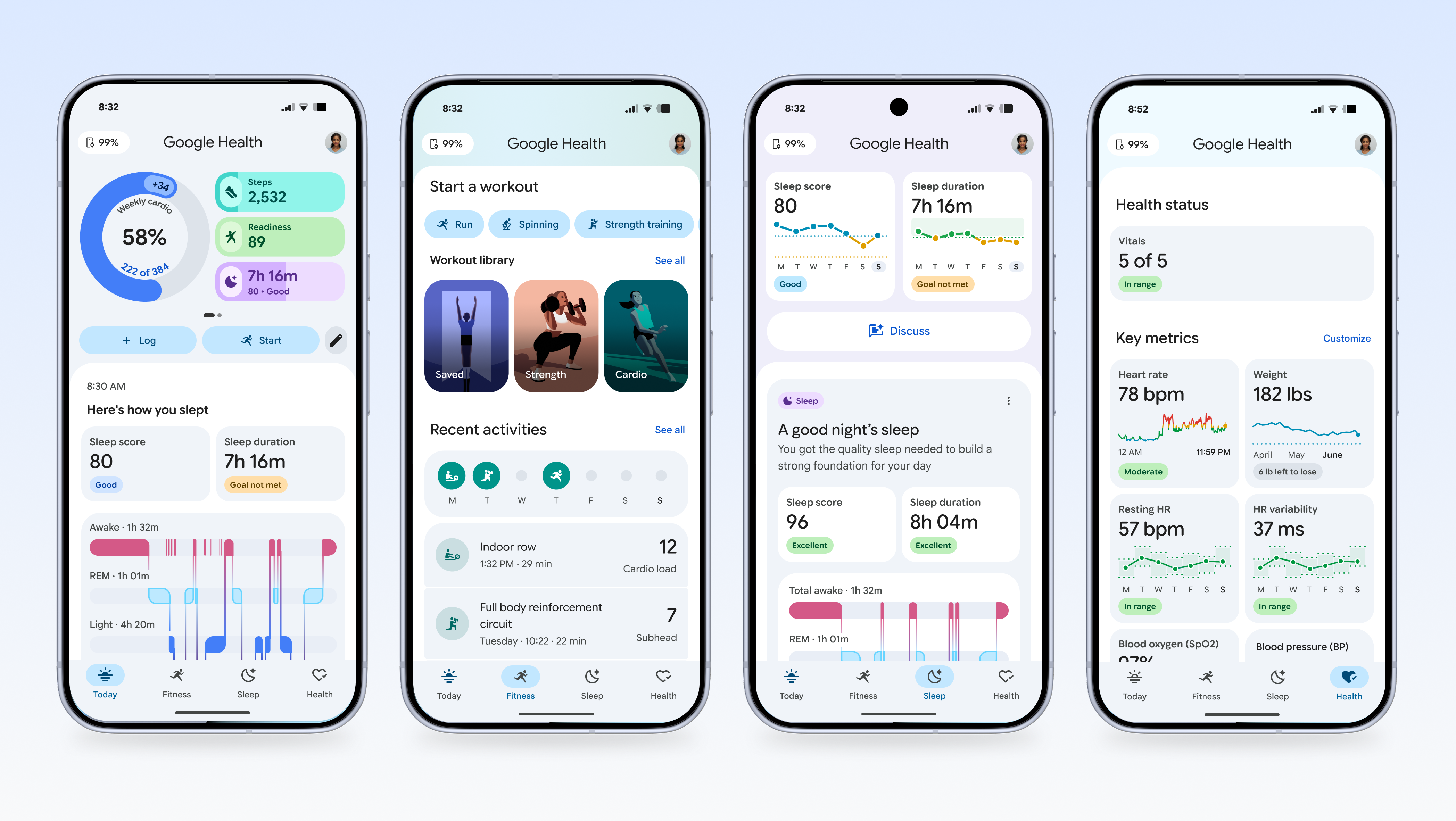
Without a subscription, the app still does all the basic things, like tracking your health stats, automatically logging workouts, and showing it all in a beautiful dashboard. With the Premium subscription, you get all the features of Fitbit Premium as well as the new AI Health Coach. It’s a chatbot, so you can ask it about any health or wellness topic, and the answers are based on your health data.
Google suggests asking a health coach to find a customized workout routine or address health concerns. The robot could theoretically use your accumulated health metrics, such as workouts, nutrition, and sleep, to provide better suggestions. You can also upload a photo of a meal to Health Coach and have it automatically logged in the app.
<a href