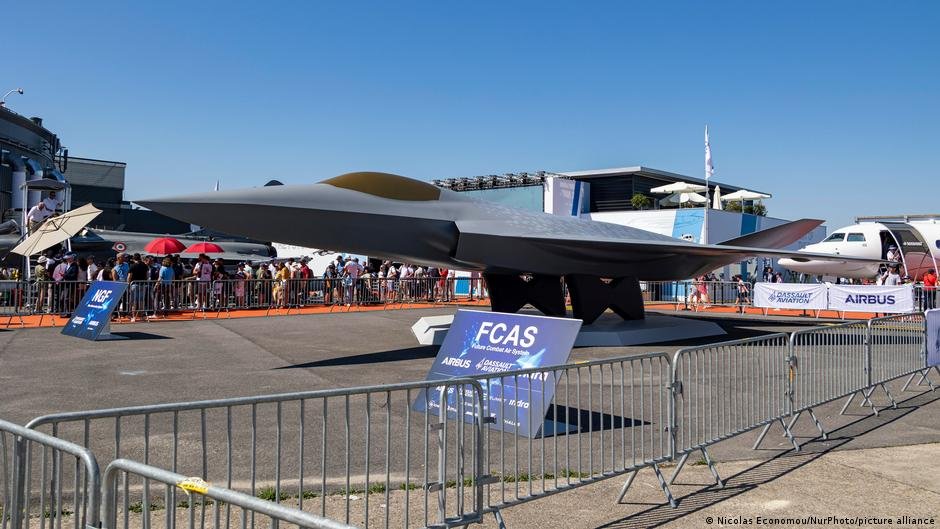
German Chancellor Friedrich Merz and French President Emmanuel Macron agreed last week that manufacturers Dassault and Airbus have failed to resolve key disputes, officials in Berlin and Paris confirmed on Monday.
The Future Combat Air System (FCAS) program, launched in 2017, aimed to create a next-generation fighter aircraft to replace the Eurofighters and Rafale around 2040.
The move to cancel one of Europe’s biggest defense projects comes as Western military officials warn of a growing threat from Russia and the United States increases pressure on Europe to take care of its defense.
What went wrong with FCAS?
The more than €100 billion ($115 billion) project, launched in 2017, was once touted as a symbol of Franco-German military unity.
But it has been plagued by years of political and industrial disputes.
French arms giant Dassault Aviation has demanded significantly more control over the project than its industry partner, the European consortium Airbus Defense and Space.
The two companies clashed over control of the next phase of the project, access to intellectual property and, above all, different requirements for the aircraft.
Airbus and Dassault Aviation had no immediate comment.
Both the governments stressed to make the project successful
Rearmaming Europe has been a priority not only for the continent’s two largest economies but also for all 27 EU members, many of whom have expressed concerns about their security following Russia’s invasion of Ukraine.
The project failed despite Merz and Macron publicly vowing to make it a success.
“The expertise in military aircraft manufacturing exists in Germany. German industry can and must now prove its capabilities,” Merz said, calling for cooperation from other partners.
Thomas Erndl, a defense policy spokesman for Merz’s conservative party in the German Bundestag, said the decision to ultimately cancel the project was the right one.
Franziska Brantner, co-leader of Germany’s Green Party, described the failure to reach a consensus as a serious blow to European security and defense policy.
“Where industry blocks progress, it is the job of politicians to show leadership and move things forward,” he told the Handelsblatt newspaper.
Germany and France now plan to focus on combat clouds linking aircraft, drones and sensors. Defense officials are scheduled to meet in mid-July to reestablish cooperation on smaller projects.
Cédric Perrin, head of the foreign affairs and defense committee in the French Senate, said that Macron was “the only person who still believed in the existence of the FCAS.”
Edited by: Louis Olofse
Don’t let algorithms hide news. If you rely on our team for reliable reporting, please take a moment Choose us as your favorite source on GoogleThat’s why you’ll always see our verified news first.
<a href