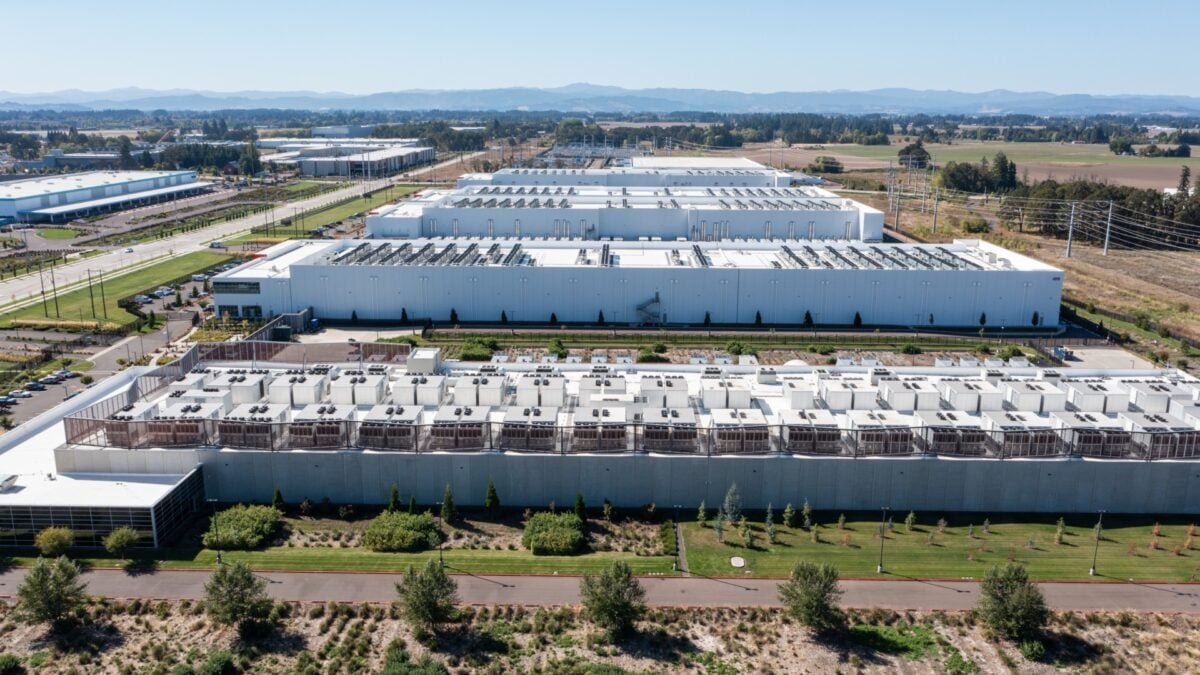

On Tuesday, the Democrat-controlled state legislature in Maine passed a ban on large data centers. It wasn’t close at all. According to the Wall Street Journal, the state House passed it 79–62, and the Senate passed it 21–13 along party lines with a few exceptions. Governor Janet Mills’ signature is still needed before it becomes law, and the Journal says she has expressed interest in signing such a ban under certain circumstances.
This ban passed despite, or perhaps because of, the relatively low data center activity in Maine. Business Insider mapped out potential data center construction by tracking permit requests for some generators, and it appears there are only two such projects in Maine. However, data center demand drives up home energy costs, and the website Electric Choice ranks Maine fourth in electricity prices.
Insider also notes that similar legislative efforts have stalled or failed entirely in Georgia, Maryland, Michigan, New Hampshire, New York, Oklahoma, South Carolina, South Dakota, Vermont, Virginia, and Wisconsin. Several other cities and states are still considering similar laws.
Maine’s ban is often described as a ban on “large” data centers, but the limit is 20 MW, which is actually quite low, and effectively blocks the construction of what are known as AI data centers. According to the Regional Planning Association, while data centers used about two megawatts of power when the data center concept was new, the average contemporary data center uses about 40 megawatts.
Maine’s bill puts a moratorium on construction until November 2027, and also creates a council tasked with evaluating the cost of data centers on the people of Maine.
<a href